


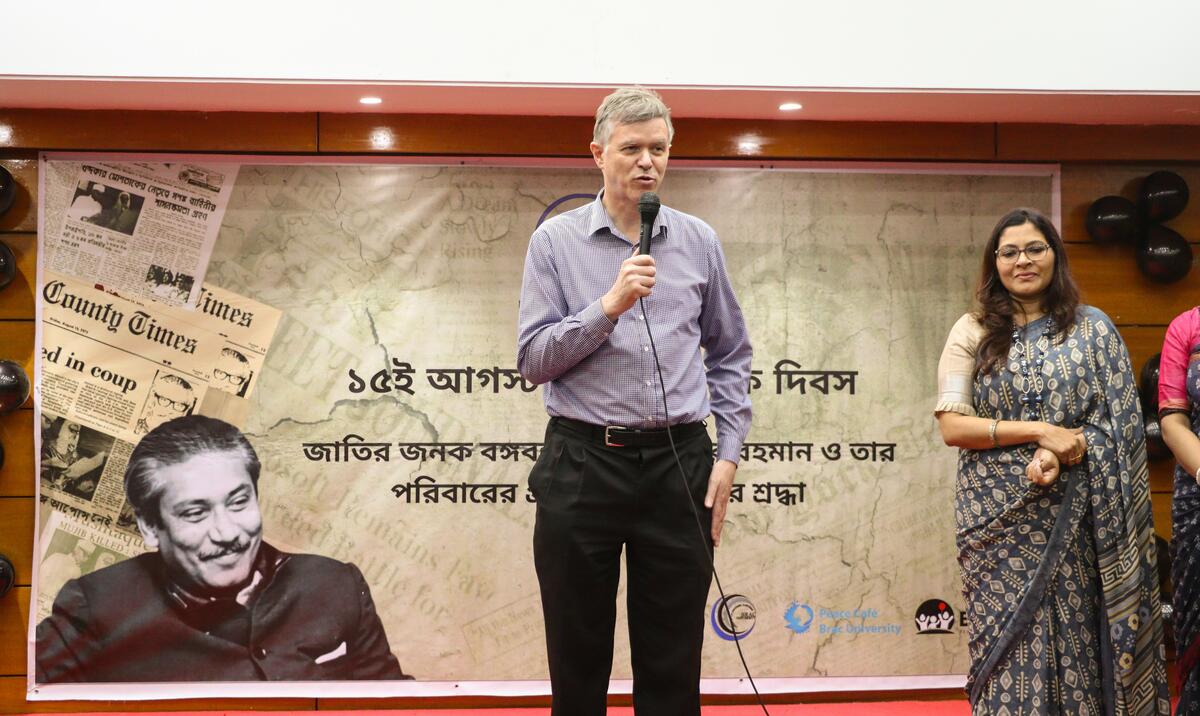
A recent Facebook post by Nandini Azad has drawn attention for its sharp criticism of BRAC University Registrar Dr. David Dowland and segments of Bangladesh’s NGO and development sector regarding their involvement in the July 2024 student-led quota reform movement.
The post, which has received many reactions on Wednesday, argues that the July movement took a critical turn at BRAC University after tear gas was fired on campus. Rumors of multiple deaths from suffocation spread rapidly.
Azad contends that the campus mobilization would have appeared more routine had the BRAC University registrar not joined students on the streets.
She describes Dowland’s participation as problematic because he is a foreigner employed in Bangladesh. “His participation in the political protest of another state is completely illegal,” the post states. Azad suggests that the presence of a foreigner boosted public enthusiasm due to a tendency to react strongly to Western figures, and she questions why BRAC and figures such as Asif Saleh brought a foreigner onto the streets during the unrest.
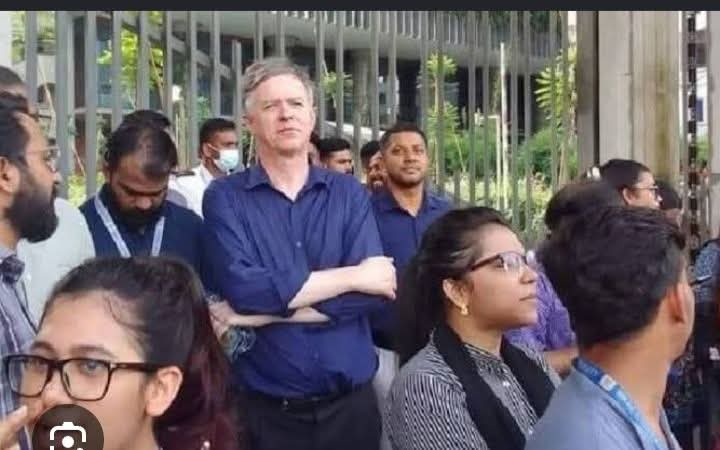
Dr. David Dowland, a British academic with a DPhil in Modern History from the University of Oxford, has served as Registrar of BRAC University since 2020. He previously held senior registrar and administrative roles at UK institutions and at the Asian University for Women. Contemporary accounts from the period, including social media posts at the time, described him standing for hours at the university gate amid clashes to help ensure student safety. Official university materials continue to list him in his role.
The post broadens its critique beyond Dowland to heads and country directors of prominent INGOs and NGOs in Bangladesh. Azad accuses parts of the development sector of functioning as “pure brokers” and unwanted pressure groups. She notes that some recipients of the Ramon Magsaysay Award have been among those she views critically, and claims these actors enjoyed favorable conditions under the Awami League government while now seeking similar comfort under the current administration (referred to in the post as “Tarek Bhai’s era”).
Azad urges readers to tag Dowland and NGO leaders on social media, pressing them to speak out on garment workers’ rights in the same way they engaged with the July movement. “During Awami time they were happy, and now in Tarek Bhai’s era they also want happiness. Don’t let these NGO parties sleep in the lap of both sides,” the post says. It also references photos of Dowland from the 2024 protests and from August 15 mourning observances in 2023.
Comments on the post largely echo the criticism, with users calling the individuals “agents,” questioning NGO influence, and expressing frustration that little has changed.
The July 2024 movement, which began over the reinstatement of a controversial government job quota system, escalated into nationwide protests, violent clashes, and ultimately contributed to the resignation of Prime Minister Sheikh Hasina and the formation of an interim government. BRAC University was among the campuses that saw significant student activity and police action during the unrest.
Azad’s post reflects ongoing debates in Bangladesh about the role of foreign staff, NGOs, and the development sector in domestic political events. Neither BRAC University nor Dr. Dowland has issued a public response specifically addressing the claims in this post as of the time of writing.