


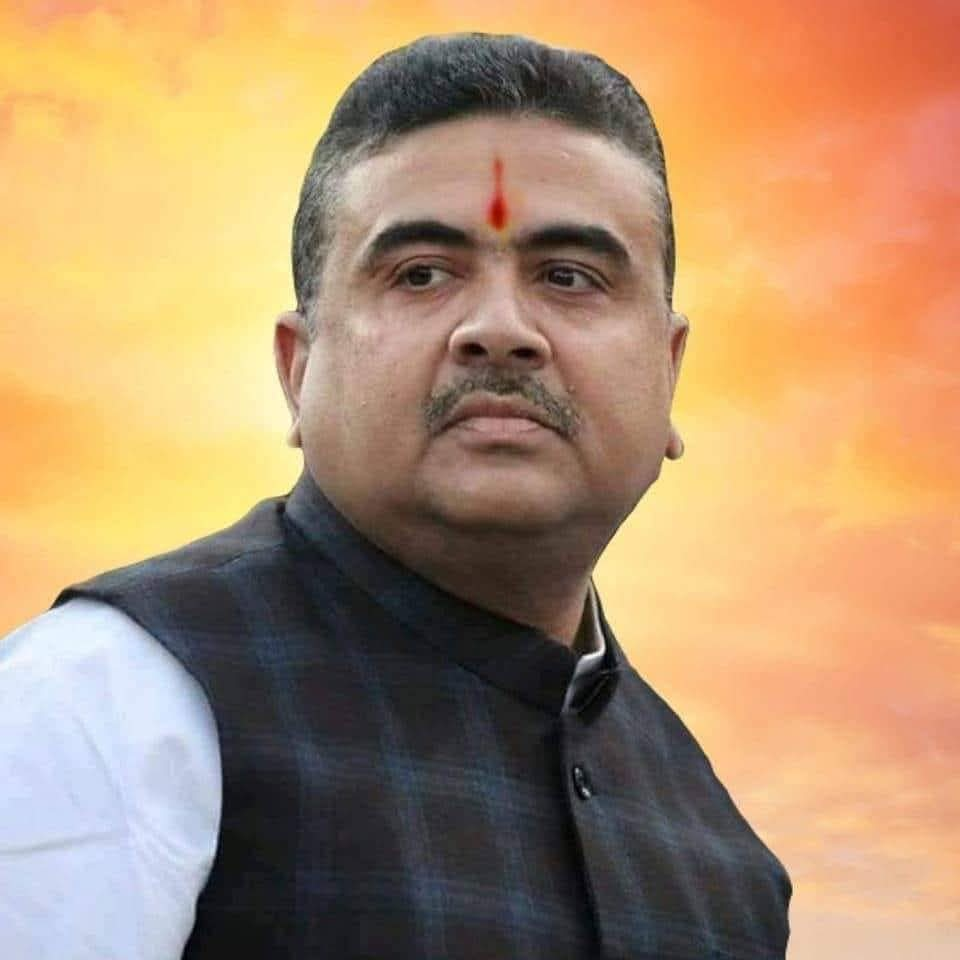
West Bengal Chief Minister Suvendu Adhikari on Thursday announced the launch of the West Bengal Investment Promotion Policy, 2026, describing it as the start of a new phase in the state’s industrialization, investment attraction, and employment generation.
In a post on his official Facebook page, Adhikari said the policy aims to build an industry-friendly environment, draw domestic and foreign investment, and create large-scale employment. “Prioritizing employment, balanced industrial development in every district, and ensuring transparent and time-bound administrative services for investors are the main goals of this policy,” he wrote.
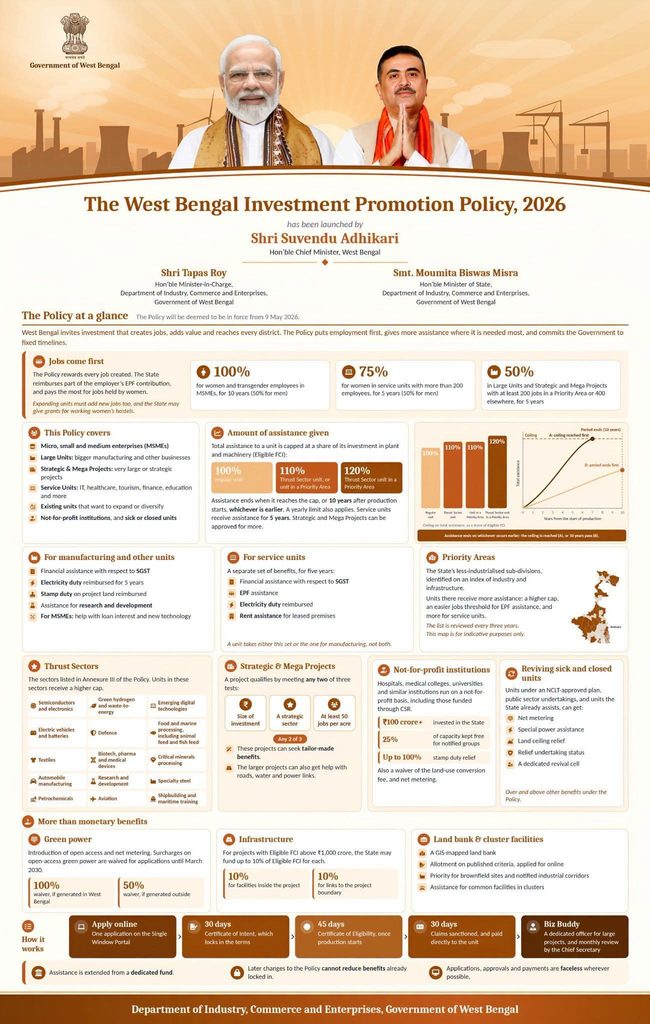
The policy, which has been in force since May 9, places job creation at the centre of incentives. Eligible MSMEs will receive 100% reimbursement of the employer’s EPF contribution for women and transgender workers for 10 years, compared with 50% for male employees. Service-sector units employing more than 200 people will get 75% reimbursement for women and 50% for men for five years.
Large units and mega projects creating at least 200 jobs in priority areas (or 400 elsewhere) qualify for 50% EPF reimbursement for five years. The policy also provides grants for working women’s hostels.
Financial assistance on eligible fixed capital investment in plant and machinery is capped at 100% for ordinary units, 110% for units in thrust sectors or priority areas, and 120% for thrust-sector units located in priority areas. Assistance is disbursed after commercial production begins and ends after 10 years or once the ceiling is reached, whichever is earlier.
Thrust sectors identified for special support include semiconductors and electronics, green hydrogen, electric vehicles and batteries, defence manufacturing, biotechnology, pharmaceuticals and medical devices, textiles, food processing, specialty steel, petrochemicals, and aviation-related activities. The policy also encourages environment-friendly and renewable-energy-based industries, including a waiver of open-access surcharges on renewable power until March 2030.
To improve ease of doing business, the policy mandates a single-window portal with fixed timelines: Certificate of Intent within 30 days, Certificate of Eligibility within 45 days of production start, and incentive payments within 30 days of sanction. Applications, approvals, and payments will be largely faceless, with dedicated officers for large projects and monthly reviews by the chief secretary.
On land, Adhikari said the government will neither follow the Left Front’s earlier approach of forcible acquisition nor the previous TMC government’s model of leaving industries to acquire land on their own. Instead, it will create land banks through direct purchase and land pooling, while requiring production to begin within three years of land allocation.
The policy covers MSMEs, large and mega projects, strategic sectors, and service industries such as IT, healthcare, tourism, finance, and education. It also includes provisions for reviving sick and closed units, R&D support, SGST-linked assistance, electricity-duty reimbursement, and stamp-duty relief. Priority areas (identified by industrial and infrastructure indicators) will receive enhanced benefits and will be reviewed every three years.
Adhikari reiterated the government’s commitment to industrial investment, employment growth, and building a prosperous, self-reliant West Bengal. The announcement follows cabinet approval of the policy draft earlier and comes roughly six months after the BJP government took office in the state.