


The National Board of Revenue (NBR) has ordered the freezing of bank accounts belonging to 204 individuals and institutions—including former ministers, MPs, political leaders, and major businessmen—over allegations of financing the RMG workers’ movement.
On Thursday (5 November), the agency sent instructions to banks across the country.
Named figures include Tipu Munshi (founder and managing director of Cipal Group and former commerce minister), Salman F. Rahman (owner of Beximco Group), Salam Murshedy (managing director of Envoy Group and former MP), Shahriar Alam (owner of Renaissance Group and former state minister for foreign affairs), Nasrul Hamid Bipu (owner of Hamid Group and former state minister for power and energy), Tajul Islam (founder of Fabian Group and former local government minister), and several other industrialists and former officials.
NBR officials said the freezes were based on intelligence information linking them to alleged financing of the unrest. The full list and detailed allegations have not been released.
Context of the unrest and government response
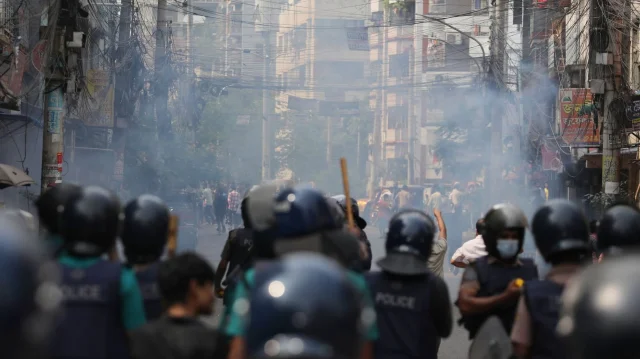
The account freezes come amid ongoing protests by ready-made garment (RMG) workers demanding a minimum monthly wage increase from Tk 12,500 to Tk 30,000, along with an end to blacklisting and arbitrary dismissals. The protests have forced hundreds of factories to shut, disrupted the sector that accounts for the bulk of Bangladesh’s export earnings, and involved road blockades and clashes in Gazipur, Mirpur, Savar, Ashulia, and Narayanganj.
The government formed a six-member minimum wage board around 1 November and held its first meeting on 4 November. The board agreed that a revised pay structure would take effect from December, with workers receiving increased salaries from January. Despite this announcement, protests continued into a fifth day, with fresh clashes, factory closures, and road blockades. Reports indicated the government appeared uneasy that the wage board announcement had failed to quell the unrest.
Home Minister Salahuddin Ahmad described the violence as “a calculated act of political violence,” a conspiracy, and an anti-state effort exploiting ordinary workers to destabilise the country. He stated that genuine garment workers had no outstanding demands and that attacks, arson, and vandalism were being carried out by outsiders posing as protesters. The minister specifically alleged that some garment factory owners, along with former MPs, ministers, and state ministers from the previous Awami League government, were driving the unrest for political ends.
Authorities have also pointed to “mafia groups,” reactionary forces, and possible external instigation. Arrests have included people police identified as Awami League affiliates.
Police used tear gas, sound grenades, batons, and in some cases rubber bullets to disperse crowds. Clashes left dozens injured (including workers, police, and journalists).
One 21-year-old garment worker, Toufiq Sheikh, died after being beaten while filming unrest in Gazipur. Human rights groups have raised concerns about arbitrary arrests, torture allegations, and excessive force.
Police have filed cases naming thousands of mostly unidentified suspects in connection with vandalism and assaults. BNP-affiliated activists have also been reported mobilising with sticks in some areas, claiming to prevent sabotage, with workers in at least one incident (Narayanganj) alleging assault by local BNP leaders.