


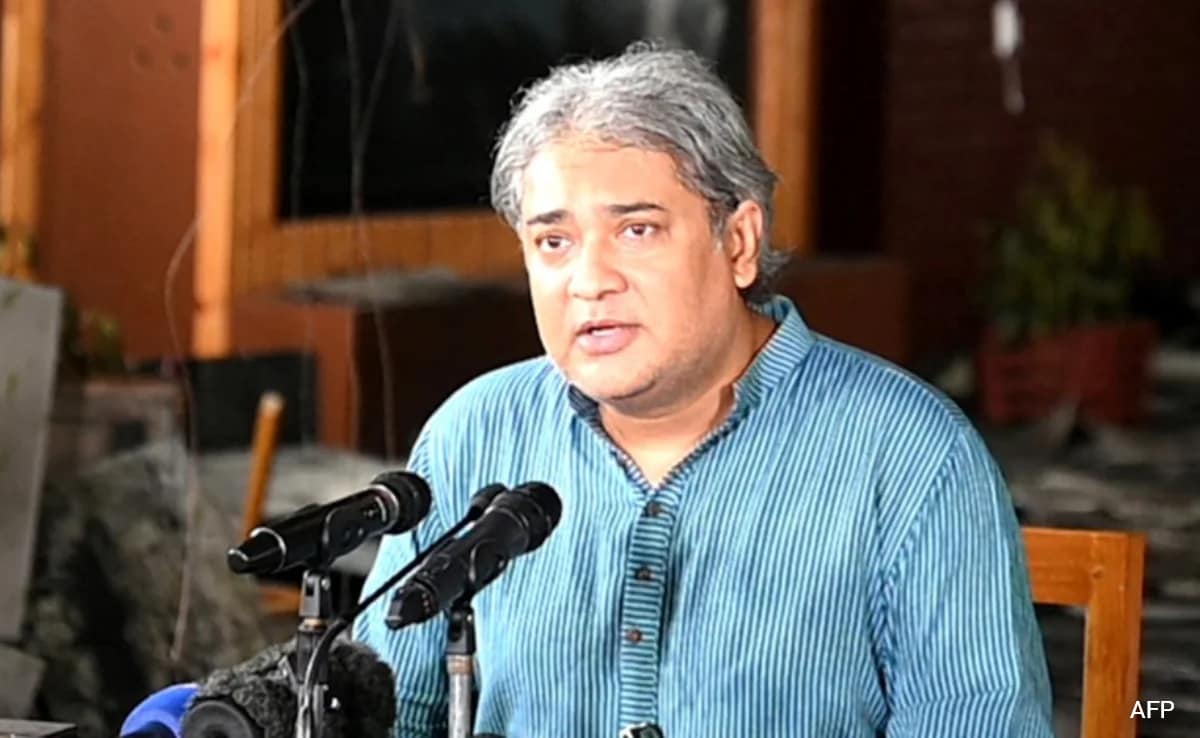
Awami League leader and ormer State Minister Mohammad A Arafat has sharply criticized State Minister for Foreign Affairs Humaiun Kobir’s remarks ruling out any passport or travel pass for former Prime Minister Sheikh Hasina.
Arafat that the Bangladesh-India prisoner exchange (extradition) treaty cannot be used to force her return.
In a Facebook post on Thursday, Arafat dismissed the government’s reliance on the bilateral extradition agreement as an attempt to “fool the people of Bangladesh.” He wrote that the treaty does not apply to Sheikh Hasina or any political leader, stating that “according to the terms of the agreement, it is not possible.”
“India will never hand over even a minor Awami League leader, let alone Sheikh Hasina, under this treaty,” Arafat asserted. He noted that Hasina is currently residing in India under presidential protocol and challenged the government: if she herself wants to return, “if you have the guts, issue a travel pass.”
Kobir, speaking to reporters after seeing off a Chinese delegation at Hazrat Shahjalal International Airport earlier on Thursday, had said Bangladesh would seek Hasina’s return solely through the existing extradition treaty. He described her as a “fugitive and a terrorist” responsible for the deaths of thousands during the 2024 uprising and ruled out issuing any regular passport or travel document. “She is not someone coming to visit her in-laws in Rangpur, for whom we would issue a passport,” Kobir said, adding that judicial warrants and the treaty provided the necessary legal framework for her handover.
Also Read: No travel pass for Hasina’s return; she must be extradited, says Humaiun Kobir
Arafat drew a pointed comparison with the current political leadership. He recalled that when BNP leader Tarique Rahman (now Prime Minister) was a fugitive accused living in London, the previous government had sought his return from Britain, which refused. “If your leader Tarique had asked for a travel pass to return to Bangladesh then, we would have given it immediately,” Arafat wrote. “But he did not have the courage to return. Now Sheikh Hasina wants to return, but you do not have the courage to issue her a travel pass.”
The exchange comes amid renewed public statements by Hasina that she intends to return to Bangladesh in December 2026, despite a death sentence handed down in absentia by the International Crimes Tribunal in 2025 over the July-August 2024 crackdown. She has repeatedly said she is prepared to face arrest or worse, describing the return as a responsibility to her people rather than a bid for power. Her passport has been cancelled by Bangladeshi authorities, leaving the practical mechanism of any voluntary return in question.
The 2013 Bangladesh-India extradition treaty includes a political-offence exception, though it excludes certain serious crimes such as murder. Legal and political analysts have long noted that India retains significant discretion, particularly if it views charges as politically motivated or not made in good faith. Dhaka has repeatedly sought Hasina’s extradition through note verbals – not through proper channels with detailed court verdicts and related case documents, while New Delhi has stated that the request is under examination through legal processes, with no timeline set.