


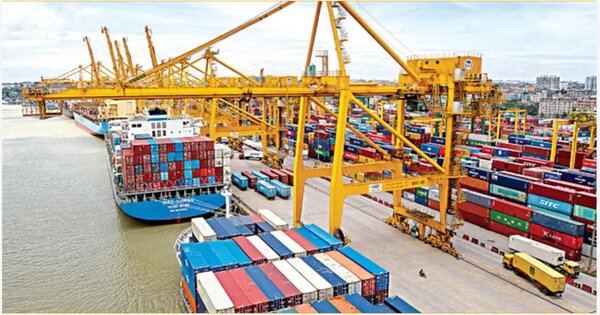
The picture of sluggish business and trade in the country is reflected in port and customs statistics. In the first three months of the current fiscal year, container handling at Chittagong Port fell by nearly 7 percent compared to the same period of the previous fiscal year.
At the same time, the volume of dutiable imported goods at Chittagong Custom House in October declined by about 17.6 percent year-on-year.
Industrial entrepreneurs say that high inflation is reducing people’s purchasing power and market demand, while fuel shortages, supply chain instability, and higher import costs are putting pressure on industry and business.
There is also concern about the law-and-order situation. According to them, if this contraction in production and consumption continues for long, pressure on investment and employment may increase further. To manage the situation, they are emphasizing forecast-based planning that takes into account fuel and food stocks, imports, and foreign exchange demand.
Analysis of data from the Chittagong Port Authority (CPA) shows that monthly container handling at the port has been continuously declining since the beginning of the current fiscal year (2026-27). In the first month of the fiscal year, July, 298,601 TEU containers were handled; this dropped to 285,424 TEU in August. In September, handling fell further to 279,253 TEU. Not only on a monthly basis, overall container handling at the port also declined compared to the same period of the previous fiscal year.
According to CPA data, a total of 863,278 TEU containers were handled at Chittagong Port in the first three months of the current fiscal year, which is about 7 percent less than in the same period of the 2025-26 fiscal year.
A downward trend is also visible in the import statistics of Chittagong Custom House under the National Board of Revenue (NBR). According to the agency’s data, in October this year, 7.549 million tons of goods imported through Chittagong Port were assessed for duty, valued at Tk 409,110 crore. In the same month last year, the volume of dutiable goods was 9.165 million tons, valued at Tk 457,270 crore. Thus, over a one-year period, the volume of dutiable goods fell by about 17.6 percent and the value by 10.5 percent.
On this matter, Dr. Fahmida Khatun, Honorary Fellow of the Centre for Policy Dialogue (CPD), told Bonik Barta: “We are, so to speak, in a recession. The economy is in a kind of stagnation. On one hand, the growth rate is slow; on the other, inflation is high. Investment and employment are low, and real income is under pressure. The growth of the wage index is lower than the inflation rate. Overall, the economy is going through a crisis situation. In some areas, the situation is even moving in a negative direction.”
Citing the slowdown in economic activities as one reason behind the decline in container handling and imports at Chittagong Port, she said: “Among imports, there are essential goods as well as capital machinery and intermediate goods. Import of capital machinery indicates new investment or expansion of existing industries. Similarly, import of intermediate goods is related to production activities. A decline in the import of these goods means there is no momentum in new investment and production expansion.”
Dr. Fahmida Khatun also sees the downward trend in private sector credit growth as a sign of deteriorating investment conditions. She said: “Private sector credit growth has declined further. That is, indications of slowdown in investment and economic activities are visible in various indicators. Combining all indicators, it can be said that the economy is heading toward recession.”
Along with the annual accounts of Chittagong Port, a large drop in dutiable goods imports is also seen in the month-on-month comparison. In September, 9.083 million tons of goods were assessed for duty at Chittagong Custom House, valued at Tk 486,230 crore. In October, this fell to 7.549 million tons, and the dutiable value dropped to Tk 409,110 crore. Thus, within one month, the volume of dutiable goods declined by about 16.9 percent and the value by 15.9 percent.
In this regard, Chittagong Port Authority Secretary Syed Refayet Hamim told Bonik Barta: “Due to various measures taken by the authority, there has been momentum in the handling of import-export goods at the port. However, whether imports and exports increase or decrease in the country mainly depends on the commercial activities and decisions of businessmen.”
Currently, four seagoing container terminals are operating at Chittagong Port. While container handling has increased somewhat at PCT and NCT, there has been a significant decline at CCT and the General Cargo Berth (GCB). On a terminal-wise basis, CCT handled 113,000 TEU containers in the first three months of the last fiscal year. In the same period of the current fiscal year, it fell to 88,504 TEU. That is, handling declined by 24,496 TEU or about 22 percent in one year.
The decline is even greater at GCB. In the first three months of the last fiscal year, 313,914 TEU containers were handled here. In the same period of the current fiscal year, it dropped to 224,949 TEU. Thus, handling declined by 88,965 TEU or about 28 percent.
Businessmen believe that stagnation in new investment and uncertainty in industrial expansion may be contributing to the decline in container handling at the port and the volume of dutiable import goods at customs. According to them, due to uncertainty in fuel supply and the gas-electricity crisis, entrepreneurs are unable to decide on setting up new factories or expanding existing businesses.
In many cases, even after creating production infrastructure, the necessary fuel connections are not available. Especially in gas-dependent industries, running production on alternative fuel is expensive. As a result, entrepreneurs are taking a cautious stance on new investment and industrial expansion, which may also affect the demand for industrial raw materials and machinery imports.
On this, Metropolitan Chamber of Commerce and Industry (MCCI) President Kamran T. Rahman told Bonik Barta: “Everyone is in a state of fear. Investment is not happening. Entrepreneurs are currently in a wait-and-see position. They cannot decide whether to go for new expansion, build new factories, or make some changes in business.”
Related parties say that the picture of private sector slowdown is also reflected in bank credit growth. According to Bangladesh Bank data, private sector credit growth fell to just 4.17 percent in September this year, the lowest in the country’s history. To increase credit flow in this sector, the central bank has announced an incentive package of Tk 60,000 crore. However, eligible entrepreneurs are not available to take these low-interest loans.
In this situation, Bangladesh Bank Governor Md. Mostakur Rahman held a meeting yesterday with leaders of the Bangladesh Association of Banks (BAB), the organization of private bank entrepreneurs, and the Association of Bankers, Bangladesh (ABB), the organization of bank executives. The meeting, which started in the evening at the central bank, continued until 8:30 pm.
One Bank PLC Managing Director Muhit Rahman, who participated in the meeting, told Bonik Barta: “Along with reviewing the overall situation of the country’s economy, there was a detailed discussion on the implementation of the incentive packages. Private sector credit growth has fallen to 4.17 percent. There was discussion on how to increase credit flow in the current situation. The governor spoke sincerely with the leaders of BAB and ABB about the problems. He also gave several guidelines to advance the implementation of the incentive packages.”
Industrial entrepreneurs believe there are multiple reasons behind the downward trend in import activities reflected in port and customs statistics. According to them, the war in the Middle East has disrupted the international supply system and also increased the cost of importing goods. On the other hand, high inflation has reduced consumption and demand in the domestic market, shrinking the need for imports.
Meghna Group (MGI) Chairman Mostafa Kamal told Bonik Barta: “Even though inflation and the cost of living have increased, income is not rising at the same rate, so consumption is decreasing. Previously, a person who bought one kilogram of goods now buys 700-800 grams. That is, in many cases, consumption has decreased by 20-30 percent. A major shortfall in fuel and food security is the lack of adequate strategic reserves. Countries like China, India, and Pakistan use such reserves to cope with fluctuations in the international market. Since Bangladesh does not have that, the impact of global instability falls directly on import costs, production, and consumers. Disruption of factory production amid the ongoing instability is also a major concern now.”
Amir Alihussain, Managing Director of BSRM Group, which is at the forefront of the country’s steel sector, believes that the overall pace of the economy has slowed, especially in the last two months.
He told Bonik Barta: “People’s purchasing power has decreased due to high inflation. Although the government has plans for infrastructure development, implementation will take time. Therefore, the possibility of demand increasing in the short term is low. People are now limited to buying essential goods. On the other hand, production costs are rising due to high prices of gas, electricity, and fuel. This is making it difficult to keep industrial factories’ businesses sustainable. If the law-and-order situation does not improve, the crisis will increase further.”
Emphasizing advance planning, he said: “If there is a fear of a future dollar crisis or pressure on foreign exchange, separate planning or a rationing system for importing industrial raw materials, food items, and luxury goods can be considered from now on.” He believes this will avoid the need to suddenly impose major controls on imports and reduce the risk of a big shock to the economy.
Premier Cement Managing Director and Chittagong Chamber President Md. Amirul Haque told Bonik Barta: “No company in the cement sector—local or multinational—is in good shape now. Everyone is struggling to survive.”
Source: Bonik Barta