


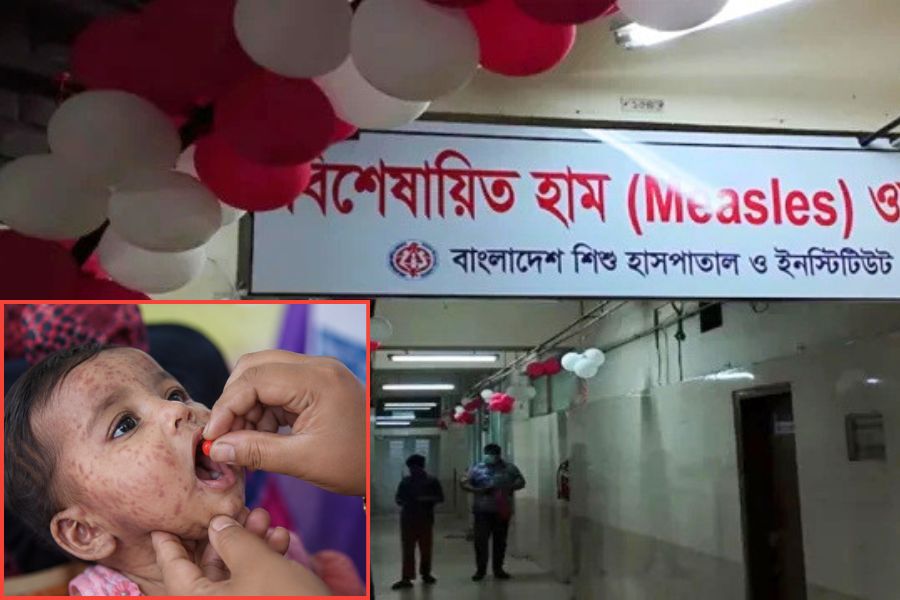
Bangladesh’s Directorate General of Health Services (DGHS) reported on Wednesday that six more children died with measles symptoms in the previous 24 hours, taking the combined toll of confirmed and suspected measles-related child deaths to 1,269 since mid-March.
No laboratory-confirmed measles deaths were recorded in that 24-hour window, but authorities logged 1,402 new infections (1,325 suspected and 77 confirmed).
This is the country’s deadliest measles outbreak in decades and, by suspected case count, the world’s largest this year, according to WHO data and international reporting. Cumulative figures since March 15 show measles-like symptoms in 234,148 people, with 24,150 laboratory-confirmed cases. Hospitals have admitted 208,634 suspected patients, of whom 199,894 have recovered and been discharged.
Sharp contrast with recent years
Before the current surge, Bangladesh had largely controlled measles through its Expanded Programme on Immunization. Official figures recorded only around 100–300 cases annually between 2021 and 2025, with zero or near-zero deaths in recent years (including just 132 cases and no deaths in 2025). Coverage had long hovered near or above the WHO-recommended 95% threshold for herd immunity. The 2026 outbreak represents a dramatic reversal.
Procurement changes under the Yunus interim government
Health officials and independent reporting have pointed to disruptions during the 2024–2025 political transition and specific decisions by the interim government led by Muhammad Yunus as key drivers of the immunity gaps that fueled the explosion in cases and deaths.
For years, Bangladesh procured WHO-approved measles-rubella vaccines through UNICEF and Gavi via a direct international supply mechanism. In September 2025, the Yunus administration shifted part of the procurement to an open-tender system. UNICEF strongly opposed the change.
UNICEF representative in Bangladesh, Rana Flowers, has been quoted saying she repeatedly warned officials, including interim health adviser Nurjahan Begum, that the switch risked disrupting supplies of life-saving vaccines.
The tender process became mired in bureaucratic delays involving fund releases and approvals. Vaccines sat in international warehouses while stocks ran out domestically, producing nationwide shortages. A supplemental measles-rubella campaign planned for 2024 (already postponed due to unrest) was ultimately cancelled. Routine coverage fell sharply—internal figures at one point indicated only about 59% of eligible children received measles vaccination in 2025; later WHO/UNICEF estimates put first-dose coverage at around 90% and second-dose at 86%, both below the level needed to prevent outbreaks.
Current Health Minister Sardar Md Sakhawat Husain has stated in parliament that the open-tender decision, disregard of UNICEF warnings, and resulting administrative complications triggered the vaccine crisis. He and other officials have also cited insufficient attention to routine immunization during the early months of the interim government, when resources were directed toward treating those injured in the July 2024 uprising.
The outbreak is reported to have begun in Rohingya refugee camps near the Myanmar border in early 2026 before spreading nationwide, eventually reaching nearly all of Bangladesh’s 64 districts. Most deaths have occurred among young children, many of them unvaccinated or under-vaccinated, with pneumonia a leading complication. Dhaka Division has recorded the highest number of deaths.
Response and ongoing challenges
After the interim government’s tenure ended and a new elected government took office, authorities reinstated direct procurement through UNICEF, secured emergency supplies with WHO and Gavi support, and launched a large-scale vaccination campaign starting in April 2026 that has administered tens of millions of doses. Despite this, new cases and deaths continue to be reported daily, and hospitals remain under severe pressure.
Public health experts have described the outbreak as a warning about the fragility of immunization systems when procurement mechanisms or coverage drop below critical thresholds. Some have called for a formal national emergency declaration. Independent reviews have also flagged risks of follow-on outbreaks of other vaccine-preventable diseases if gaps are not closed.
The DGHS continues to issue daily updates. While recovery numbers are high among hospitalized patients, the cumulative death toll of 1,269 children—overwhelmingly from a disease that was nearly eliminated—marks the highest casualty figure from measles in Bangladesh in recent memory.