


RMG workers demanding a minimum monthly wage of Tk 30,000 (up from the current Tk 12,500) continued protests for a fourth consecutive day on Wednesday across Dhaka’s Mirpur and industrial areas in Gazipur, Savar-Ashulia, and Narayanganj.
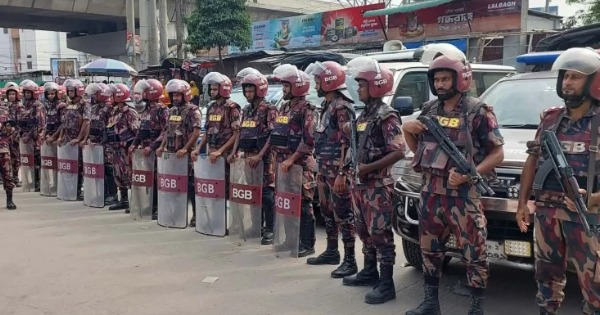
Clashes with police, road and highway blockades, tyre burning, and arson marked the day, while authorities stepped up deployments, including 24 platoons of Border Guard Bangladesh (BGB), since the protesters are agitated after learning about the death of an RMG worker and injuries and filing of cases.
Savar clashes and arson
In Savar’s Hemayetpur (Padmar Mor) and Ulail areas, workers from multiple factories blocked the Dhaka-Aricha Highway from around 9 a.m. Protesters clashed repeatedly with police in chases and counter-chases. Workers set fire to a police vehicle used by Savar Model Thana Officer-in-Charge Saiful Alam.
Reports put the number of injured at 10 to 50, including the OC, several police personnel, journalists (from outlets including 71 TV and Star News), workers, and others. Police responded with tear gas shells, sound grenades, and rubber bullets. Factories in the area declared holidays amid the unrest. Traffic was disrupted for hours before authorities cleared the blockade.
Broader industrial belt unrest
Protests and blockades also hit Gazipur (areas including Nawjor, Bhogra, Kaliakair/Chandra), Ashulia, and Narayanganj (including Fatullah). Workers blocked sections of the Dhaka-Tangail and Dhaka-Mymensingh highways earlier in the week, burned tyres and debris, and clashed with police.
In Mirpur, earlier clashes involved brick-throwing, tear gas, and sound grenades near Mirpur-10/11, with metro stations temporarily closed. Hundreds of factories (reports cited 300–700+ at different points, affecting hundreds of thousands of workers) suspended operations or declared holidays to avoid further violence, according to BGMEA figures.
Police actions included baton charges, tear gas, sound grenades, and arrests. Authorities reported detaining dozens (including a cumulative figure of around 68 earlier in the week), with many described as non-workers or members of the banned Awami League and its affiliates allegedly infiltrating protests to incite sabotage.
Cases were filed against unidentified protesters for arson, vandalism, and attacks on police vehicles and personnel. Officers reported dozens injured since the protests began.
BGB deployment
On Wednesday, BGB announced the deployment of 24 platoons across key industrial zones to maintain order, ensure worker and public safety, and support normal factory operations: five in Savar (Hemayetpur, Ashulia, Baipail), 13 in Gazipur (Chourasta, Bhogra Bypass, Porabari, Masterbari, Telipara, Safipur, Chandra, Kaliakair), and six in Narayanganj (DC office area, Chashara, Jhalkuri Bridge, BSCIC, Kanchpur Bridge).
Earlier in the week, around 10–12 platoons had been deployed. BGB is coordinating with police, using drones and body-worn cameras in some areas.
Role of BNP activists
BNP (ruling party) activists, including from Jubo Dal and Chhatra Dal, have taken positions in protest areas, often carrying sticks, conducting motorcycle patrols, and assisting in securing police stations and highways. They have described their presence as resisting “miscreants” or outsiders posing as workers and preventing sabotage. Reports note them joining police efforts to clear blockades or protect stations, with some accounts of activists confronting or beating protesters.
BNP leaders, including local MPs, have been present at sites in places like Narayanganj and Gazipur. The party has alleged that elements linked to the previous Awami League government and other forces are exploiting workers’ grievances to destabilise the sector and the government. Home Minister Salahuddin Ahmed has pointed to political motives behind efforts to disrupt production.
Workers say the current wage is inadequate amid rising living costs and demand an immediate hike to Tk 30,000, plus action on dismissals, blacklisting, and outstanding dues. The government has formed a Minimum Wage Board and directed it to finalise a new pay structure by December, while urging workers to return to factories and promising security. Industry groups have warned of lost orders and production disruptions in Bangladesh’s vital RMG sector, which accounts for the bulk of exports.
Situation reports as of Wednesday afternoon described ongoing tensions in some spots with heavy security presence, while traffic had resumed in cleared areas.