


Nearly half of the country’s families are unable to cover household expenses with their income. Due to rising prices of daily necessities, stagnation in employment, and a decline in real wages, they are having to take loans to meet living costs.
The crisis is more severe in rural areas than in urban ones. Some 47.42% of the country’s total households were forced to take loans in the past year to cover essential daily expenses.
This picture has emerged from the Bangladesh Bureau of Statistics (BBS) ‘Living Standard Survey 2025’. At the request of the National Pay Commission, the Poverty and Livelihood Statistics Cell of BBS conducted the survey. Interviews were held with three thousand households in rural areas, urban areas, and city corporation areas of the country from September 14 to 18 last year.
According to the survey, 51.91% of rural households took loans in the past year to meet essential expenses. In urban areas, the rate is 40.19%, and in city corporation areas it is 32.11%. That means rural households are under greater financial pressure compared to urban ones.
Survey data shows that at the national level, the average monthly income per household is 33,513 taka. In contrast, the average monthly expenditure is 35,311 taka. That is, there is a monthly deficit of 1,798 taka between average income and expenditure. To cover this shortfall, many families have to break into savings or rely on loans.
There are also significant differences in expenditure by region. In city corporation areas, the average monthly expenditure per household is 46,778 taka. In urban areas it is 37,344 taka, and in rural areas 32,532 taka. At the national level, nearly half of monthly expenditure goes to food and half to non-food items. However, the pressure of food expenditure is higher in rural areas. On the other hand, in city corporation areas, 56.7% of total expenditure goes to non-food items.
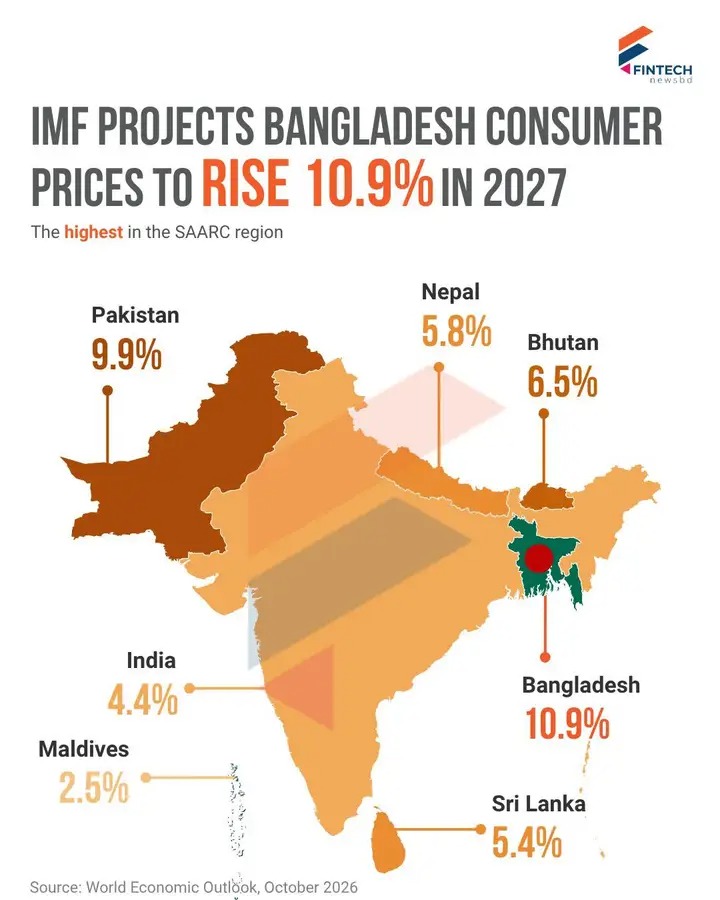
Economists say that since the pandemic, weak economic conditions have led to slower growth, rising inflation, and stagnant employment. People’s real wages are declining. As a result, even though income is falling, rising expenses are forcing many families to take loans. The standard of living is not improving; rather, the increase in prices of daily essentials is the cause of higher expenditure. With fewer income opportunities in rural areas, the debt burden is higher. The benefits of remittance income are also reaching only a limited number of people.
Meanwhile, because the inflation rate is higher than wage growth, people’s purchasing power is decreasing. According to the BBS wage rate index, the wage growth rate fell to 7.9% last September, compared to 8.05% the previous month. According to government data, the inflation rate was higher than the wage growth rate for 56 consecutive months up to last September.
The issue of economic pressure also came up in the World Bank’s Bangladesh Development Update published on October 6. The report said that a shortfall in labor demand and prolonged high inflation are damaging people’s living standards. As a result, the poverty rate in the country could rise from 18.7% in 2022 to an estimated 22.5% in 2026.