


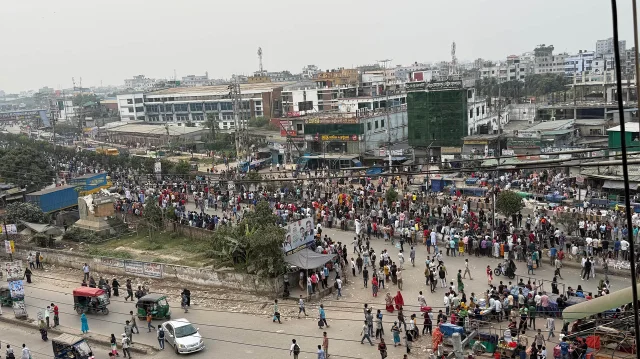
Protests by Bangladesh’s ready-made garment (RMG) workers demanding a sharp rise in the minimum wage entered a fourth day on Tuesday, with police deploying tear gas and other measures to disperse demonstrators in industrial areas around the capital.
The unrest has forced hundreds of factories to suspend operations, disrupting the country’s vital export sector.
Workers are seeking to raise the monthly minimum wage from 12,500 taka (roughly $100–102) to 30,000 taka (about $240–245), citing soaring inflation and living costs for food, housing, transport, and healthcare. The RMG industry employs around four million people—many of them women—and accounts for more than 80 percent of Bangladesh’s export earnings, supplying major global brands.
Authorities formed a six-member wage board on November 1 to review the demands, but demonstrations continued across hubs, including Ashulia, Gazipur, Mirpur, and areas of Dhaka, with reports of road blockades, clashes, injuries, arrests, and some property damage.
Sajeeb Wazed Joy, son of former Prime Minister Sheikh Hasina and a former ICT adviser, has publicly criticized the government’s handling of the protests in a series of statements.
He described the response as a “brutal crackdown,” stating that “disturbing scenes from Mirpur and Gazipur expose the brutal crackdown on garment workers under the BNP government.”
Joy emphasized that “the very workers sustaining Bangladesh’s export economy are being beaten, intimidated and denied their right to fair wages and dignity. Workers are not enemies of the state. They are the backbone of the nation. Stop the repression. Respect workers’ rights.”
In other comments, he accused authorities and BNP cadres of branding underpaid workers as Awami League supporters and unleashing violence instead of addressing legitimate wage demands.
He highlighted the human cost, noting that “your shirt was made by her” and describing the treatment of women workers demanding a living wage, while urging global brands and the international community not to remain silent.
He has used hashtags including #WhoMakesYourClothes and #RMGWorkersProtest.
Former State Minister for Information Mohammad A. Arafat added his voice, stating: “The right to protest does not belong only to wealthy countries. From Europe to India, people demand relief from rising costs. Bangladesh’s workers deserve no less. When a struggle for bread is answered with violence, solidarity is a duty. Stand with them.” He also used the hashtag #WhoMakesYourClothes.
Arafat has similarly argued that rising living costs justify protests elsewhere and that Bangladeshi workers should not face violence for seeking relief from hunger and inadequate pay.
The government has urged workers to return to factories while the wage board conducts its review. Industry groups have warned of potential export disruptions if the unrest persists. The developments occur against the backdrop of Bangladesh’s post-2024 political transition, with the RMG sector remaining central to the economy.
The situation continues to evolve, with both sides facing pressure over wages, order, and the rights of the workforce that underpins much of the country’s export income.