


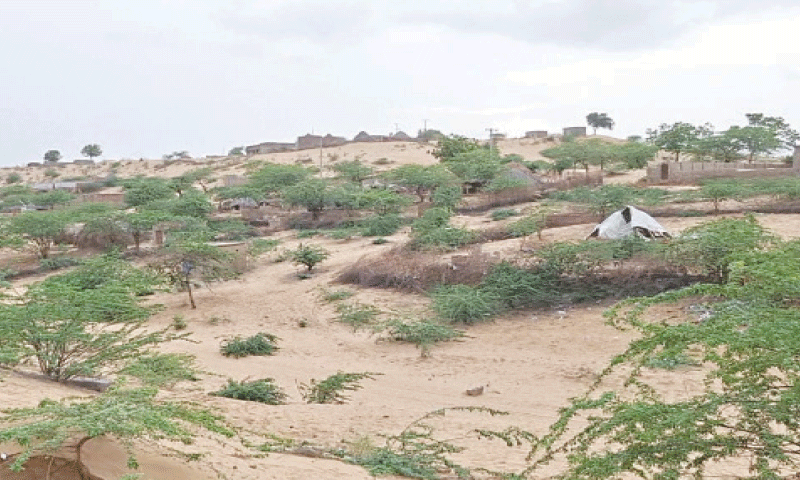
KARACHI: Sindh Chief Minister Syed Murad Ali Shah on Saturday declared Tharparkar a drought-affected district and directed relevant departments to launch relief operations without delay.
Presiding over a meeting at CM House, Shah was briefed on drought-like conditions across all seven talukas of the district. The meeting was attended by MNA Dr Mahesh Malani; MPAs Dost Muhammad Rahimoon, Qasim Soomro, Faqeer Sher Muhammad Bilalani and Arbab Lutfullah; Chief Secretary Asif Hyder Shah; Senior Member of the Board of Revenue Khalid Hyder Shah; and Mirpurkhas Commissioner Shahmir Bhutto.
According to a statement issued by the CM House, the briefing confirmed that 85 to 90 per cent of cultivated crops had been destroyed or rendered unproductive. The agriculture extension department estimated losses at around 90 per cent, while reports from assistant commissioners and mukhtiarkars indicated that only 10 to 15 per cent of crops had survived.
Shah expressed serious concern over the impact of inadequate and poorly distributed rainfall on agriculture, livestock and livelihoods in the desert district. He noted that livestock remains a major source of income for local communities and stressed the need for immediate intervention to protect it.
He directed the chief secretary to ensure that all non-functional reverse osmosis (RO) plants are repaired and restored on a priority basis. Authorities were also instructed to identify faults in existing water supply sources and restore them to full capacity so communities have uninterrupted access to drinking water.
Additionally, Shah ordered an urgent assessment of the feasibility of laying a dedicated water supply line from Naukot to Mithi to provide a sustainable and reliable supply. He said all technical and administrative requirements should be examined promptly to develop a long-term solution to the area’s water shortage.
The chief minister further emphasised the need for immediate arrangements to address the fodder shortage and protect livestock. He directed concerned departments to coordinate efforts and ensure relief reaches affected areas without delay.
The briefing highlighted uneven monsoon rainfall this year. While seasonal totals ranged from 181 mm to 273 mm across the seven talukas, September rainfall was particularly low—between 1 mm and 36 mm—causing crops and natural grass to dry out before maturing.
Shah said the provincial government would stand by the people of Tharparkar during this difficult period and instructed the administration to remain vigilant, closely monitor the situation, and ensure no affected community is left without essential support.