


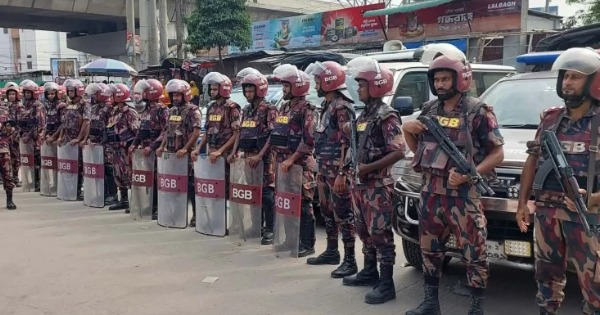
Border Guard Bangladesh (BGB) has deployed 33 platoons across industrial zones in Dhaka, Gazipur and Narayanganj to maintain security and ensure a normal working environment, the paramilitary force confirmed in a statement on Sunday morning.
The deployment follows a week of widespread protests by ready-made garment (RMG) workers demanding a minimum monthly wage of Tk 30,000 (up from the current Tk 12,500), along with payment of arrears, an end to blacklisting and other demands. The unrest, which began around 31 October, led to road blockades, factory closures (hundreds of units temporarily shuttered), clashes with police, arson and vandalism in areas including Savar, Ashulia, Mirpur, Gazipur and Narayanganj.
Casualty and legal figures from the protests (late October to early November):
- Deaths: At least 1 (Toufiq Hossain / Toufique Sheikh, a worker at Laila Styles Limited in Gazipur, critically injured on 2 November and died the next day while under treatment in Dhaka).
- Injuries: Over 210 people (including workers, police, BGB personnel and journalists).
- Arrests: At least 216 (including labour leaders and others).
- Cases: 18 criminal cases filed, naming approximately 19,521 people as accused (many unidentified).
These figures are based on media reports and monitoring by JusticeMakers Bangladesh in France (JMBF) up to 5–6 November. Earlier partial reports cited around 100 arrests by 3 November and multiple cases (including under the Anti-Terrorism Act) with thousands of named or unidentified accused.
BGB members are stationed in:
- Dhaka: Savar, Ashulia and Mirpur
- Narayanganj: Shibu Market, Jalkuri, BSCIC Industrial Area, Chashara, Kanchpur and Shimrail
- Gazipur: Chandra, Palli Bidyut, Mouchak, Ambag, Kashimpur, Nawjor, Bhogra Bypass, Gacha and Salna
The BGB headquarters monitoring cell is tracking field operations and live footage around the clock using technology-based systems. Personnel remain on alert and are coordinating with local administration and police. The force said the deployment and surveillance will continue to protect life and property, maintain overall security and ensure a safe, normal working environment in the industrial areas.
A wage board has been formed and held its first meeting; it announced that a revised wage structure would take effect from December (with payments reflecting it from January). Tensions have eased somewhat, with many workers returning to factories, though some disruptions and demands continue.