


Former state minister Mohammad Ali Arafat has sarcastically claimed that Irene Khan, Bangladesh’s Permanent Representative to the United Nations, “deserves the highest human rights award” for accepting a senior role under the BNP government led by Prime Minister Tarique Rahman.
In an X post on Monday, Arafat pointed to the recent police detention of a woman entrepreneur as evidence of ongoing human rights violations, describing the government as one that came to power through a “one-sided election” and is “violating human rights left and right.”
The post responded to reports that Sathi Akter, owner of Sathi Beauty Parlour in Bhaluka, Mymensingh, was detained by police on the night of October 25 after locals handed her over.

According to multiple local media accounts, Akter had gone live on Facebook expressing frustration over repeated thefts at her business premises and neighboring shops, while also criticizing the BNP government and its activists and expressing regret over her vote. Police took her into custody amid local tensions, with authorities indicating that legal proceedings were underway.
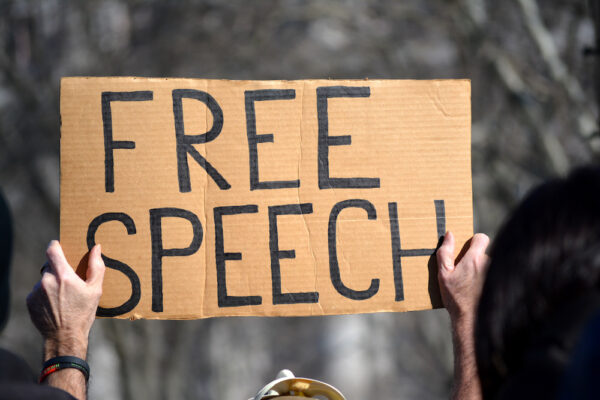
Arafat framed the incident as an example of restricted freedom of expression under the current administration and tagged Khan directly.
Irene Khan, a British-Bangladeshi human rights lawyer who previously served as Secretary General of Amnesty International (2001–2009) and UN Special Rapporteur on freedom of opinion and expression, assumed the UN post in late August 2026 after being appointed by the BNP-led government.
She has a long record of international advocacy, including the Sydney Peace Prize, and has continued public commentary on global issues such as the Rohingya crisis and the situation in Palestine since taking the role. But her selective role with regard to Bangladesh’s crisis after the anti-government movement in 2024 raises serious questions about her neutrality.
Arafat’s criticism arrives against a backdrop of persistent concerns from rights organizations and individual activists about the contraction of civic space since the violent July 2024 uprising that ousted Sheikh Hasina’s Awami League government. That period saw widespread mob violence, attacks on journalists and media offices, and extrajudicial retribution.
Subsequent reports from groups including CIVICUS Monitor, Human Rights Watch, Amnesty International, and PEN International have documented continued patterns of mob violence, assaults on journalists (including by political activists), use of broad cyber and anti-terrorism laws against online critics, and self-censorship.
Freedom House and others have noted that while the interim government under Muhammad Yunus opened some political space, extralegal violence and retribution persisted; under the BNP government that took power after the February 2026 election (from which the Awami League was excluded), observers have highlighted failures to fully reform policing and security agencies, ongoing targeting of critics, and incomplete accountability for past abuses.
Activists have specifically warned that the post-2024 environment has fostered elements of “mobocracy,” with vigilante actions, political score-settling, and pressure on independent expression replacing earlier forms of state repression in some cases.
While the 2026 election was assessed by some international observers as competitive and relatively peaceful compared with prior polls, and the BNP secured a clear majority, critics including Arafat and rights monitors argue that the exclusion of major opposition forces, continued legal restrictions, and incidents such as the detention of citizens for online criticism of the ruling party indicate that space for dissent remains constrained.
Rights bodies continue to call for stronger safeguards on freedom of expression, accountability for violence, and independent oversight mechanisms.