


The Arakan Rohingya Salvation Army (ARSA) has issued a formal statement mourning the death of a Bangladeshi soldier killed during a joint anti-human-trafficking operation in Teknaf and welcoming the rescue of dozens of hostages, including Rohingya refugees.
The statement comes amid ongoing ARSA propaganda efforts and reported expressions of support from segments of Bangladesh’s Islamist networks.
In a two-page statement dated November 7 and released on social media, ARSA expressed “deepest condolences” over the death of Bangladesh Army Sainik Muhammed Titas Sheikh, 27, who was killed on November 5 during the raid in the Rangikhali hills of Teknaf upazila, Cox’s Bazar district.
The group described his death as “deeply regrettable” while he served in an operation against an armed human-trafficking gang and extended sympathy to his family and the Bangladesh Army. It praised the Bangladesh Army, Border Guard Bangladesh (BGB), and Bangladesh Police for the “successful rescue of 51 Bangladeshi nationals and 6 Rohingya refugees from among 120 captives,” calling it a “commendable achievement.”
The statement condemned “armed criminal networks” exploiting both Bangladeshi nationals and Rohingya refugees in the Teknaf hills and refugee camps, urged continued dismantling of such groups, and called for action against cross-border yaba trade that it linked to the Arakan Army (AA). It was signed by Ustad Khalid Junun, identified as Chief of General Staff, on behalf of the Commander-in-Chief.
According to the Inter-Services Public Relations (ISPR) Directorate and Bangladeshi media reports, a joint force from the Army’s 10th Infantry Division, BGB, and police launched the operation around 5 p.m. on Thursday after intelligence indicated that 15–16 armed traffickers were holding roughly 120 Bangladeshi nationals and Rohingya refugees hostage.
Traffickers opened fire as forces approached, triggering a gunfight. Soldier Titas Sheikh, from Laskardia village in Nagarkanda, Faridpur (stationed at the Rangikhali Army Camp with the Bir-1 unit), was shot in the left shoulder/upper chest. He was initially treated at Leda IRC Rohingya Hospital before transfer to the Combined Military Hospital in Ramu, where he was pronounced dead.
Five traffickers were detained and firearms recovered; 57 people were rescued. Titas, whose father is a retired army member and whose brother also serves, was buried with military honors on Friday.
ARSA, a Rohingya armed group that originated in the context of the large refugee camps in Cox’s Bazar (formerly known as Harakah al-Yaqeen or the Faith Movement), has long been accused by Bangladeshi authorities of involvement in violence, extortion, and other criminal activity inside the camps.
Its chief, Ataullah Abu Ammar Jununi (also known as Hafiz Ataullah), was arrested by Bangladesh’s Rapid Action Battalion in Narayanganj in March 2025 and has remained in custody facing multiple cases, including terrorism and murder charges.
Myanmar and other actors have designated ARSA a terrorist organization; the group has been involved in fighting against the Arakan Army in Rakhine State.
Additional context emerged in late October 2026 when ARSA’s public relations channel on X shared a video of a Hefazat-e-Islam leader praising the group. In the clip, the cleric asserted that ARSA is the only organization genuinely fighting for the rights and freedom of the Rohingya people, claimed that the government provides necessary support to the group, and alleged that rival factions engineered Ataullah’s arrest to undermine ARSA and advance their own interests.
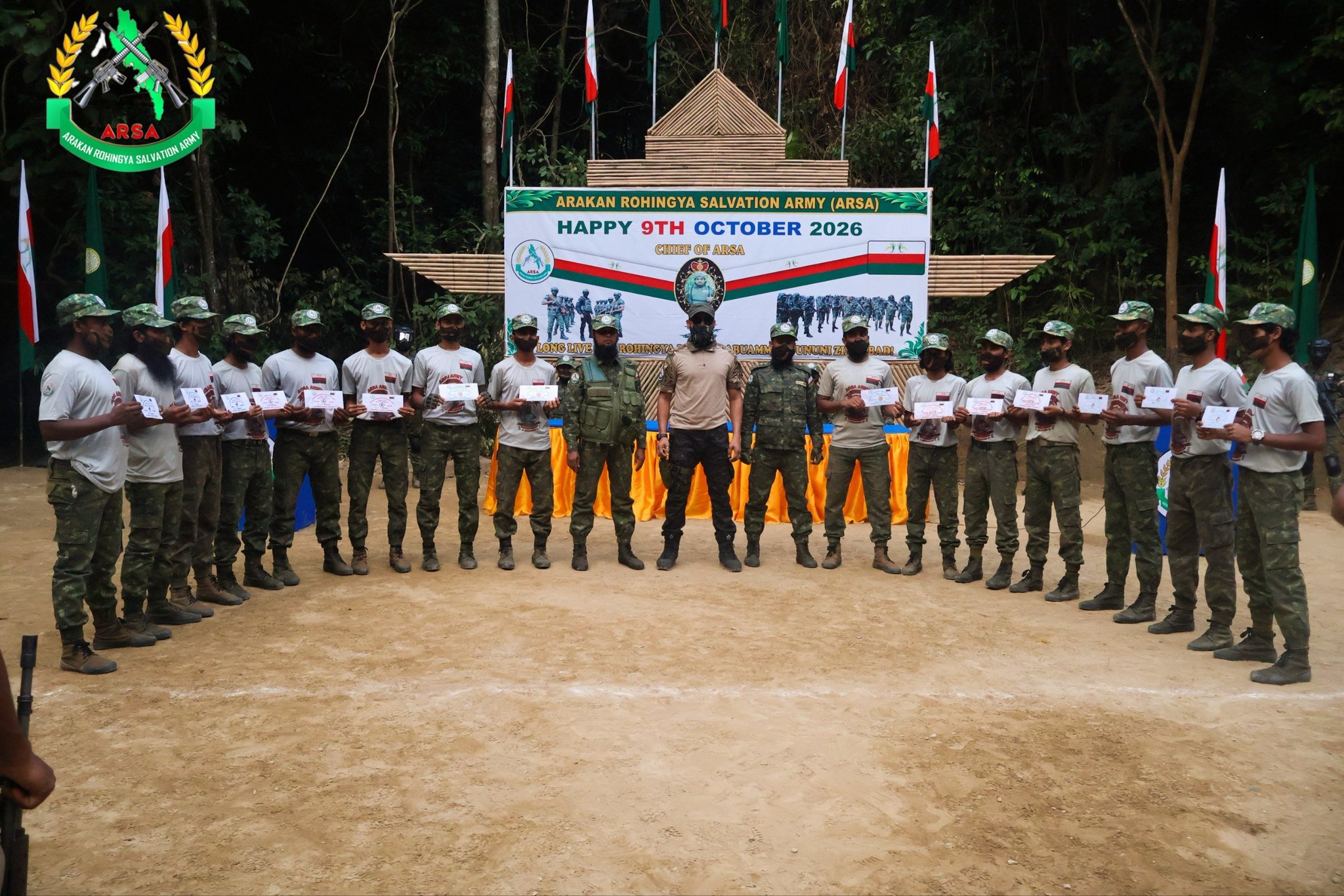
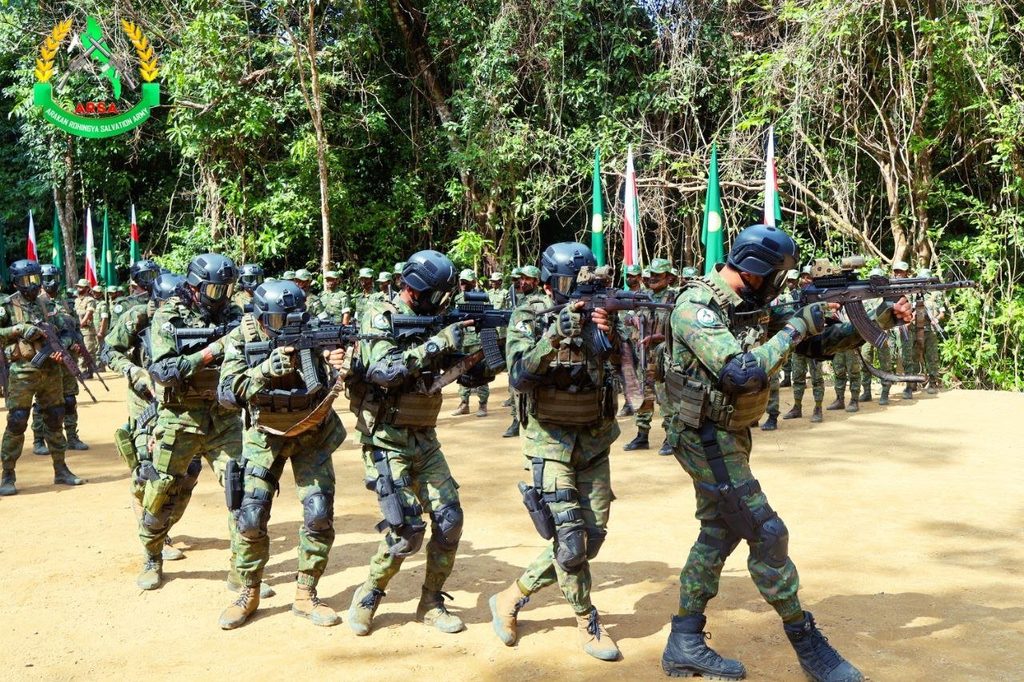
ARSA has also released a multi-part series of videos marking the 10th anniversary of “Rohingya Defence Day” (October 9), commemorating its 2016 attacks on Myanmar border posts; the clips show armed fighters in Arakan participating in speeches, gatherings, and other activities.
Hefazat-e-Islam is a major platform rooted in Bangladesh’s Qawmi madrasa system. In the post-2024 political landscape, its leaders have held high-level meetings with government figures, including Prime Minister Tarique Rahman, and presented demands focused on Islamic education, blasphemy-related laws, recognition of Qawmi degrees, and other issues.
Analysts have long noted overlapping networks between segments of the Qawmi ecosystem and more radical or militant elements, though Hefazat presents itself as a non-political religious platform. Other Rohingya organizations, including the Arakan Rohingya National Organisation (ARNO), issued similar statements of condolence and praise for the Teknaf rescue operation.
The Teknaf incident and ARSA’s statement highlight the complex interplay of armed criminal activity, trafficking networks preying on both local and refugee communities, and the activities of Rohingya armed groups operating in and around the camps. Joint forces have continued follow-up operations in the Rangikhali area.