


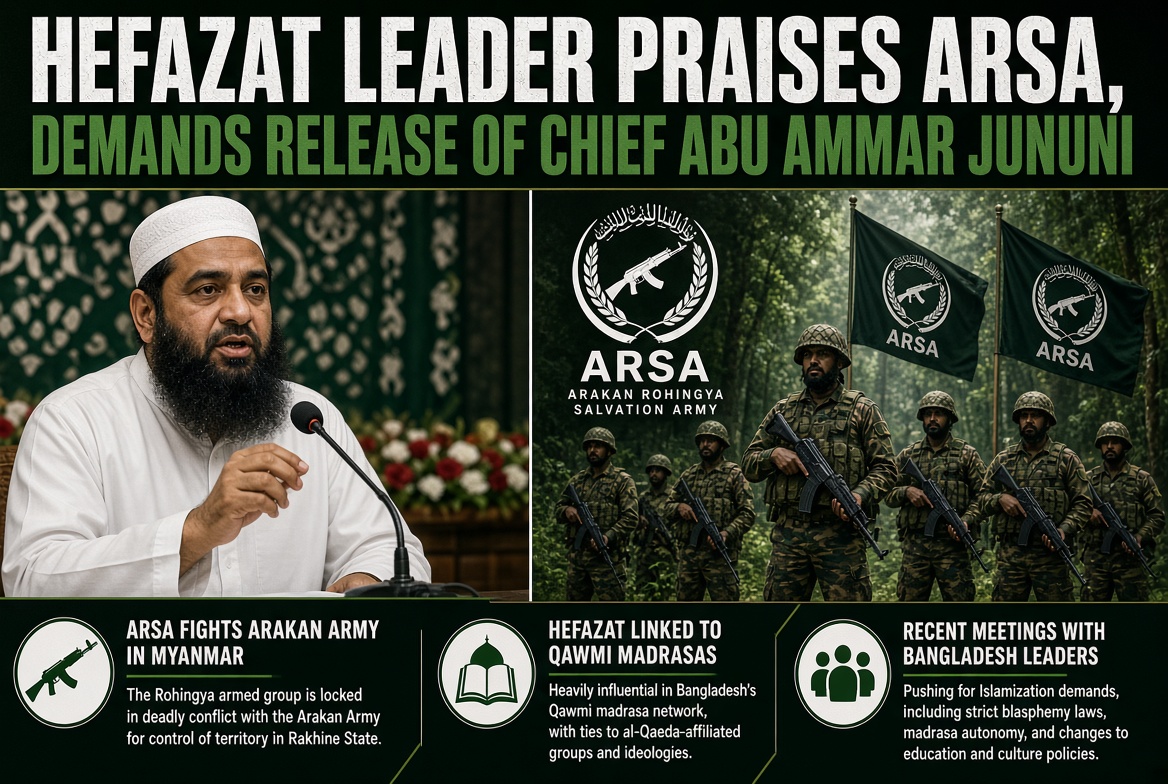
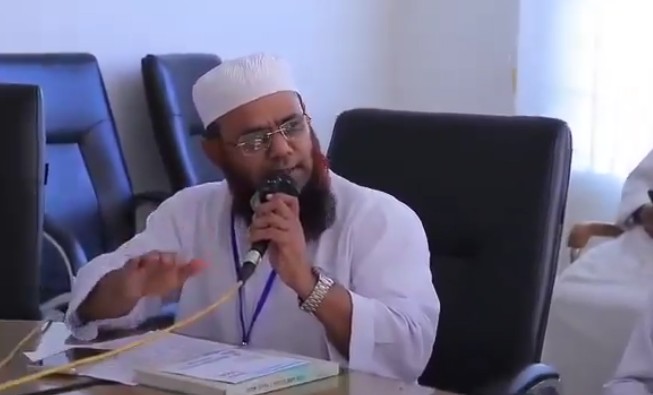
A video circulating on social media, shared by the Arakan Rohingya Salvation Army’s (ARSA) public relations channel, shows a Hefazat-e-Islam leader praising the Rohingya armed group and calling for the release of its commander-in-chief, Hafiz Ataullah (Abu Ammar Jununi). In the clip, the cleric asserts that ARSA is the only organization genuinely fighting for the rights and freedom of the Rohingya people and that the government provides necessary support to the group.
He further alleges that rival factions engineered Ataullah’s arrest by Bangladeshi authorities to undermine the group and advance their own interests.
ARSA, which Myanmar and others designate as a terrorist organization, has been engaged in fighting the Arakan Army—a Buddhist Rakhine separatist force battling Myanmar’s junta. Other Rohingya armed groups active in the conflict and in Bangladesh’s refugee camps include the Rohingya Solidarity Organisation (RSO) and the Arakan Rohingya Army (ARA).
ARSA has released a multi-part series of videos this October marking the 10th anniversary of Rohingya Defence Day (9 October), commemorating its 2016 attacks on Myanmar border posts. The clips show armed fighters in Arakan participating in speeches, gatherings, traditional games, and other commemorative activities.
Qawmi Networks and Militant Overlaps
Hefazat-e-Islam is a platform rooted in Bangladesh’s Qawmi madrasa system. Analysts and security reporting have long noted overlapping networks between segments of this ecosystem and al-Qaeda-linked or inspired militant outfits. Jama’atul Ansar Fil Hindal Sharqiya, a banned group formed around 2017–2019 by former members of Ansar al-Islam, Jama’atul Mujahideen Bangladesh (JMB), and Harkat-ul-Jihad al-Islami Bangladesh, pursued AQIS-style objectives of establishing a caliphate and received training support from groups such as the Kuki-Chin National Front in the Chittagong Hill Tracts.
Ansar al-Islam itself is an AQIS-aligned outfit. ARSA has also operated in and around Rohingya camps in Cox’s Bazar, where Qawmi-linked preaching and recruitment have been reported. While Hefazat presents itself as a non-political religious platform, critics argue that its emphasis on Islamic education, opposition to secular policies, and mobilization networks have provided ideological cover or logistical space for more radical elements.
The resurgence of the Touhidi Janata groups across the country since the 2024 jihadist-army takeover was a brainchild of Hefazat leadership, who are demanding revocation of secularism from the Constitution and fuelling anti-India sentiment while supporting Pakistan- and Afghanistan-like religious rule.
Recent Meetings and Expanding Demands
In recent months, Hefazat leaders have held high-level meetings with Bangladesh’s President Mirza Fakhrul Islam Alamgir, Prime Minister Tarique Rahman, and several ministers to advance a revised agenda. In August 2026, Ameer Allama Shah Muhibullah Babunagari and senior leaders, including Secretary General Sajidur Rahman, presented a nine-point charter to the prime minister at Babunagar Madrasa in Fatikchhari.
Key demands included the highest punishment for insults to Islam and the Prophet, ensuring no law contradicts the Quran and Sunnah, compulsory Islamic education for Muslim students from primary through higher secondary levels, recognition of Qawmi Dawra-e-Hadith degrees as master’s equivalents, declaring Ahmadis non-Muslim, banning Hizb ut-Tahrir, and withdrawing cases filed against Islamic scholars and leaders during the previous Awami League government—cases that critics say often targeted individuals linked to jihadist networks.
An October 2026 delegation led by Hefazat’s organising secretary also met the president, discussing unity, madrasa visits, and cooperation on trade and religious issues. These engagements coincide with broader Hefazat-linked activity, including support for “Kalema” (Islamic declaration of faith) flag campaigns that have appeared on roads and in processions across Bangladesh, with figures such as Mufti Harun Izhar encouraging their widespread display.
Hefazat and affiliated groups have also been associated with street mobilizations framed as protests against blasphemy or cultural and secular events, which opponents describe as mob-driven pressure tactics to enforce religious conformity.
Together, the video endorsement of ARSA, the group’s ongoing armed campaign against the Arakan Army, and Hefazat’s continued push for Islamization measures and case withdrawals illustrate the platform’s expanding role in Bangladesh’s post-2024 political and security landscape.