


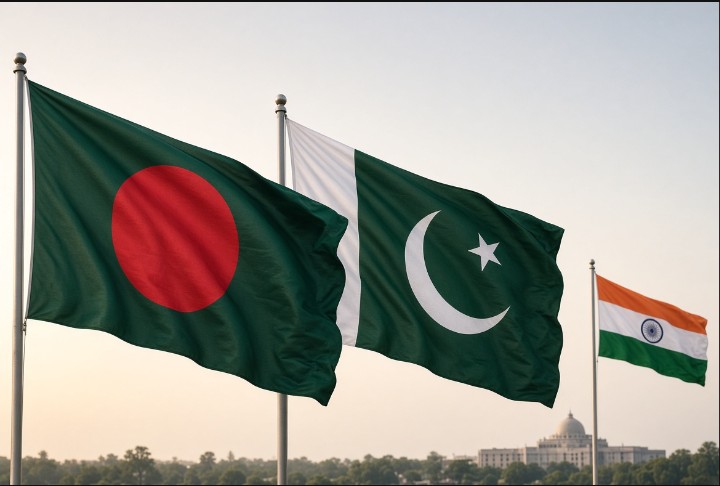
Dhaka is sending 35 senior government officials to Pakistan for advanced training, marking a clear preference for engagement with Islamabad and a sharp break from the India-centric administrative training policy that dominated under the Awami League government.
The 14-day programme runs from 9 to 22 November at the National School of Public Policy in Lahore. It includes five Additional Secretaries and 30 Joint Secretaries, drawn from the Ministry of Public Administration (four officials), the Cabinet Division and Prime Minister’s Office (two each), and various other ministries. The officials are scheduled to leave Dhaka on 8 November. Pakistan is bearing all costs of travel, accommodation, and training; Bangladesh has no financial involvement. Participants must submit a report within five working days of return.
This is the second such batch. In May, 12 senior officials (one Additional Secretary and 11 Joint Secretaries) completed training at the Civil Services Academy in Lahore from 4 to 21 May—the first structured programme of its kind between the two countries in decades.
Post-Awami League Shift Away from India
For years under the Awami League, Mussoorie in India was the primary overseas training destination for Bangladeshi civil servants. Mid-level officials regularly attended programmes at the Lal Bahadur Shastri National Academy of Administration under memorandums of understanding with India’s National Centre for Good Governance (NCGG). The arrangement began with a 2014 MoU, was renewed in February 2019, and again on 30 April 2024 in Dhaka. The final agreement was for one year, with discussions at one point about extending it to 2030. Between 2019 and 2024 alone, over 1,000 Bangladeshi civil servants were trained under these programmes, with broader figures reaching around 2,500 officials.
Since the fall of the Awami League government on 5 August 2024 following the student-led mass uprising, no Bangladeshi officials have been sent to India for training. Sources in the Ministry of Public Administration cite diplomatic strains with New Delhi, the political transition, expiration of agreements, and visa complications as reasons for the suspension. Instead, senior officials are now being directed to Pakistan.
Pakistani invitations for such training, sent at various times, were not acted upon during the Awami League years. The issue resurfaced under the interim government when then Home Secretary (now Cabinet Secretary) Nasimul Gani visited Pakistan. After the BNP formed the government following the 13th parliamentary elections, Pakistan formally extended an invitation through Bangladesh’s Ministry of Foreign Affairs, which received a positive response. No formal bilateral agreement on the training exists yet; officials describe the current exchanges as a step toward mutual understanding, with a formal MoU expected later. Pakistan has also expressed interest in MoUs linking its institutions with Bangladesh’s Public Administration Training Centre and Civil Service Administration Academy.
Additional Secretary Mustafa Zaman of the Ministry of Public Administration, who tops the current list, said the programme—offered at Pakistan’s invitation—covers how Pakistan conducts administration and development activities, along with good governance, human resource management, and government policy strategies.
Public administration analysts note that the move carries a diplomatic message amid South Asia’s shifting political realities. While some officials argue that training in both countries would enhance cooperation and exchange of experiences, the practical outcome since August 2024 has been a complete halt of the India programme and a pivot toward Pakistan as the new preferred destination for senior-level capacity building.