


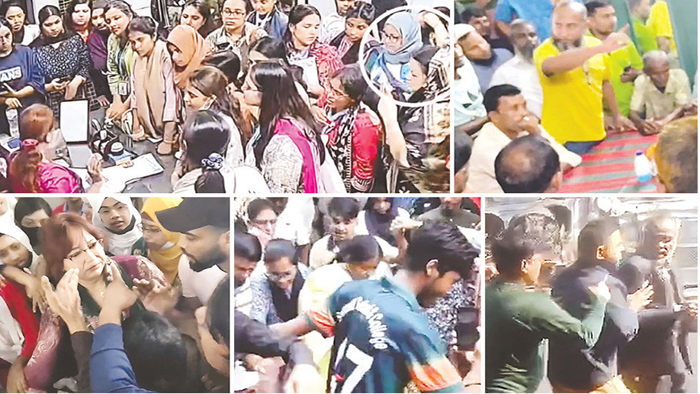
The Global Center for Democratic Governance (GCDG) has released a comprehensive research publication examining reported academic repression, institutional exclusion, disciplinary actions, coercion, violence, and related human-rights concerns affecting teachers and students throughout Bangladesh’s education system.
Titled “Bangladesh’s Education Sector under Repression: Human Rights Violations, Institutional Exclusion, and Abuse of Teachers and Students, August 2024 to August 2026,” the September 2026 study covers primary and secondary schools, colleges, public and private universities, engineering institutions, medical and dental education, agriculture and veterinary education, technical and vocational institutions, and madrasas.
It draws on documentary research, institutional and judicial records, structured datasets, media reporting, case studies, and in-depth interviews.
The report’s central question is whether teachers and students have been able to teach, study, participate in academic life, organize, express opinions, and seek redress without violence, coercion, arbitrary exclusion, discriminatory punishment, or other improper interference. It examines issues including coerced resignation, academic exclusion, suspension and expulsion, restrictions on professional and student mobilization, criminal proceedings, detention, violence and intimidation, institutional due process, academic freedom, access to education, and child safeguarding concerns.
Key data from the study include a student-response dataset of 1,088 records submitted between March and April 2026. Informal academic exclusion was the largest category (381 records, or 35 percent), followed by suspension (217), show-cause notices (131), expulsion (124), forced institutional change (94), certificate cancellation (74), and exclusion from residential halls (67).
These are self-reported response records rather than independently verified victims. A separate school and college teacher register contains 188 entries: 112 reporting forced resignation, 17 reporting forced removal, and 59 concerning individuals reportedly unable to enter their institutions despite no formal resignation or removal.
The publication notes patterns that emerged after the August 2024 political transition, including demands for resignations of teachers and academic officials, suspensions, prolonged exclusions from teaching, physical intimidation, arrests, and interruptions to student education. It distinguishes legitimate institutional accountability for misconduct from measures that may raise concerns over due process, proportionality, political motive, or arbitrary exclusion. The study does not treat every adverse action as a human-rights violation and stresses individual assessment of evidence, procedure, and consequences.
Supplementary material on madrasas includes in-depth interviews with children and adolescents highlighting safeguarding issues, including reports of feeling unsafe, absence of effective complaint mechanisms, and continued contact with accused persons in some accounts. These are presented as qualitative first-person accounts rather than prevalence estimates.
Recommendations address review of student disciplinary and exclusion measures, protection of teachers from coercion, support for peaceful professional and student mobilization, child safeguarding, effective remedies, preservation of evidence, institutional transparency, and independent follow-up. The report anchors its analysis in the Constitution of Bangladesh, international human-rights instruments (including the ICCPR and ICESCR), and relevant UNESCO and ILO standards on academic freedom and the status of teaching personnel.
GCDG, a Canada-based organization focused on democratic governance and human rights, published the study using its own resources. The full report, including case studies and appendices, is available via the organization’s website.