


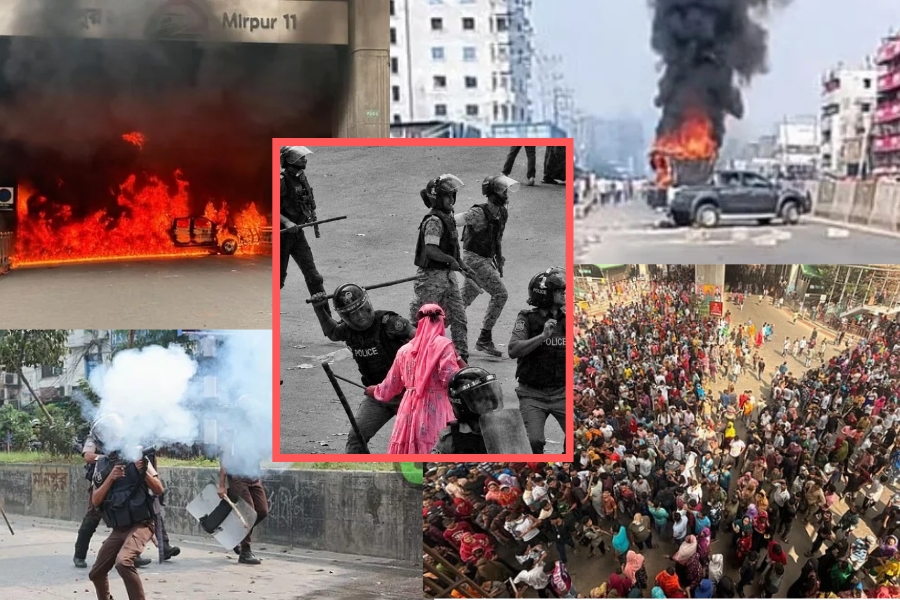
Ready-made garment (RMG) workers staged fresh protests and road blockades in Mirpur and Gazipur on Monday, a day after the government formed a wage board and ordered tough action to restore order following Sunday’s daylong clashes, factory closures, arson and police response.
While workers in Savar-Ashulia largely returned to factories, tensions persisted elsewhere, prompting the deployment of paramilitary Border Guard Bangladesh (BGB) forces.
On Sunday, Labour and Employment Minister Ariful Haque Choudhury announced the formation of a six-member wage board to review RMG wages. It is chaired by Senior District and Sessions Judge Sheikh Ashfaqur Rahman, with representatives from employers (including BGMEA), workers, the government and an independent member.
Workers have long demanded a minimum monthly wage of Tk 30,000 — more than double the current Tk 12,500 set in 2023 — citing rising living costs, along with an end to blacklisting and reinstatement of dismissed workers.
Despite the announcement and the minister’s appeal to return to work, protests escalated: workers blocked roads in Mirpur, Gazipur and parts of Savar-Ashulia; clashed with police; set fire to a police vehicle under Mirpur-11 metro station and a police box in Gazipur; and forced at least 529 factories to declare holidays, affecting nearly one million workers, according to the Bangladesh Garment Manufacturers and Exporters Association (BGMEA).
Police used tear gas, water cannons and sound grenades. Prime Minister Tarique Rahman held an emergency meeting that night and directed law enforcement to ensure uninterrupted factory operations and protect lives and property.
Monday morning saw renewed action in key industrial areas. In Dhaka’s Mirpur, garment workers gathered from around 8:45 a.m. near Mirpur-10 and surrounding spots, blocking roads and causing severe traffic congestion. Police and other forces worked to clear the blockades and restore normal movement.
The day before, similar blockades in Mirpur had led to repeated chases with police and the arson of a police vehicle, temporarily closing nearby metro stations.
In Gazipur, workers for a fourth consecutive day blocked the Dhaka-Tangail highway in Kaliakair areas including Palli Bidyut and Mouchak from early morning. They vandalised more than 50 vehicles and some shops, according to local reports.
Factory authorities again declared holidays in the Mouchak, Palli Bidyut, Sufipur and nearby industrial zones. Traffic was disrupted for several kilometres. Kaliakair police confirmed the blockade, chase-and-counter-chase incidents and vandalism, with BGB, extra police and other forces present.
Ten platoons of BGB personnel, led by 21 executive magistrates, were deployed across key Gazipur points to maintain order alongside police. Authorities said the deployment aims to prevent further highway blockades and violence.
In contrast, the situation in Savar-Ashulia industrial areas appeared calmer. Workers were seen entering factories, including in the Dhaka Export Processing Zone (DEPZ), in a largely peaceful manner after welcoming the wage board decision. Labour leaders said they view the board as a positive step and expect it to complete its work within about two months and announce a Tk 30,000 minimum wage.
Ordinary workers also called for their names not to be blacklisted and for other demands to be addressed. Extra police remained on alert at key points, but no major untoward incidents were reported as production resumed in most units.
Industry groups had warned that prolonged disruptions during the peak order season could affect exports. The RMG sector employs around four million people and accounts for the bulk of Bangladesh’s export earnings.
The government has stressed that the wage board will address the core demand and urged workers to return to factories while law enforcers act against violence and sabotage. Monday’s mixed picture — ongoing blockades and BGB presence in Gazipur and Mirpur, alongside a return to work in Savar-Ashulia — shows the unrest is not yet fully resolved.