


The prospects of the 1996 Indo-Bangladesh Ganges water-sharing treaty being automatically renewed are growing slimmer by the day, with no clear timeline for a visit by Bangladesh Prime Minister Tarique Rahman to India. Sources indicate that significant changes to the treaty’s terms, including a much shorter tenure, are under active consideration.
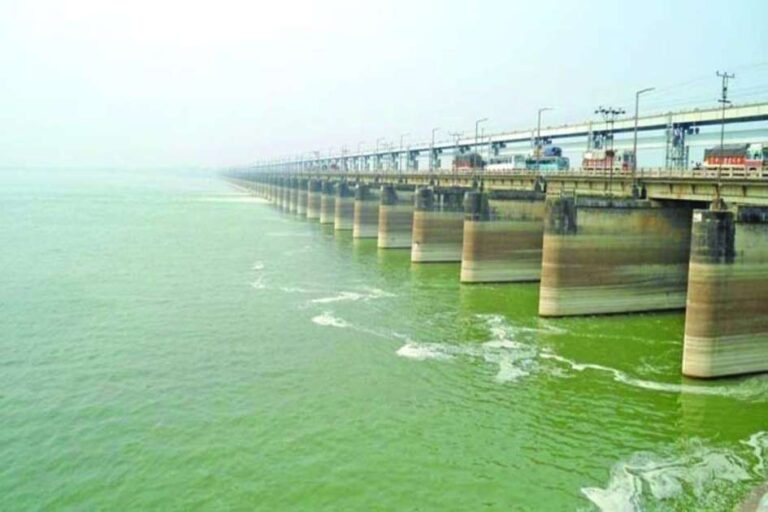
The 30-year treaty, signed on December 12, 1996, by then Indian Prime Minister H.D. Deve Gowda and his Bangladeshi counterpart Sheikh Hasina, is set to expire on December 12, 2026. It has no automatic renewal clause and requires mutual consent. The agreement regulates the sharing of Ganges River waters during the lean (dry) season, roughly from January 1 to May 31, controlled primarily through releases from the Farakka Barrage in Murshidabad, West Bengal — just 20 km upstream of the Bangladesh border. The Padma is the name used for the Ganges in Bangladesh.
Under the current formula, when the flow at Farakka drops to 70,000 cusecs or less, the two countries share the water on a 50:50 basis. In certain conditions below that threshold, Bangladesh receives a fixed 35,000 cusecs. In practice, both sides are guaranteed 35,000 cusecs in alternating three 10-day periods between March 11 and May 10. The arrangement has long been sensitive for both countries, supporting agriculture, fisheries, and navigation downstream while serving Indian needs for irrigation, industry, and power generation.
Competing Demands Complicate Talks
India is unlikely to renew the treaty in its existing form without high-level political engagement, including a visit by Rahman, according to officials familiar with the discussions. Several Indian stakeholders, particularly in Bihar and West Bengal, have argued that sharply rising demand for freshwater — for drinking water, agriculture, industry, and thermal power plants — requires a renegotiated framework. Heavy siltation around the Farakka Barrage has also raised concerns about impacts on water flow in adjoining areas, prompting calls for a more comprehensive river-basin approach rather than a simple sharing formula at one point.
Bihar Chief Minister Samrat Choudhary recently emphasized that the state’s interests must be protected before any renewal of the international agreement. He highlighted Bihar’s need for adequate Ganga water for drinking, irrigation, and industrial purposes as essential for development.
On the Bangladesh side, the ruling Bangladesh Nationalist Party (BNP) has pushed to restore elements of the 1977 bilateral agreement, which included a “minimum guarantee” clause ensuring Bangladesh received a higher share — around 80 percent of its scheduled lean-season allocation. Officials and party voices have argued that the 1996 treaty, signed under the Sheikh Hasina-led Awami League, does not adequately safeguard Bangladesh’s agricultural interests and should be replaced or substantially revised rather than merely extended. Water Resources Minister Shahiduddin Chowdhury Anee has publicly called for a new or revised pact with explicit guarantee provisions.
Political Dynamics and Bilateral Context
The treaty has become a politically charged issue in Bangladesh. Much now hinges on whether Prime Minister Tarique Rahman, who took office following elections earlier in 2026, travels to India. Since his election, at least four planned visits have been delayed, with some sections of the establishment in Dhaka citing issues related to the extradition of former Prime Minister Sheikh Hasina (who has been in India since her ouster in 2024). Groups including Jamaat-e-Islami have reportedly sought to influence the government’s India policy, contributing to anti-India rhetoric in some quarters and slowing engagement. At the same time, there is urgency in parts of Dhaka to address the Ganges treaty before its expiry.
Technical-level discussions have continued through the Joint Rivers Commission (JRC), but high-level political momentum has been limited. Bangladesh has formed technical committees and formally sought talks, while India has maintained that river issues are handled through existing bilateral mechanisms. Failure to reach a successor arrangement or interim understanding by December 12 could leave dry-season water sharing without a formal legal framework starting December 13, raising risks for both countries amid climate variability and growing water stress.
As the deadline approaches, both New Delhi and Dhaka face domestic pressures that make a straightforward extension of the 1996 terms increasingly difficult. A shorter-term agreement or a revised formula reflecting updated hydrological realities, climate considerations, and the needs of upstream Indian states as well as downstream Bangladesh appears more likely if talks advance. For now, clarity on the future of one of South Asia’s most important transboundary water arrangements remains tied to the trajectory of high-level political engagement between the two neighbors.