


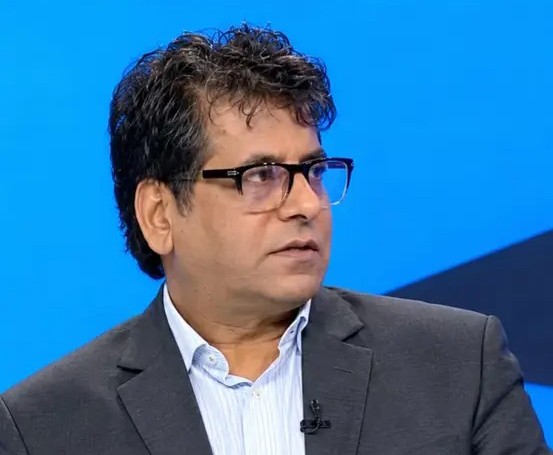
Veteran Bangladeshi journalist and former war correspondent Anis Alamgir has strongly defended his ongoing criticism of Nobel laureate Dr. Muhammad Yunus in a Facebook post published on Sunday.
Alamgir, known for his live reporting from conflict zones including Iraq and Afghanistan and now active as a university teacher and commentator, addressed questions about why he has been a vocal critic of Yunus since the latter assumed a leading role in the country’s interim administration.
“In talk shows or political discussions, current issues will naturally come up,” Alamgir wrote. “In the present political context, the names of Sheikh Hasina, Dr. Yunus, Tarique Rahman and their respective governments are bound to feature. Am I supposed to erase Yunus’s name between Sheikh Hasina and Tarique Zia and instead narrate the story of Shaista Khan from 300 years ago?”
He stressed that he had not criticised Yunus when the latter was a private citizen, but argued that once someone occupies state power, independent citizens have a full right to offer constructive criticism of their governance. “Does winning a Nobel Prize mean that no one can criticise a person even after they take state power? Should we not be allowed to call a fraudster a fraudster?”
Alamgir described Yunus as “utterly failed, a patron of mob culture, and vengeful” as a ruler, adding that he himself has been a victim of what he termed administrative oppression under the current setup. He said differences of opinion with Yunus’s “blind followers” are natural, accusing them of swallowing even harmful decisions by their leader without question. Using a sharp analogy, he wrote that if their leaders began bottling and selling their own liquid waste, the devotees would still queue up to buy it, calling it a “special contribution of the leader.”
Responding to a former journalist who posted that those “not even worthy of Yunus’s fingernail” were criticising him, Alamgir ridiculed the argument as bankrupt. “If the success of running a state is now to be measured by the length of nails, hair and wool, then perhaps we also need to know the market price of the leader’s shorn wool,” he wrote.
He concluded by stating that no one is above criticism: “The Nobel Prize is an honour, but it is not a licence that places any ruler beyond accountability. Anyone in state power must account for their actions — whether it is Yunus, Sheikh Hasina or Tarique Rahman.” He ended with a prayer: “O Lord, at least grant these blind devotees the light to see the truth.”