


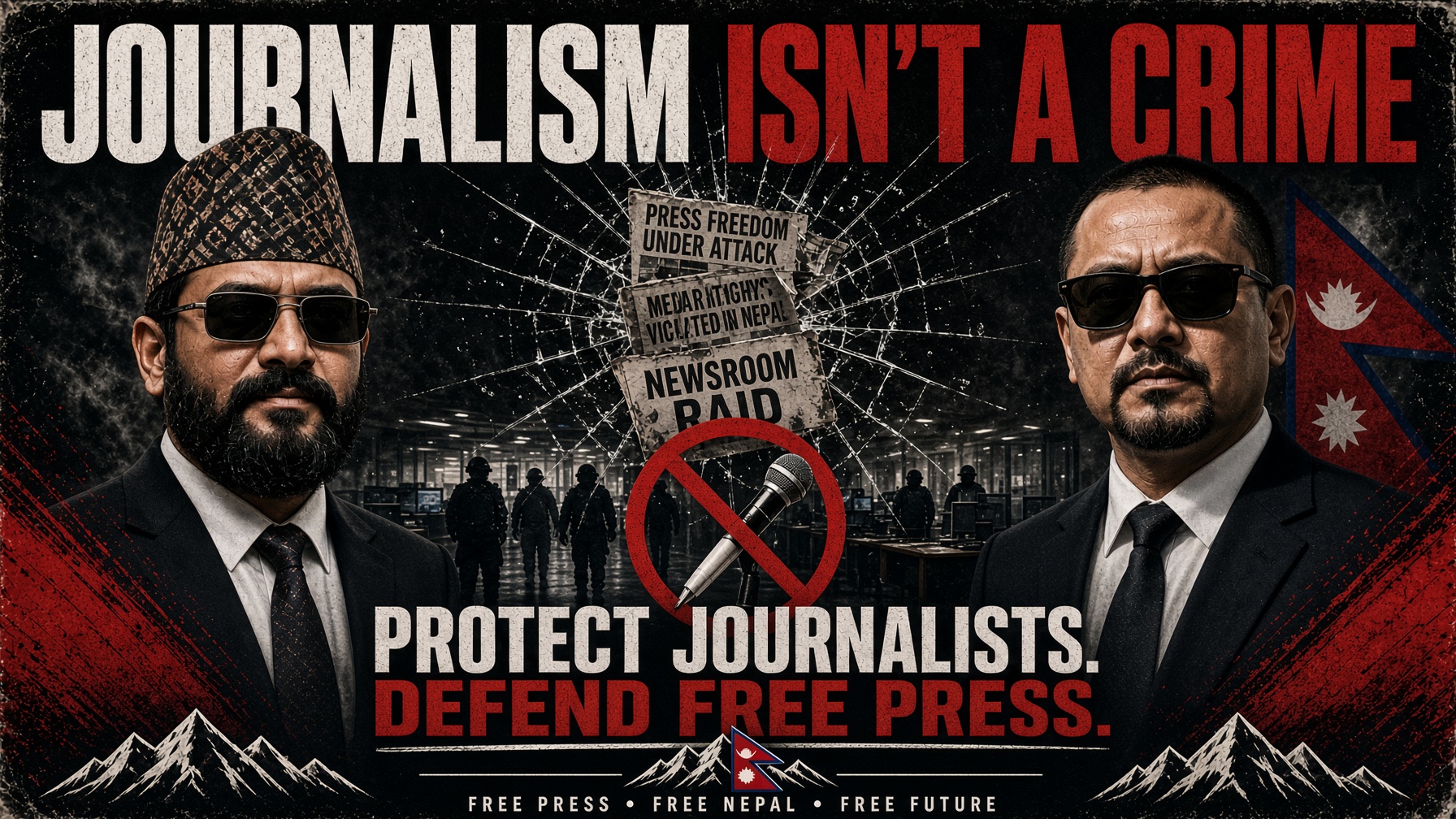
Nepali police conducted a series of newsroom entries and detentions targeting journalists on Friday, actions that drew immediate comparisons to authoritarian tactics of suppressing independent reporting.
Plainclothes officers entered offices of multiple outlets, including Nepal Press in Baneshwor, where they took journalist Bishwamani Subedi into custody from the newsroom itself. The detention was linked to a Cyber Bureau letter and questioning over a report alleging the government was seeking to remove Inspector General of Police Dan Bahadur Karki and that the IGP had sought legal advice.
Similar actions hit Motivate News (Shobharaj Baral detained from the office), DNA Khabar (Dhiraj Basnet summoned and held), with officers also visiting Naya Patrika seeking Navaraj Mainali and approaching Diyo Post.
These moves—police entering newsrooms to seize journalists for their coverage, with unclear or undisclosed warrants, charges, or court authorization—prompted swift condemnation. The Press Council Nepal held an emergency meeting, objecting to the lack of transparency on legal grounds and urging release if no lawful basis existed. Political parties, the Nepal Bar Association, and media groups criticized the interference, with some noting it evoked past royal-regime tactics of media intimidation.
By evening, after widespread outcry, Communications Minister Bikram Timilsina announced via social media that all arrested journalists had been released. He stated the government is “fully committed to press freedom,” describing it and responsible journalism as pillars of democracy. Reports indicated Prime Minister Balendra Shah directed the releases.
While the quick reversal averted prolonged detention, the initial pattern of newsroom raids and targeting reporters for published stories has heightened concerns about authoritarian tendencies, where state security forces act against critical media with limited immediate accountability, relying on public and political backlash to correct course.