


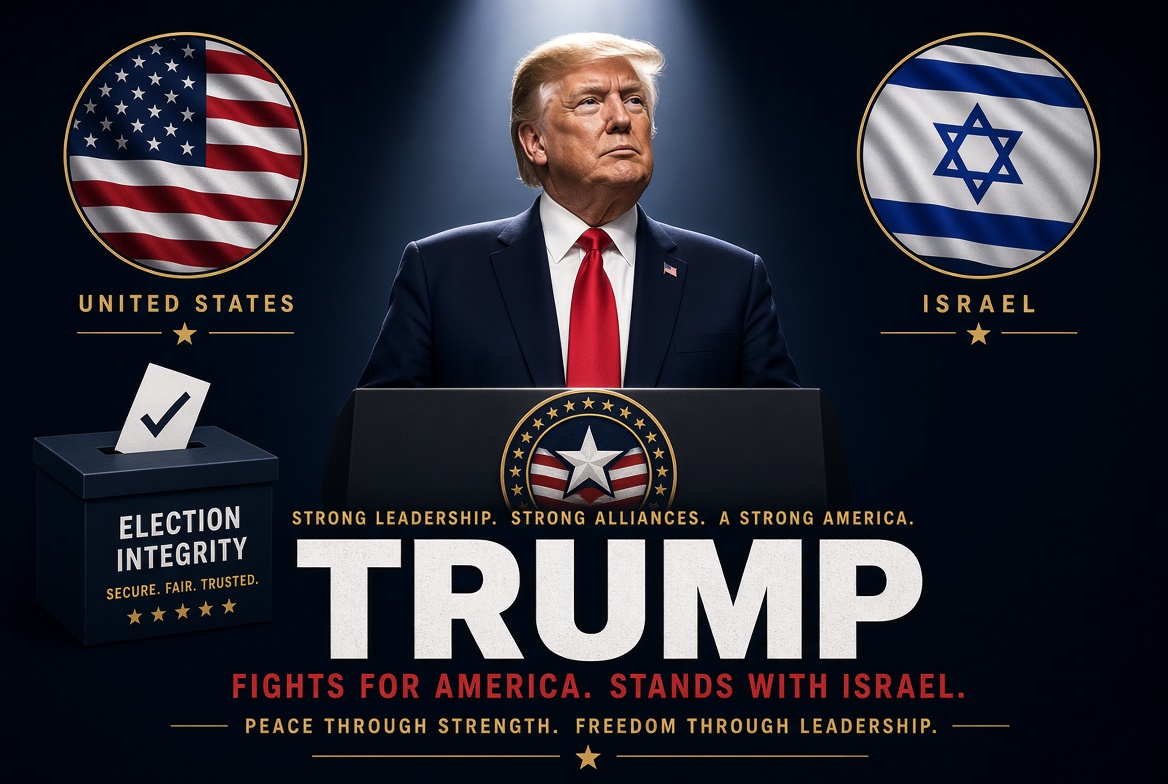
Israeli defense, finance, and military officials were reportedly blindsided by President Donald Trump’s Election Day claim that the United States will end roughly $4 billion in annual aid to Israel by the close of 2026, with opposition leaders accusing Prime Minister Benjamin Netanyahu of failing to inform the security establishment and endangering national interests.
According to Israeli media reports on Tuesday, officials in the Finance Ministry, Defense Ministry, and the military learned of the purported deal through Trump’s remarks on Fox News rather than through formal channels. A senior defense official told public broadcaster Kan, “We did not expect this announcement, certainly not today… We will study the implications of the decision, which has yet to reach professional officials.” A Finance Ministry source told Walla that no formal document had been submitted from the Prime Minister’s Office regarding an immediate end to the aid, even though the ministry was aware of longer-term discussions about phasing it out.
Netanyahu’s office issued no immediate public comment. The prime minister has previously spoken of tapering US military assistance to zero over roughly a decade—most recently noting just days earlier that multibillion-dollar packages from Washington would not continue indefinitely—but he has not publicly called for an abrupt cutoff this year. The existing 10-year Memorandum of Understanding provides about $3.8 billion annually through 2028.
Opposition figures were sharply critical:
- Gadi Eisenkot, chairman of the Yashar party and a leading rival, said the defense establishment and Israeli public were learning of a change in the strategic relationship through the media. “The fact that the defense establishment, along with Israeli citizens, is learning through the media about a change in the fabric of the strategic relationship shows just how much Benjamin Netanyahu’s conduct is a real danger. He can no longer be trusted and must be replaced,” Eisenkot said, demanding answers “tonight.”
- Yair Golan, chairman of the Democrats party, called the move “heavy damage to Israel’s security.” He argued that at a time of record defense spending, depleted stockpiles after prolonged conflict, and the need to replenish offensive weapons, “a responsible prime minister would have fought to increase American aid, not eliminate it.”
- Avigdor Liberman, chairman of Yisrael Beytenu, framed the announcement as “the price of Trump’s support for Netanyahu” amounting to $3.8 billion a year.
Trump’s Announcement
Trump made the claim in a phone interview on Fox & Friends on the morning of the US midterm elections. He said he and Netanyahu had reached an agreement months earlier to halt the funding, adding that Netanyahu himself raised the idea because Israel is “a very thriving country” that no longer needs the money. “We’ve already agreed that by the end of this year we won’t be paying Israel. Now we’ll help Israel if they need it,” Trump said. He added that Israel “can buy whatever they want” and that the US would still provide assistance if required.
Trump also linked the decision to US domestic politics, arguing that the aid had become “a bad talking point” used by Democrats—specifically naming Michigan Senate nominee Abdul El-Sayed—and that Republicans should not have to “suffer the slings” over a program Israel does not need. Much of the existing aid is spent on US-made weapons systems.
Broader Context
The announcement, if implemented, would accelerate the end of a longstanding aid arrangement well before its formal expiration. Details on how any early cutoff would be executed remain unclear and would likely require coordination with Congress, which appropriates the funds. The White House and Netanyahu’s office had not provided further clarification by the end of Tuesday, and the story was still developing.
Public support for US aid to Israel has softened in the United States, particularly among Democrats and some elements of the Republican base, amid years of debate over the Gaza conflict and other regional issues. Trump’s remarks explicitly tied the decision to neutralizing campaign criticism in races such as Michigan’s Senate contest.