

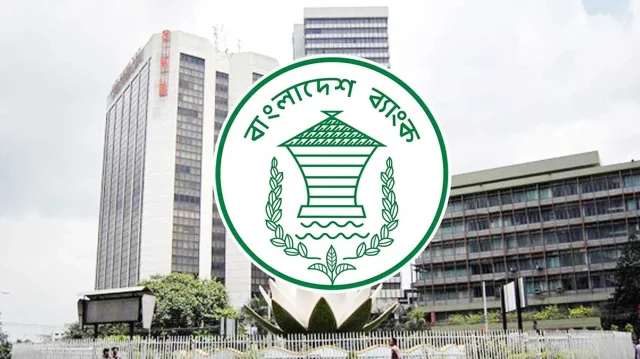
Bangladesh’s full-fledged Islamic banks recorded modest monthly gains in deposits, investments, remittances, and related indicators in August, according to Bangladesh Bank data, even as the sector continues to expand amid longstanding questions about governance, ideological links, and policy support.
Deposits at the country’s 10 full-fledged Islamic banks reached approximately Tk 3.92 lakh crore at the end of August, up roughly Tk 3,508 crore (0.90 percent) from July. Year-on-year, however, deposits in this segment declined about 1.69 percent. Investments stood near Tk 5.42 lakh crore, with remittances through these banks rising sharply to about $625 million in August from roughly $538 million in July (a 16.2 percent monthly increase). Import payments also edged higher, while export receipts showed some softening. Staff numbers across the banks were little changed at just over 42,000.
The sector’s footprint is widening further. Private-sector NCC Bank has converted several branches to full Islamic operations, obtained central bank approval for additional Islamic windows, and submitted plans to become a fully Shariah-compliant bank, with training of staff and recruitment of experienced personnel already underway. Its chairman has publicly stated the goal of completing the transition next year. Similar conversions have occurred previously at other lenders. Separately, five troubled Islamic banks have been merged into the new state-owned Sammilito Islami Bank, which received a substantial government capital injection (around Tk 20,000 crore of the Tk 35,000 crore paid-up capital) as part of resolution efforts after high non-performing loan levels in the predecessor institutions.
These developments have prompted concern among some observers about the broader implications of the sector’s continued expansion and official support. Historically, Islami Bank Bangladesh Limited—the largest player—was established in 1983 with a majority of its initial capital from Gulf sources, including Saudi and Kuwaiti investors, the Islamic Development Bank, and related institutions. Early local involvement included figures linked to Jamaat-e-Islami, and the bank long maintained associations with Islamist political networks. While ownership structures later shifted (including under the previous government), political controversies have persisted, including recent parliamentary debates involving allegations of political mobilisation through bank schemes and recruitment practices. Jamaat-linked protests and influence claims have also surfaced around the bank in the post-2024 period.
Critics argue that the proliferation of Shariah-compliant institutions, combined with heavy remittance inflows from the Middle East and correspondent relationships with Gulf Islamic banks, can channel foreign funds and ideological influences that align with more conservative or politicised interpretations of Islam. In a country that has faced periodic challenges with Islamist extremism and political Islamism, the growth of a parallel financial ecosystem with historical ties to such networks raises questions about long-term social and security implications, even if direct operational links to violent extremism are not always evident.
Government patronage is another focal point. Bangladesh Bank has approved expanding Islamic windows and branch conversions, while the state has injected substantial public capital into the merged Sammilito Islami Bank to stabilise the sector after widespread irregularities, looting allegations under prior ownership structures, and elevated non-performing assets. Liquidity support and board interventions have also been provided to key Islamic lenders. Supporters of the model cite customer demand, ethical finance principles, and remittance mobilisation benefits. Sceptics counter that preferential treatment and public resources are enabling expansion of institutions that have repeatedly demonstrated governance weaknesses and ideological entanglements, potentially at the expense of a more neutral, conventional banking system.
The August data and ongoing conversions illustrate a sector regaining some momentum after confidence crises, yet the combination of foreign capital origins, remittance dependence on ideologically charged regions, historical political associations, high past default rates, and active state facilitation continues to fuel debate over whether this growth serves broader economic stability or risks entrenching parallel structures with potential consequences for extremism and national policy independence. Bangladesh Bank’s statistics and the banks’ own statements form the basis of the positive indicators; the surrounding concerns draw from ownership histories, political reporting, and the scale of public intervention in troubled Islamic lenders.