


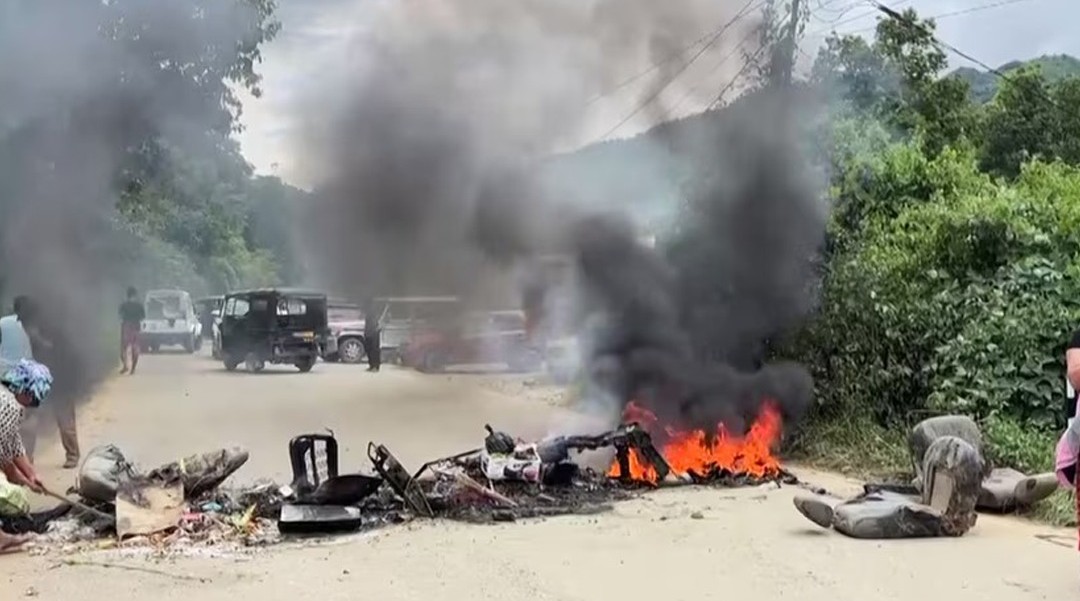
Manipur remains on edge in late October 2026, with fear and anxiety among Meitei, Kuki-Zo, and Naga communities undermining peace efforts more than three years after ethnic violence began. Recent incidents have expanded beyond the original Meitei–Kuki divide, involving Naga–Kuki clashes in the hills, targeted killings, and even limited Meitei–Pangal (Muslim) tensions, as highlighted in a ThePrint ground report.
Timeline and Key Facts
Violence erupted on 3 May 2023 after a Tribal Solidarity March by hill communities opposed a Manipur High Court order seemingly supporting Scheduled Tribe status for the valley-dominant Meiteis (mostly Hindu/Sanamahist). Counter-mobilization led to attacks, arson, and displacement that quickly ethnicized space: Meiteis largely left Kuki-dominated hills, and Kuki-Zos left the Imphal Valley.
Official figures as of 31 August 2026 put the toll at 306 killed (including security personnel) and 49 missing since May 2023, with roughly 60,000 displaced; the Chief Minister has said about 36,000 have been resettled while ~24,000 remain in camps. Earlier counts were lower; independent trackers and media report higher cumulative figures when including 2026 hill violence. Thousands of weapons were looted from armouries early on, many still unaccounted for. Buffer zones and restricted movement persist.
Key developments:
- 2023–early 2025: Peak Meitei–Kuki violence under Chief Minister N. Biren Singh; arms looting, widespread property destruction, and demands for separate Kuki administration.
- February 2025: Biren Singh resigns amid political pressure; President’s Rule imposed.
- February 2026: President’s Rule revoked; BJP’s Yumnam Khemchand Singh takes over as Chief Minister with deputy CMs from different communities.
- February 2026 onward: Kuki–Naga violence flares in hill districts (Ukhrul, Kamjong, Kangpokpi, Senapati, etc.) from local disputes, spreading via armed village volunteers. ACLED recorded nearly 50 civilian deaths, dozens of armed clashes, abductions, and arson events in this period alone.
- October 2026: Killings of Meitei civilians collecting firewood (suspected Kuki militants), a Kuki civilian in Chassad, Naga–Kuki gunfights, house burnings, and rare Meitei Hindu–Pangal clashes. Valley shutdowns and protests followed; security forces made some arrests.
Roughly 30,000+ security personnel remain deployed; the state has sought more. Suspension of Operations (SoO) agreements with some Kuki groups have been renegotiated, but enforcement in hills is contested.
Historical Context, Migration, and Roots of Conflict
Manipur’s major communities are Meiteis (valley majority, politically dominant), Nagas (northern hills), and Kuki-Zo (southern hills; mostly Christian). British colonial administration after the Anglo-Manipur War and the 1917–19 Kuki Rebellion institutionalized hill–valley distinctions, leaving lasting administrative and land divides. Post-independence, valley constituencies dominate the assembly; tribal land protections exist but are contested.
Earlier conflicts included intense Naga–Kuki fighting in the 1990s over territorial claims (hundreds of villages burned, large-scale displacement) and smaller Meitei–Pangal and Kuki–Paite clashes. Insurgencies (Naga NSCN factions seeking greater Nagalim, Meitei groups like UNLF/PLA seeking sovereignty or autonomy) long militarized society.
Migration is a core disputed narrative. Meitei and increasingly Naga civil society groups allege significant post-Independence and recent influx of Kuki-related people from Myanmar (including 1960s refugees and Chin people after the 2021 coup), linking it to demographic shifts, poppy cultivation, and encroachment. They demand an NRC with a 1951 cut-off before the next Census, backed by assembly resolutions. Kuki-Zo groups reject this as an attempt to label long-settled Indian citizens as foreigners; historians note pre-Independence presence of related communities and that not all Kukis arrived as 1960s refugees. Cross-border kinship exists, but claims of wholesale illegality lack consensus verification. Poppy, forest eviction drives, and the ST demand were proximate triggers in 2023.
Role of Armed Groups
Militias and village volunteers have been central. On the Meitei side, groups such as Arambai Tenggol (initially cultural, later armed) and Meitei Leepun were active in early violence and accused of leading mob attacks and arms looting; some reports noted proximity to the previous state government. Kuki side features SoO-bound groups (KNO, UPF umbrellas) plus village volunteers who have engaged in defensive and offensive actions. Naga village guards and NSCN factions have been involved in recent hill clashes. All sides have used looted or existing weapons for ambushes, arson, and targeted killings. Disarmament has been incomplete despite surrenders and operations; experts note militias fill security vacuums and sustain cycles of revenge.
Political and Expert Views
Chief Minister Yumnam Khemchand Singh has repeatedly called for all communities (Meitei, Kuki, Naga) to identify as Manipuris, stressed that “peace is the only way” for development, and appealed for forgiveness and collective effort. He has reviewed security with officials and opposition leaders after recent killings and noted economic losses. Deputy Chief Minister Nemcha Kipgen (Kuki) has condemned civilian deaths and urged calm. Opposition figures, including former CM Okram Ibobi Singh, have said law and order has “completely failed” and that armed groups could be curbed quickly if the government acted decisively. Home Minister Govindas Konthoujam has provided the official casualty figures.
Analysts (including ACLED) attribute the spread of violence to longstanding territorial disputes, armed civilian volunteers, and incomplete political settlement. Commentators note the failure to fully operationalize peace mechanisms announced after 2023 and the limits of security deployments without sustained dialogue and demilitarization. Ground reporting, including ThePrint’s, describes pervasive fear that questions the durability of recent political arrangements.
The situation remains fluid, with overlapping conflicts, restricted movement, and unresolved demands (separate administration for some Kuki groups, territorial integrity insisted upon by Meiteis, Naga political aspirations, and citizenship verification). Sustained dialogue among communities, effective arms recovery, and addressing land and demographic concerns appear necessary for lasting calm, though trust deficits remain deep.