


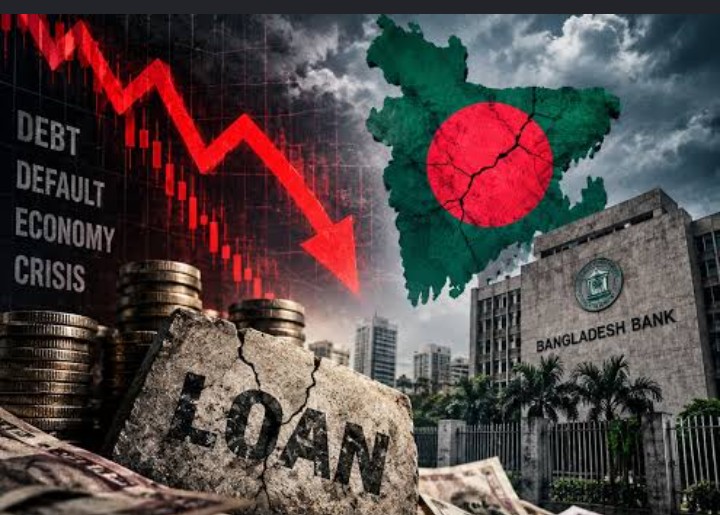
Government employees began receiving salaries under the long-awaited National Pay Scale 2026 today, along with three months of arrears, even as the administration resorts to fresh short-term bank borrowing to cover the cost amid persistent revenue shortfalls and a strained economy.
After an 11-year gap since the 2015 scale, the new structure raises basic pay by 100–142 percent: the lowest grade (Grade 20) jumps from Tk 8,250 to Tk 20,000, while the highest fixed basic (Grade 1) doubles from Tk 78,000 to Tk 156,000. Implementation is phased—40 percent of the increase for Grades 1–9 and 50 percent for Grades 10–20 from July to December 2026, rising to 75 percent in the first half of 2027 and full effect from July 2027, with most allowances deferred until 2028.
Roughly 1.4 million serving employees and 800,000 pensioners are covered in this round (MPO teachers’ adjustments continue separately).
Many received SMS notifications of the credits this morning; those whose pay fixation remains incomplete will get theirs in coming days.
The timing has drawn sharp criticism. Full rollout is projected to add around Tk 1.05 lakh crore annually to the wage bill once complete. The FY 2026-27 budget already allocates about Tk 1.31 lakh crore for salaries, allowances and pensions (including Tk 1.06 lakh crore for salaries alone) within a Tk 9.38 lakh crore spending plan that carries a Tk 2.43 lakh crore deficit.
To meet the immediate extra outgo—October salaries plus July–September arrears—the government has ramped up bank borrowing. Bangladesh Bank called a special auction of 14-day Treasury bills for Tk 5,000 crore. Officials indicated the short-term instrument was needed specifically because ordinary cash flows cannot cover the higher payroll.
Through late October, the government had already raised roughly Tk 55,300 crore via regular Treasury bills and bonds; the special auction would push the month’s total near Tk 60,300 crore, the highest monthly figure since the current government took office. Earlier months this fiscal year saw Tk 56,000 crore (July), Tk 50,000 crore (August) and Tk 41,500 crore (September).
Revenue performance offers little comfort. Against the National Board of Revenue’s Tk 6.04 lakh crore annual target, a shortfall of Tk 25,491 crore appeared in July–August alone, with collection remaining weak in September and October. Net bank borrowing in the first quarter of the fiscal year stood at Tk 24,245 crore.
In the previous fiscal year, government borrowing from the banking system grew more than 34.5 percent while private-sector credit growth fell to a historic low of 4.47 percent. Banks still hold large excess liquidity (about Tk 4.42 lakh crore at end-August), yet yields on Treasury bills have risen—91-day bills moved from 8.13 percent early October to 8.55 percent later in the month—as government demand absorbs funds.
Former Finance Secretary and Comptroller and Auditor General Mohammad Muslim Chowdhury called the use of 14-day special bills to pay salaries “not good news for the country’s economy and the government’s capacity.”
He noted that revenue is not rising while expenditure (including the new scale and large projects) is increasing, warning that the debt burden will grow rapidly and private-sector space will shrink further. Economist Dr. Zahid Hossain observed that the government is already in a rollover cycle: it lacks capacity to repay maturing instruments and must reissue them, with total debt stock projected near Tk 34 lakh crore by FY 2028-29 if trends continue.
A BNP-linked member of the parliamentary standing committee on finance acknowledged the inherited fragile economy—high inflation, unemployment and expenditure far exceeding income—and said the scale was needed for employee morale and efficiency. He insisted income must rise to match the higher outgo, but the immediate resort to special short-term borrowing for a recurring wage bill underscores the gap between political priority and fiscal reality.
The payments arrive while private credit remains starved, yields edge higher, and the administration finances day-to-day obligations through the banking system rather than stronger revenue measures.
Critics see a pattern of locking in permanent higher recurrent spending while relying on temporary instruments and continued bank dependence—raising the risk of crowding out investment and deepening the debt-rollover trap at a moment when the broader economy shows little sign of rapid recovery.