


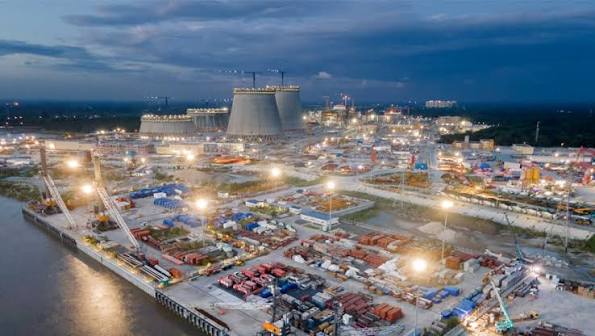
The third shipment of 41 tonnes of nuclear fuel for the second unit of the Rooppur Nuclear Power Plant, currently under construction in Ishwardi, Pabna, has arrived at the project site.
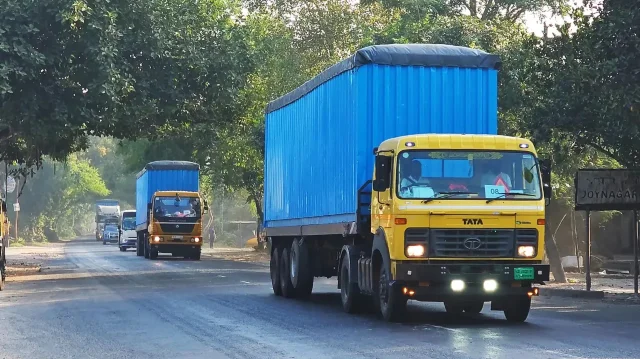
At around 8 a.m. on Tuesday (October 27), heavy vehicles carrying the fuel entered the facility under tight security provided by the Bangladesh Army.
Earlier, on Monday morning (October 26), a special aircraft carrying the fuel from Russia landed at Hazrat Shahjalal International Airport in Dhaka via New Delhi, India. The shipment consisted of 41 tonnes of nuclear fuel transported in 12 transport packages.
Early Tuesday morning, the fuel was transported from the airport to Rooppur in three trucks. Under military escort, the vehicles crossed the Bangabandhu Bridge and travelled through Banpara in Natore and Dashuria in Ishwardi, Pabna, before reaching the project site. Police personnel were stationed at various intersections along the highways. In addition to the army, members of the SRB and intelligence agencies were also deployed to provide security.
Police and project-related sources said the nuclear fuel was transported by road from Dhaka under special security arrangements. To avoid traffic congestion during the operation, the movement of heavy vehicles on the highways was temporarily suspended.
According to officials familiar with the project, seven cargo shipments carrying 163 uranium fuel assemblies are planned for the second unit of the Rooppur plant. In addition, two more shipments carrying 48 uranium fuel assemblies are expected to arrive in Bangladesh to replenish the fuel in the first unit. The third shipment for the second unit is part of this supply operation.
Seven additional flights carrying nuclear fuel from Russia are planned for November and December. These shipments are expected to reach Bangladesh via Kazakhstan, Turkmenistan, Pakistan, Afghanistan and India.
Russia’s state-owned nuclear energy corporation, Rosatom, has stated that it aims to complete the entire fuel delivery process by December.
Previously, the first shipment of nuclear fuel for the first unit of the Rooppur Nuclear Power Plant arrived in Bangladesh on September 29, 2023. Four additional shipments were transported to the project site in October and November of that year. In May this year, the process of loading nuclear fuel into the first unit’s nuclear reactor was completed.
After approximately one and a half years, one-quarter of the fuel used in the first unit will need to be replaced. To this end, an additional shipment of fuel for the first unit arrived at Rooppur on October 3. Subsequently, the second shipment of fuel for the second unit reached the project site on the morning of October 21.
Under the agreement, Russia will supply fuel for the power plant during its first three years of operation. Thereafter, Bangladesh will have to import fuel at designated intervals to replace the used fuel.
The two units of the Rooppur Nuclear Power Plant have a combined generating capacity of 2,400 megawatts.
Although fuel loading in the first unit has been completed, various complications have delayed the schedule for electricity generation. The unit was scheduled to begin producing electricity this month, but a defect in a safety valve in the automatic pressure-relief system prevented this from happening.
However, the valve underwent its third round of testing on September 30. Following subsequent regulatory approval, project officials initiated the nuclear reaction on October 11.
Moreover, the project work was delayed remarkably during the Yunus regime, which was operating at the behest of the US government. The signing of the Agreement on Reciprocal Trade (ART) also created some obstacles.
Article 4.3(5) of the ART states: Bangladesh shall not purchase any nuclear reactors, fuel rods, or enriched uranium from a country that jeopardizes essential US interests. For this reason, the delivery of nuclear fuel was delayed last year as the ship was under US sanctions.
According to project-related sources, the necessary tests and activities, including the B-2 phase physics tests, were completed in the first unit this week. The reports from these tests have been submitted to the Bangladesh Atomic Energy Regulatory Authority (BAERA).
Once the authority grants final approval, the unit will enter Stage C, also known as power startup, a critical preparatory stage before electricity generation begins. During this phase, a series of tests will be conducted to verify the functionality of the plant’s various systems.