


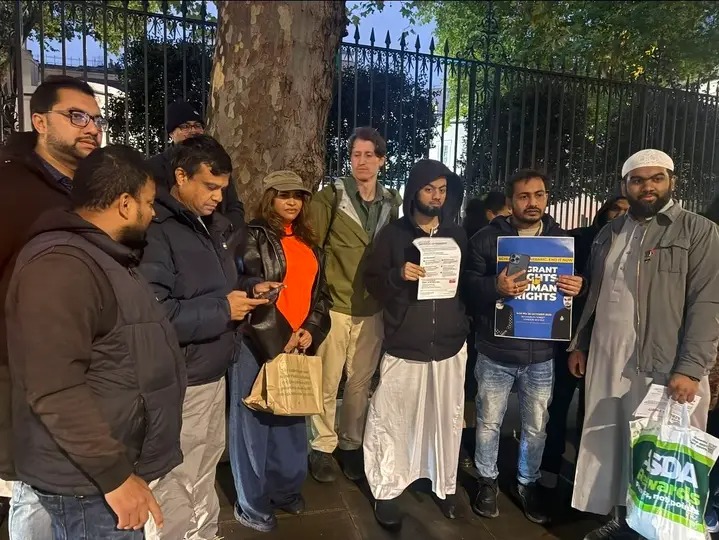
Protesters demand transparency, independent investigation and accountability over the deaths of two Bangladeshi nationals in Saudi Arabia
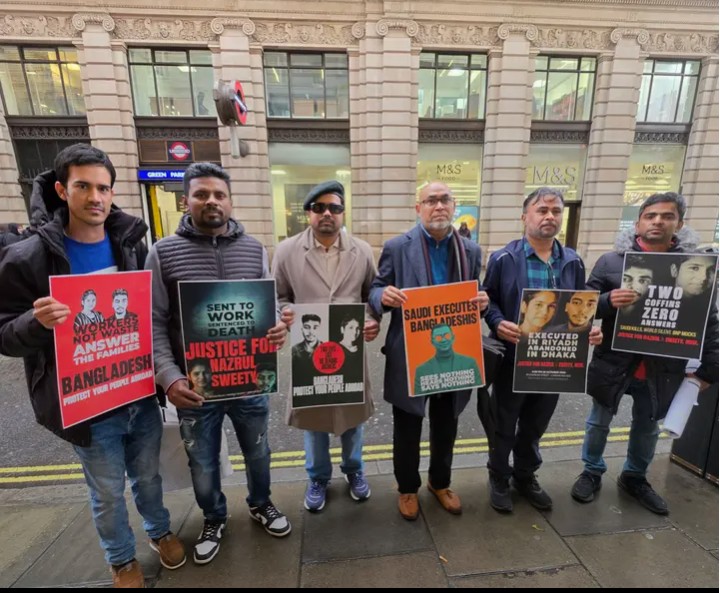
Members of the British Bangladeshi community have staged a demonstration outside the Embassy of Saudi Arabia in London to protest the executions of two Bangladeshi nationals, Nazrul Islam Abdul Basir and Siti (Sweety) Akhtar, in the Makkah region of Saudi Arabia on 14 October 2026.
The protesters expressed outrage over the circumstances surrounding the executions, raising serious concerns about transparency in the judicial process, access to legal representation, consular assistance and the rights of migrant workers. They called on the Saudi authorities to disclose the details of the cases and ensure accountability for any failures in the legal proceedings.
The demonstration follows a formal memorandum of protest and demands, dated 26 October 2026, addressed to the Ambassador of the Kingdom of Saudi Arabia in the United Kingdom. Submitted by members of the British Bangladeshi diaspora, the memorandum calls for a full account of the legal proceedings that led to the executions and an independent review of the cases.
The document states that there is no publicly available information confirming whether either defendant had access to a lawyer of their choice or a Bangla interpreter at any stage of the proceedings. It also raises concerns about whether the Bangladeshi diplomatic mission was informed of the cases and given the opportunity to provide consular assistance.
Under Article 36 of the Vienna Convention on Consular Relations, foreign nationals detained abroad are entitled to be informed of their right to consular notification and access. The memorandum argues that the circumstances surrounding the two cases raise questions about compliance with these obligations.
It further states that the Bangladesh Consulate General in Jeddah reported that it had not been informed of the deaths, raising additional questions about communication between the Saudi authorities and the Bangladeshi diplomatic mission.
The protesters also questioned the proportionality of the sentences, arguing that international standards restrict the use of capital punishment to the most serious crimes. The memorandum notes that the sentences were discretionary punishments, known in Islamic jurisprudence as ta’zir, rather than fixed hadd punishments, and calls for greater scrutiny of the judicial decisions.
Beyond the two cases, the demonstration highlighted the vulnerability of Bangladeshi migrant workers in Saudi Arabia and the need for stronger safeguards to protect their fundamental rights.
More than three million Bangladeshis live and work in Saudi Arabia, according to the memorandum. They contribute to the Kingdom’s economy across various sectors, including construction, domestic work, healthcare and services supporting millions of pilgrims who visit the holy sites each year.
The memorandum argues that migrant workers must be treated with dignity and that their nationality or immigration status must not deprive them of basic legal protections, including the right to a fair trial, legal representation, interpretation and consular assistance.
Six demands for justice and accountability
The memorandum sets out six principal demands for the Saudi government.
First, it calls for the publication of the charges against Nazrul Islam Abdul Basir and Siti (Sweety) Akhtar, details of their legal defence, the trial records, the judgments, any appeal decisions and the royal orders confirming their sentences.
Second, it demands the disclosure of all communications between the Saudi authorities and the Bangladesh Embassy in Riyadh and the Consulate General in Jeddah, from the time of arrest until the executions. It also seeks clarification on whether and when the two individuals were informed of their right to consular access.
Third, the memorandum calls for an independent review of the arrests, investigations, prosecutions, verdicts and sentencing, as well as the handling of the cases by the relevant consular authorities. It urges the Saudi government to publish the findings and hold accountable any officials found to have failed in their duties.
Fourth, it demands a public audit of Bangladeshi nationals currently detained, facing trial or serving sentences in Saudi Arabia, including those facing the death penalty.
Fifth, it calls for the Saudi authorities to publish details of the legal aid, interpretation services, complaint mechanisms, consular access and compensation available to migrant workers.
Finally, it demands the disclosure of complaints of abuse involving Bangladeshi migrant workers received by Saudi authorities over the past decade, together with information on how those complaints were investigated and resolved.
The memorandum also asks the Saudi ambassador to transmit the demands to the Saudi Ministry of Foreign Affairs and Ministry of Interior in Riyadh and requests a written response within 30 days.
Copies of the memorandum have been addressed to the Bangladesh High Commission in London, the UK’s Foreign, Commonwealth and Development Office and relevant United Nations special rapporteurs and working groups concerned with extrajudicial executions, migrant rights, judicial independence and discrimination against women and girls.
A call to uphold justice and human dignity
The protest also carried a wider message about the treatment of migrant workers and the responsibility of governments to protect human life and uphold due process.
The memorandum argues that the cases raise questions not only about diplomatic obligations and international human rights standards but also about the principles of justice, compassion and mercy that Saudi Arabia, as the custodian of Islam’s two holiest mosques, is expected to uphold.
The signatories stressed that respect for Saudi Arabia, its people and its holy places must go hand in hand with respect for human life and the right to justice.
They called on the Saudi government to provide answers to the families of the two executed Bangladeshis, disclose the relevant legal records and ensure that any shortcomings in the handling of the cases are independently investigated.
The memorandum concludes with a demand for justice, transparency and accountability, emphasising that the rights to life, a fair trial, legal representation and consular assistance must be protected regardless of a person’s nationality or immigration status.
The central demand of the protest is clear: the Saudi authorities must provide a full account of the cases, establish whether legal and consular safeguards were respected, and ensure accountability for any failures that contributed to the circumstances surrounding the executions.