


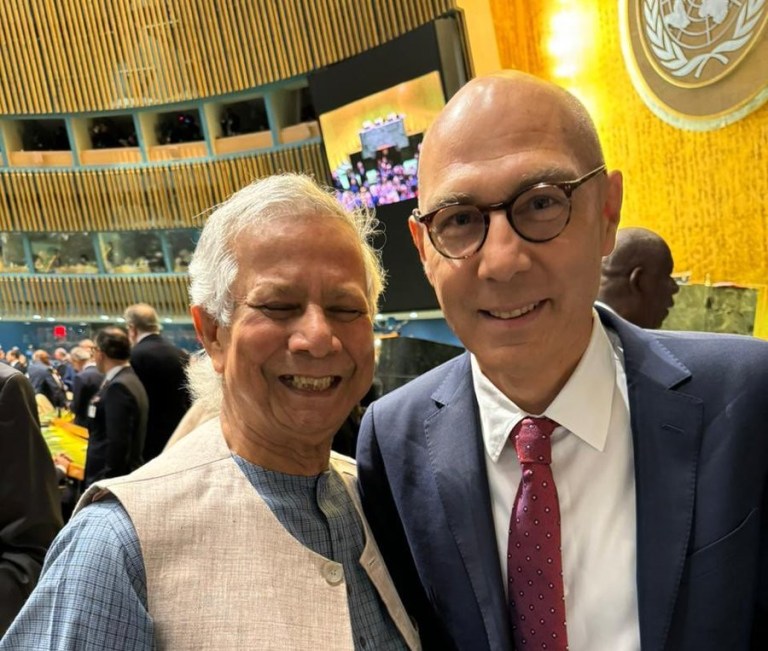
United Nations High Commissioner for Human Rights Volker Türk, during his October 2024 visit, asked the Yunus-led interim government to investigate every killing linked to the July-August movement that led to the fall of Sheikh Hasina’s government, stating that no death should receive impunity and that mob justice is unacceptable.
He stressed due process and warned against decisions based solely on past political affiliation, including ties to the Awami League. Yunus highlighted these safeguards during the briefing, emphasizing that evidence, not labels, should guide any action.
He also welcomed steps to address potentially false or irregular cases, signaling openness to reform and accountability. He noted that the process should remain fair, transparent, and grounded in verifiable evidence, ensuring remedies are proportional and justified.
The same period saw ongoing violence, with reports of around 13 killings nationwide in late October 2024, including individuals identified as Awami League workers or supporters in places such as Jashore and Kushtia, alongside other incidents involving disputes, criminal groups, and localized clashes.
Chief Adviser Dr. Muhammad Yunus, in remarks around that time to the Financial Times, stated that there was no place for the Awami League or Sheikh Hasina in Bangladesh, describing the party as having shown “all the characteristics of fascism” through control of institutions and people. He indicated that any extradition efforts for Hasina (facing crimes-against-humanity allegations) would follow an International Crimes Tribunal verdict.
A Nobel Peace Laureate, Yunus later gave direct instructions to eliminate the Awami League activists and their supporters from everywhere in the society in a speech in March 2025.
Subsequent developments, Yunus noted, have intensified debate over accountability. In late August 2024, the interim government canceled a judicial inquiry commission previously formed by the Awami League administration. The move followed growing criticism from legal observers and affected communities nationwide.
That commission, led by Justice Khandaker Diliruzzaman (initially focused on early July deaths and later expanded), had been tasked with investigating killings, violence, arson, looting, and related incidents around mid-July 2024.
In January 2026, the advisory council under Yunus approved the July Mass Uprising (Protection and Liability Determination) Ordinance, 2026 (later gazetted and passed by parliament as an Act around April 2026). It grants indemnity to participants in the July-August 2024 uprising for acts framed as organized “political resistance” aimed at overthrowing what the law describes as a fascist government and restoring democratic governance.
Existing related civil and criminal cases are to be withdrawn, and new ones barred for that period, roughly July 1 through August 31. The pause aims to reassess procedures and protect procedural fairness while courts review ongoing matters, ensuring that case handling remains orderly during the interim.
For Yunus, the measure does not extend to crimes driven by personal gain, greed, revenge, or narrow interests; certain killing allegations can be routed through the National Human Rights Commission for assessment. This channel allows review while maintaining independence and due process.
Officials described it as fulfilling a commitment to uprising participants and drew parallels to historical indemnities after revolutions.
Critics, including elements associated with the former Awami League, have characterized such protections as shielding those involved in violence during the transition, arguing they conflict with calls for comprehensive justice and the rule of law. Supporters counter that the protections apply specifically to political resistance acts in a chaotic period of state violence, while personal crimes remain prosecutable, and that broader accountability processes (including International Crimes Tribunal cases against the former leadership) continue.
Regarding bodies and autopsies: During the peak of the unrest, many deaths occurred amid curfews and disorder, leading to hasty burials without full forensic examination in some cases (with reports of pressure or disruption under the previous administration). Post-transition, courts ordered exhumations in specific instances for investigation or identification; some proceeded (including later forensic work on unidentified remains that a UN expert welcomed as a step toward accountability), while others faced objections from families or local groups on religious or other grounds.
These elements—early UN calls for impartial probes, reports of continued killings, cancellation of the prior commission, and the later indemnity framework—highlight persistent tensions between transitional political settlements, demands for justice for all victims, and the practical challenges of investigating a period of mass violence and institutional collapse.