


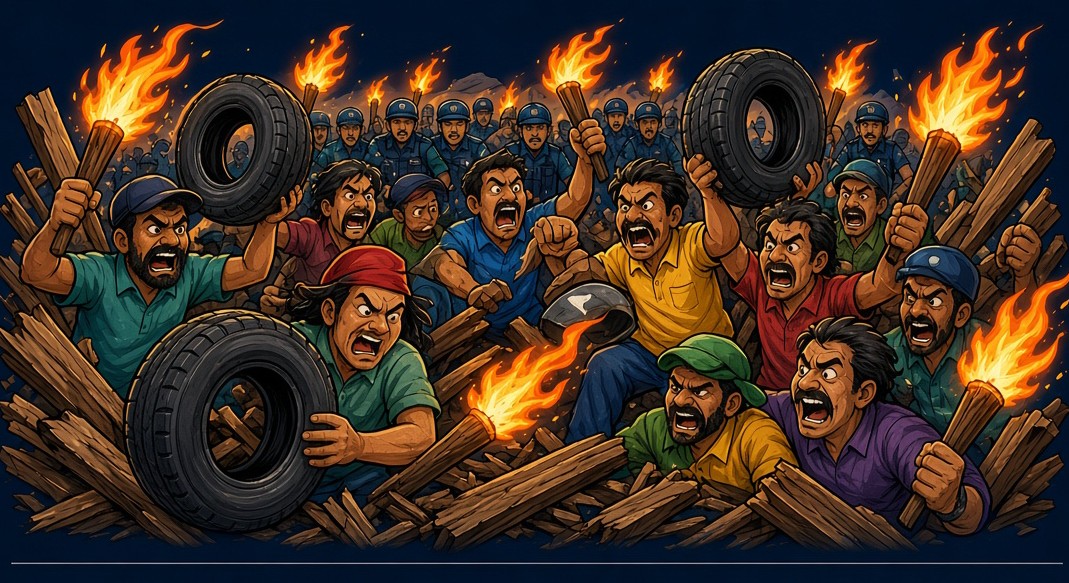
At least 171 people were killed in mob beatings across Bangladesh between January and September 2026, according to data from the rights organization Ain o Salish Kendra (ASK). Another monitoring group, the Human Rights Support Society (HRSS), reported a higher figure of 187 deaths in 398 incidents over the same period.
Both organizations noted that the toll already exceeds or approaches full-year totals from recent years—ASK recorded 128 such deaths in 2024 and 198 in 2025.
The figures come amid ongoing concerns about vigilante attacks triggered by allegations of theft, personal disputes, religious insults, or land and property conflicts. Rights groups have repeatedly warned that weak investigations and limited accountability allow such violence to persist, a pattern that intensified after the 2024 political upheaval and has continued under the current government.
Two recent high-profile cases have drawn particular attention. In Satkhira, Wahiduzzaman Shamim was beaten to death on 13 October after an audio recording from a domestic dispute was circulated as evidence of blasphemy. He was attacked twice—once at a local medical chamber and again after police took him to a hospital—despite earlier intervention by law enforcement.
Family members alleged involvement by local Jamaat-e-Islami and Hefazat activists who helped mobilize crowds under the banner of “Touhidi Janata”; the party has denied the claims. Several people, including the man who used Facebook Live to rally the crowd, have been arrested.
Separately, a mother-and-child health centre (RADDA MCH-FP Centre) in Dhaka’s Mirpur area was looted, vandalized, and partially demolished by a large group on 24–25 September. Police have arrested more than two dozen people, many linked to local units of the ruling Bangladesh Nationalist Party (BNP) and its student and youth wings. A #BNP lawmaker from a reserved seat resigned amid allegations of political involvement; investigators continue to examine the roles of other party figures. The attack appears tied to a property dispute.
The Ministry of Home Affairs has stated that mob-related incidents and deaths declined by roughly 40 percent in 2026 compared with 2025, based on its own narrower dataset.
Probir Kumar Sarker, founder of Write For Rights, said that the absolute numbers remain high and that political affiliations—whether of Jamaat-linked groups in some religiously framed attacks or BNP-linked individuals in land-related cases—continue to surface in investigations without consistent legal follow-through. International observers and local human rights organizations have called for stronger institutional responses to curb extrajudicial violence and protect the rule of law.