


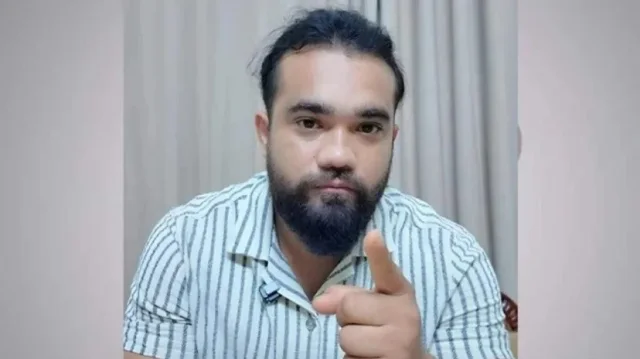
The father of a seven-year-old girl who was sexually abused at a madrasa in Tongi, Gazipur, says he and his family have been living in fear amid threats, pressure to withdraw the complaint, and a counter-case filed against him by the madrasa authorities.
He has reportedly left Bangladesh, saying he no longer wants to remain in the country amid the mounting pressure.
The case has also drawn attention to statements emphasizing the need to protect the reputation of teachers and religious educators, as well as allegations that the victim’s family is being pressured while seeking justice for the child.
Accused Teacher Visited Family With Sweets After Abuse
Closed-circuit television (CCTV) footage reportedly shows Moslem Ahmed, 30, the assistant head teacher (vice-principal) of Qariul Quran International Madrasa in Madhya Auchpara, Tongi, visiting the residential building where the victim’s family lives on October 20, the day after the abuse.
According to the footage, Ahmed entered the building at approximately 12:38 p.m. carrying a red bag containing sweets. He spoke briefly with security personnel on the ground floor before taking the elevator upstairs.
He left the building about 10 minutes later without meeting any member of the family.
At 12:45 p.m., he reportedly sent a WhatsApp message to the child’s mother, saying, “Sister, I am standing outside your door. I have come to meet you briefly.”
The child’s father was not home at the time. The purpose of the accused teacher’s visit and his decision to bring sweets have not been established. His response to questions about the visit was not available in the report.
Ahmed was subsequently arrested and sent to jail in connection with the case. A court rejected his bail application.
Victim’s Father Says Family Is Being Threatened
The child’s father, Shahjalal Rumi, has alleged that he and his family have faced repeated threats since the allegations became public.
He said the family’s mobile phone numbers had been circulated widely, allowing people to contact them from different numbers. According to him, the callers have pressured the family to withdraw the complaint and remove videos related to the incident from social media.
“My family’s and my own mobile phone numbers have been spread everywhere. Taking advantage of this, people are threatening us in various ways. They are telling us to withdraw the complaint and remove the videos that have been uploaded. We are living in constant fear,” he said.
Rumi also stressed that his protest was not directed against the wider religious community.
“I want to make it clear that my protest is not against the community of Islamic scholars. My protest is against those who use religious appearance as a cover,” he said.
His allegations raise serious concerns about whether the family can pursue justice without intimidation. The police have confirmed that both sides have made verbal allegations of threats, although no formal written complaint concerning the threats had been received at the time of the statement.
Counter-Case Accuses Father of Theft and Other Offences
The controversy intensified after the madrasa’s founder and principal, Almas Hossain, accused Rumi and a group of people of entering the institution and assaulting the accused teacher.
The principal alleged that a group of 15 to 16 people, led by the child’s father, entered the madrasa and beat Ahmed. He also claimed that teachers, other staff members and security personnel were assaulted when they attempted to intervene.
In addition, the madrasa authorities alleged that the institution’s office was vandalised and that Tk 1.7 million and five mobile phones were stolen. They filed a separate complaint with the police over these allegations.
The counter-case reportedly named the victim’s father as an accused and included allegations of theft and other offences.
These allegations have placed the father in a difficult position: while seeking legal action over the abuse of his daughter, he is also facing accusations brought by the institution whose teacher is at the centre of the original case.
The allegations in the counter-case have not been established as proven facts. They require independent investigation and judicial determination, just as the original allegations must be resolved through the legal process.
Attorney General Stresses Teachers’ Reputation and Legal Process
Attorney General Md Ruhul Quddus Kazal, commenting on the incident, said people should not take the law into their own hands. He also stressed the importance of preserving public respect for teachers and ensuring that children do not feel unsafe in educational institutions.
He said anyone who commits a crime should be punished in accordance with the law, while anyone who is innocent should be recognised as such.
The attorney general also cautioned against targeting the entire teaching community over the actions of one or two individuals. He said the matter should be resolved through the judicial process because a criminal case was already under investigation.
His comments focused on due process, the reputation of teachers and the importance of protecting the trust between students and educators.
However, the broader concern remains whether equal attention is being given to the safety of the alleged child victim and the protection of her family from intimidation while the case proceeds.
Upholding the presumption of innocence does not diminish the importance of investigating allegations of child sexual abuse. Likewise, protecting teachers from mob violence does not justify threats or pressure against a complainant seeking legal redress.
Police Say Preliminary Evidence Supports Abuse Allegation
Police have said their initial investigation found preliminary evidence supporting the allegation that the child had been sexually abused.
Tongi West Police Station Officer-in-Charge Arifur Rahman said investigators had visited the scene and collected evidence. He confirmed that the investigation was ongoing.
The case originated after the seven-year-old girl reportedly became reluctant to attend the madrasa. When her parents asked her about the reason, she initially remained silent but later disclosed what had allegedly happened.
The family subsequently filed a complaint against Ahmed under Bangladesh’s laws concerning the repression of violence against women and children.
Videos showing the accused teacher being beaten by the child’s relatives and local residents later circulated on social media, sparking widespread public debate.
While the allegations of assault against the teacher must also be investigated, the circulation of those videos and the ensuing controversy have added another layer of complexity to the case.
Victim’s Father Says He Has Left Bangladesh
In a message sent to the media on Monday evening, Rumi reportedly confirmed that he had left Bangladesh.
“I am no longer in this country. I am not thinking about these things anymore. Whatever happens, happens. Take care,” he wrote.
He did not disclose which country he had travelled to.
In the same message, Rumi expressed anger at the madrasa’s principal, accusing him of making false statements and continuing to do so. Those accusations have not been independently verified.
Rumi’s reported departure came after the counter-case was filed against him, following which he had largely stayed out of public view.
His decision to leave the country underscores the seriousness of the pressure he says he has faced. However, the available information does not independently establish the precise reasons for his departure or whether the alleged threats directly prompted it.
A Case Raising Questions About Protection and Accountability
The case now involves several interconnected issues: allegations of sexual abuse against a child, the arrest and detention of the accused teacher, claims of assault and theft against the victim’s father, and allegations of threats intended to pressure the family into withdrawing its complaint.
The police have said the original allegation has preliminary evidentiary support, while the investigation remains ongoing. The allegations in the counter-case and the family’s claims of intimidation also require impartial examination.
The central concern is that a family seeking justice for an alleged crime against a child should be able to participate in the legal process without threats, coercion or fear of retaliatory proceedings.
The accused teacher is entitled to a fair trial, and any allegations against the father must likewise be investigated lawfully. Neither principle should be used to deflect attention from the alleged abuse or to intimidate the child’s family.
Ultimately, the credibility of the justice system will depend not on the public standing of the accused or the complainant, but on a transparent investigation, protection for the child and her family, and accountability based on evidence rather than influence or intimidation.