


By Anis Alamgir
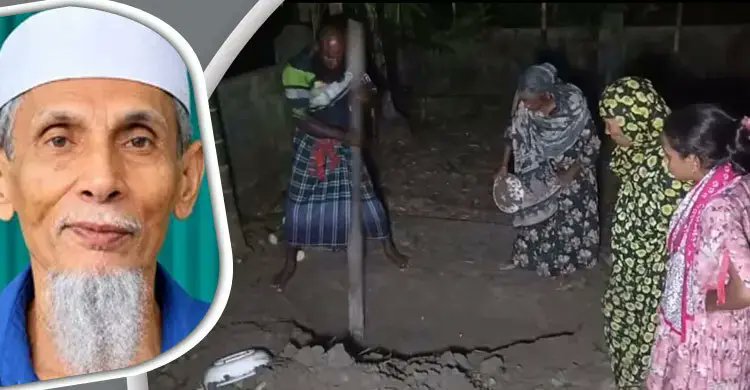
In an independent, sovereign country, why must a man’s wife, daughter, and sister dig his grave by torchlight in the dead of night?
Why should a freedom fighter like Manik Pashari, who was the complainant or a witness in the case against Delawar Hossain Sayedee, be denied even the right to a peaceful burial or a proper funeral prayer in accordance with his religious traditions?
In the past, after executing individuals convicted of war crimes, the administration took responsibility for arranging their burials to maintain law and order and prevent tensions. Why, then, is the weakness and failure of administrative arrangements so evident today? As citizens, are we to be deprived of our right to die and be buried in peace?
///
Today, October 24, I attended the funeral prayer of valiant freedom fighter Muhammad Shafiqul Rahman, former president of the National Press Club and former Member of Parliament for Chandpur-4 (Faridganj). The prayer was held after the Isha prayer at Gulshan Society Mosque.
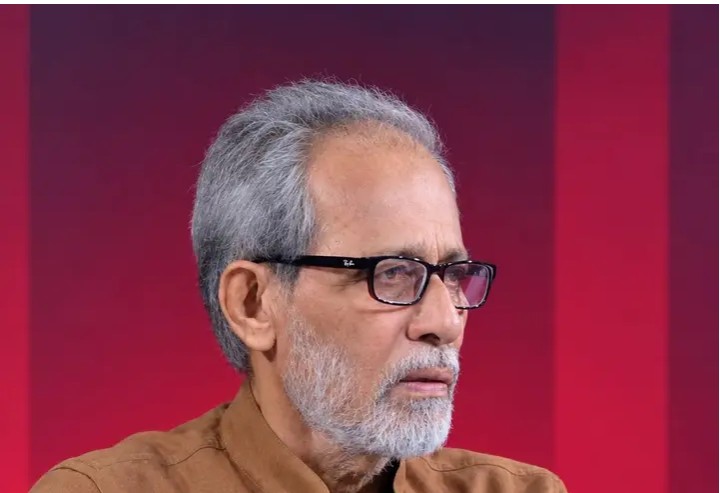
Shafik Bhai was someone very close to me. After his release from prison, I went to visit him at his home. I did not feel good seeing him in that condition. He was mentally distressed because he could no longer walk and had lost the rhythm of a normal life.
I did not want Shafik Bhai to be given such a farewell. The unceremonious, almost solitary departure of such a distinguished journalist and valiant freedom fighter is truly painful. Apart from a handful of journalists, some of his relatives, and a few people from his locality, nobody else was present at the funeral prayer. Because of the hostile environment, news of the funeral was not widely publicised either. Even among the party activists who came, there was apprehension about whether the funeral prayer would face another obstruction. In the end, the prayer was completed peacefully. His body was then placed in cold storage.
His only daughter, who lives in the United States, is expected to return to the country on Sunday. His burial will take place on Monday.
It was necessary to arrange another funeral prayer for him on Sunday in the grounds of the National Press Club, which he had led as president for two terms and as general secretary once, and whose premises had once been bustling with his presence. But I do not know whether the authorities will arrange it. It now seems that even death has its own political affiliations, and political calculations are being applied even to the dead.
The changes of 2024 may have given us many things, but how much have they made us more compassionate, socially and politically? Today’s experience has brought precisely this question to the forefront. In this country, will a person’s dignity continue to be determined by caste, party affiliation, and political position even after death? I am also now wondering whether the state will arrange the Guard of Honour that a valiant freedom fighter is entitled to receive.
Today, I saw in the news that, amid allegations that Jamaat had obstructed the burial in Pirojpur, a Guard of Honour had to be given secretly to the body of Manik Pashari, a freedom fighter who was the complainant in the case against Maulana Delwar Hossain Sayeedi.
If even after death a person’s dignity depends on calculating party affiliations, if the honour of a freedom fighter is determined by political rivalries and considerations of vengeance, then the question will inevitably arise: Is this what the reality looks like in the “discrimination-free Bangladesh” that was promised after Sheikh Hasina was removed from power?
Differences of opinion may exist, and political disagreements may persist. But a person must not be deprived of the respect they deserve in their final farewell. Is it unreasonable to expect at least this much from the state and society, particularly in the case of a valiant freedom fighter?
Anis Alamgir is a senior journalist and columnist.