


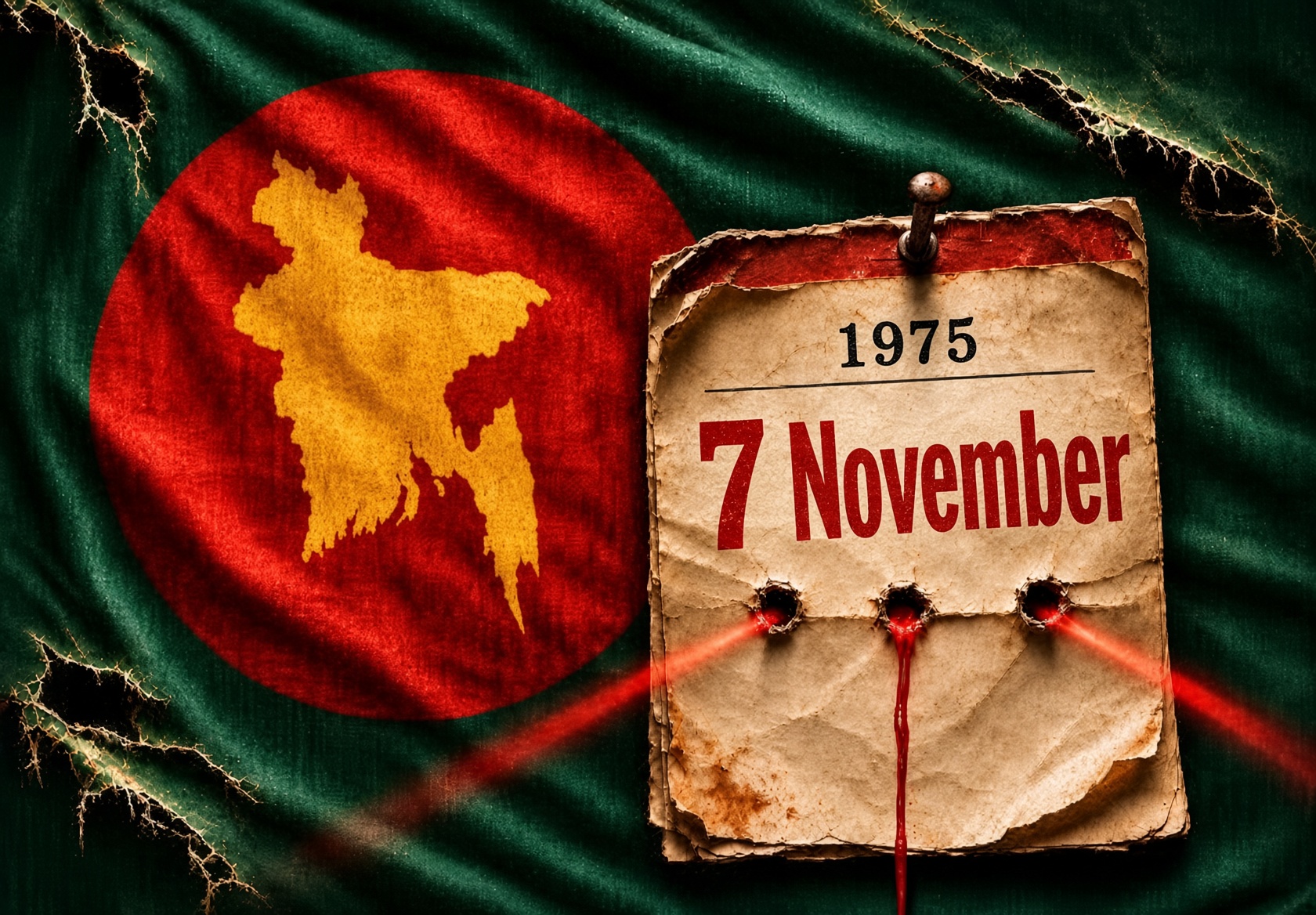
A bloody document of the lust for power, blind ambition, and Ziaur Rahman’s seizure of the throne over a pile of corpses
By Sajeeb Wazed On 15 August 1975, the anti-independence assassin clique murdered the Father of the Nation, Bangabandhu Sheikh Mujibur Rahman, along with his family. On 3 November, the four national leaders were killed inside prison. Just four days later, from 7 November, a barbaric massacre of freedom fighters and soldiers began within the armed forces.
▪️ Cold-blooded murder of top heroic freedom fighters in the name of a coup
On 7 November, in the name of the so-called “Sepoy Revolution,” three commanders of the Liberation War were first killed inside Dhaka Cantonment. Khaled Mosharraf (Bir Uttam) was the commander of Sector 2 and the founder of “K Force”; Dhaka’s “Crack Platoon” was itself a creation of his sector. K N Huda (Bir Uttam) was an accused in the Agartala Conspiracy Case and the commander of a sub-sector under Sector 8. A T M Haider (Bir Uttam) trained countless guerrillas and later became the commander of Sector 2. At the headquarters of the 10th East Bengal Regiment, Captain Asad and Captain Jalil cold-bloodedly shot and killed these three heroes.
British journalist Anthony Mascarenhas wrote in his book Bangladesh: A Legacy of Blood: “On this day, unruly jawans killed 13 army officers, including a woman doctor. Even the wife of one army officer was killed at this time.”
▪️ Zia’s release from captivity and reckless seizure of power
On the night of 6 November, the Lancer forces of Faruk, led by the 15 August killer Lancer Mohiuddin, freed the house-arrested Zia and brought him to the office of the Second Field Artillery Regiment. Researcher Golam Murshid wrote in his book Muktiyuddha O Tarpar: Ekti Nirdoliyo Itihash (The Liberation War and After: A Non-Partisan History) that immediately upon being freed, Zia went straight to the radio without taking permission from President Justice Sayem and declared himself “Chief Martial Law Administrator,” which was later changed to “Deputy Chief Martial Law Administrator.”
▪️ Zia’s rule: A dense web of coups and wholesale extrajudicial killings
During Zia’s rule, more than 20 military coups took place, averaging almost one every three months. According to Golam Murshid, after each coup, many army personnel were hanged, and mass graves were given without trial. Researcher Marcus Franda wrote in his book Bangladesh: The First Decade that after the air force coup of 2 October 1977, nearly two and a half thousand army personnel were killed in the repression. According to Murshid’s information, only 11 officers survived in the air force, of whom only three could fly aircraft.
▪️ Legalization of indemnity and state rehabilitation of the killers
To stop the trial of the 15 August massacre, Khondaker Mostaq issued the “Indemnity Ordinance” on 26 September 1975. Ziaur Rahman incorporated that black law into the Constitution through the Fifth Amendment in 1979. The killers were rewarded by being given high-ranking jobs in embassies abroad. Thus began the dark age of impunity.
▪️ Zia’s tragic end and the farce of a trial
The final outcome of this autocratic rule built on conspiracy and blood was also bloody. On 30 May 1981, Ziaur Rahman was killed in a military coup in Chittagong. Afterward, Major General M A Manzur, who had played a glorious role in the Liberation War, was detained and shot in the head in military custody without any judicial process. Later, the Sattar government, in a farcical trial, hanged another dozen freedom-fighter army officers.
▪️ History’s verdict
From Khaled-Huda-Haider to Manzur, the heroes of the battlefield were wiped out one by one. In the name of suppressing coups, thousands of ordinary soldiers hung from the gallows or disappeared into mass graves. Many of their relatives still do not know where their loved ones are buried. This was no revolution; it was a planned bloody chapter of erasing freedom fighters from the armed forces, whose blood was sought to be buried under the black law of indemnity.
The blood of that day still demands justice.