


The NGO Affairs Bureau has withdrawn the order cancelling the registration of Muslim Aid-UK’s Bangladesh Field Office and reinstated the organisation’s registration. This decision was communicated in an order issued on 19 October. Earlier, on 13 August, the registration had been cancelled under the Foreign Donation (Voluntary Activities) Regulation Act, 2016.
In the order signed by Barrister Md. Khalilur Rahman Khan, Director (Registration and Audit) of the NGO Affairs Bureau, it was stated that the cancellation order for Muslim Aid-UK’s Bangladesh Field Office registration was being withdrawn and the registration reinstated. The organisation’s registration number is 552. It was registered on 10 November 1991.
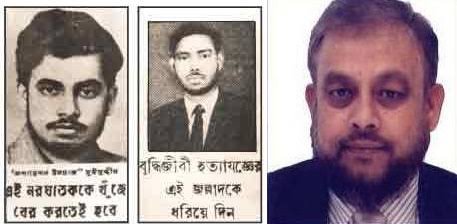
Convicted war criminal Chowdhury Mueen Uddin is (former) chairman of Muslim Aid-UK, which has for decades been linked to funding and supporting Jamaat-e-Islami and other extremist Islamic groups in Bangladesh.
Mueen Uddin denied the war-crimes charges, but documents, contemporaneous news clippings, and the findings of Bangladesh’s International Crimes Tribunal (ICT-BD) establish his involvement in the abduction, torture, and murder of Dhaka University teachers and other intellectuals in December 1971 (he was convicted in absentia in 2013 and sentenced to death on those charges).
Sources at the NGO Affairs Bureau said that the organisation’s Country Director, Mohsin Siddiqui, had appealed to the Prime Minister’s Office against the earlier cancellation decision. After the appeal hearing, on 17 August the Prime Minister’s Office directed the NGO Affairs Bureau to withdraw the cancellation order and take the necessary steps to reinstate the registration.
However, this was made subject to the organisation restructuring its board of directors and management, and to its compliance with all the conditions imposed at the time of registration.
An official of the NGO Affairs Bureau, speaking to TBS on condition of anonymity, said that government restrictions had previously been imposed on the organisation’s activities over its relief work among the Rohingya. In October 2017, Muslim Aid-UK and two other NGOs were instructed to stop distributing relief among Rohingya in Cox’s Bazar. The other two organisations were Islamic Relief and the Allama Fazlullah Foundation.
The official added that allegations had been raised that the organisation was carrying out unauthorised activities under the cover of relief work among the Rohingya. However, the organisation’s activities across Bangladesh were not halted in 2017; restrictions were applied only to relief operations among the Rohingya. The decision of 13 August 2026, by contrast, concerned the cancellation of the organisation’s registration in Bangladesh.
Muslim Aid is a UK-based international humanitarian aid and development organisation. It was established in London in November 1985 by 23 British Muslim organisations with the aim of assisting people affected by the famine in Africa. Its core work includes poverty alleviation, emergency disaster relief, healthcare, education, clean water and sanitation, livelihood development, and the rehabilitation of vulnerable people.
In Bangladesh, the organisation had already sent emergency relief during the devastating floods of 1985, before establishing a permanent office. It formally began field-level operations after the catastrophic cyclone of 1991. Thereafter, alongside emergency relief distribution, it implemented projects for the construction of cyclone shelters, agricultural development, and long-term livelihood-based initiatives.
According to information on the organisation’s own website, its activities in Bangladesh cover disaster management, addressing climate-change risks, education, healthcare, skill development, and livelihood support, among other sectors.