


Two separate attacks on police personnel in Narayanganj and Bogura within days of each other have underscored a pattern of violence against law enforcement that first intensified during the July 2024 anti-government movement and has never fully subsided.
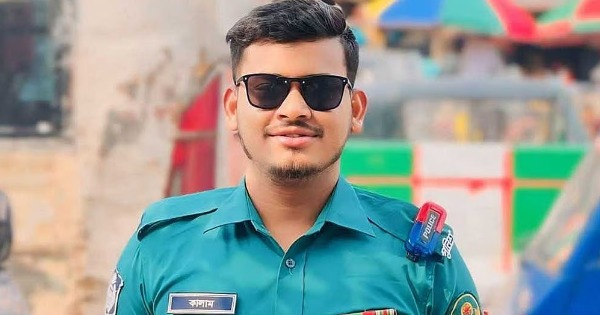
In Rupganj, Narayanganj, Abul Kalam—identified by his family and multiple reports as an Armed Police Battalion (APBn) member serving in Habiganj and home on leave—was allegedly lured to an isolated wetland (beel) in the North Masabo area of Tarabo Municipality on Thursday night (5 November).
A group of 10–15 men, led by Shahjalal (brother of a man Kalam had earlier helped police arrest on drug-related charges), beat him severely. His arms and legs were broken and a tendon in one leg was severed with a sharp weapon. Locals who heard his screams rescued him; he was first taken to a private hospital and later admitted to the National Institute of Traumatology and Orthopaedic Rehabilitation (NITOR) in Dhaka.
Family members say Kalam had long opposed drug dealing in the area and faced repeated threats after assisting in the arrests of Shahadat and Emdadul. As of the latest reports, no formal case had been registered. Local police confirmed they were aware of the incident but said they had not yet fully verified Kalam’s current service status.
A day later, in Fulbaria village under Sonatala Upazila of Bogura, a mob attacked police who had gone to execute a court warrant.
On Friday morning (6 November), SI Shimul Kumar Das and ASI Mehedi Hasan, travelling in a police pickup, arrested Golam Kabir Suman (36), wanted in a fraud case. As they tried to place him in the vehicle, local people surrounded them, beat the officers (injuring three, including the SI), vandalised the pickup, and snatched Suman from custody.
Additional police later restored order. Four women have been detained in connection with the attack, and police have filed a case.
These incidents are the latest in a sustained pattern that began in July 2024 as part of the anti-government movement. During that period, dozens of police personnel were brutally killed and several thousand were severely injured by protesters; numerous police stations were attacked or burned.
After the interim government took office, mob violence became more commonplace, with regular assaults on police stations and continued killings of police personnel.
Although the frequency of such attacks has declined under the current BNP-led government, the persistence of targeted violence against officers—whether for personal vendettas, to free accused persons, or simply to assert local dominance—continues to undermine the rule of law and the ability of police to perform routine duties without fear of mob retaliation.
Police in both districts have said investigations are underway. The two cases, occurring within 24 hours of each other in different parts of the country, illustrate how the culture of impunity toward attacks on law enforcement that took root in mid-2024 has not been fully reversed.