


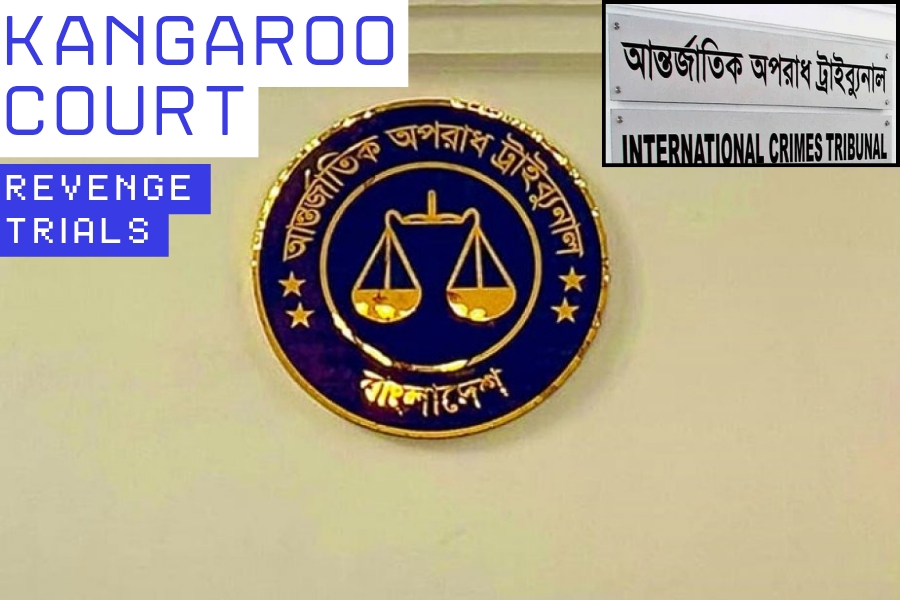
Two years after its reconstitution under the army-backed Yunus-led interim government, the Jamaat-controlled International Crimes Tribunals (ICT-BD) have delivered verdicts in seven cases involving alleged crimes against humanity during the 2024 protests.
A closer review of the proceedings, however, reveals a consistent pattern that raises fundamental questions about judicial independence, due process, and the right to a fair trial.
More than 200 individuals have been detained or shown arrested on the tribunals’ orders, often under procedures that do not require evidence of a crime at the time of arrest.
Neither tribunal has granted bail to a single detainee—despite some individuals spending over two years in custody without formal charges, others being elderly or seriously ill, and questions surrounding the strength of the allegations in several cases.
The pattern extends further. The tribunals have not declined to take cognizance of any formal charge submitted by the prosecution. They have not rejected any application to frame charges, nor granted any discharge application filed by the defence.
Every accused who has stood trial has been convicted of at least one offence (one who turned approver was later pardoned).
These outcomes prompt an uncomfortable question: are the tribunals independently assessing the prosecution’s evidence, or have the proceedings become an exercise in securing predetermined results? As journalist David Bergman observes: “A record like this does not prove that any individual decision was wrong. But it is fair to argue that a court that is genuinely weighing the evidence and assessing the law does not side with the prosecution on these contested questions, in every case, for two years.”
Several structural factors appear to have contributed. Prosecutors with overt political affiliations—linked to Jamaat-e-Islami and the BNP—have been appointed, raising concerns about impartiality and suggesting a focus on political narratives and retribution rather than professional detachment.
Judges with political ties and limited specialist experience in international criminal law have also been appointed. Finally, Articles 47(3) and 47A of the Constitution restrict constitutional remedies, insulating key decisions on arrest, detention, bail, and charge-framing from independent judicial review before final judgment.