


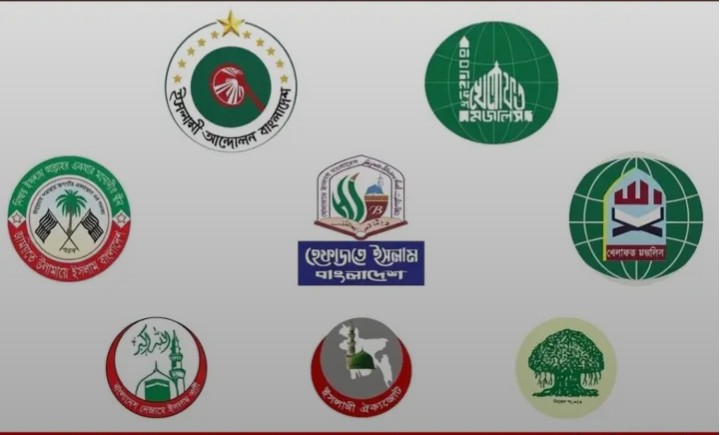
A new political platform of seven Qawmi madrasa-linked Islamist parties has been formed under the supervision of Hefazat-e-Islam, announced after a meeting on the morning of Thursday, 22 October 2026, at Makhzanul Ulum Madrasa in Dhaka’s Khilgaon.
The seven parties are: Islami Andolan Bangladesh, Bangladesh Khelafat Majlis, Jamiat Ulama-e-Islam Bangladesh, Islami Oikya Jote, Khelafat Majlis, Bangladesh Khelafat Andolan, and Bangladesh Nezam-e-Islam Party.
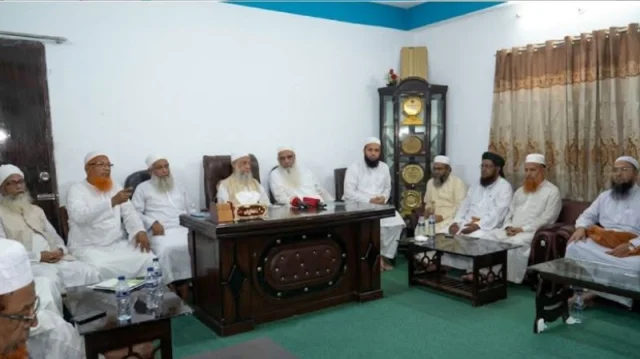
Hefazat-e-Islam Secretary General Maulana Sajidur Rahman confirmed the development, stating that the seven Islamic parties have agreed to work together from now on under the platform named “Samomona Islami Dal” (Like-minded Islamic Parties). He added that parties previously in other alliances have agreed to leave those and join this political platform. A follow-up meeting of the seven parties is scheduled for 5 December.
The process had been underway for months, primarily to contest the upcoming local government elections in a united manner. In the last national election (12 February 2026), some Qawmi-stream parties aligned with the BNP or the Jamaat-e-Islami-led alliance. With BNP and Jamaat indicating they would field independent candidates in the party-symbol-free local polls, the Qawmi parties created this new platform through Hefazat’s mediation.
Context and broader framing
This builds on earlier unity efforts led by Hefazat Ameer Muhibbullah Babunagari. A liaison committee headed by Sajidur Rahman was formed in late September after meetings in Fatikchhari, Chattogram, with a Dhaka session planned for 22 October.
Of the seven, Jamiat Ulama-e-Islam Bangladesh had contested the February national election as a BNP ally, while Bangladesh Khelafat Majlis, Khelafat Majlis, and Nezam-e-Islam had participated in the Jamaat-led alliance. The new arrangement positions the parties to operate more cohesively under Hefazat’s umbrella for local elections, amid ongoing political realignments after the 2024 changeover.
Hefazat, while describing itself as non-political, has long influenced Islamist politics through its Qawmi network. It has maintained contacts with the current BNP-led government under Prime Minister Tarique Rahman, including a meeting in which Hefazat presented a revised nine-point charter (down from its historic 13-point demands). Core elements of earlier charters included stronger anti-blasphemy measures, recognition of certain madrasa qualifications, and calls related to past incidents such as Shapla Chattar. Demands have historically included the release of arrested ulama, madrasa students, and supporters in what Hefazat termed false cases, rather than a blanket call for the release of all extremists or militants.
Since the 2024 political transition, groups associated with Hefazat and similar circles have been linked to mobilizations under the “Touhidi Janata” banner in various locations, some involving protests that turned confrontational. In June 2026, a rapid spread of black-and-white “Kalema” flags (bearing the Islamic declaration of faith) across Dhaka and other areas sparked debate; the designs resembled those historically used by groups such as the Taliban or al-Qaeda, prompting security concerns, though supporters framed them as expressions of faith. Some Hefazat-linked figures were reported as supportive of the displays.
Analysts note the platform could serve as a distinct Qawmi-oriented Islamist bloc, potentially acting as an alternative pole to Jamaat-e-Islami while remaining compatible with the BNP government’s broader political environment ahead of local polls and amid concerns about possible Awami League re-entry into politics. Direct, public confirmation of specific high-level consultations with Prime Minister Tarique Rahman, BNP President Mirza Fakhrul Islam Alamgir, or cabinet ministers specifically to launch this alliance has not featured in contemporaneous reporting, though BNP-Hefazat engagement is established.
The development underscores continuing fragmentation and realignment within Bangladesh’s Islamist political spectrum following the national election and the approach of local government contests.