


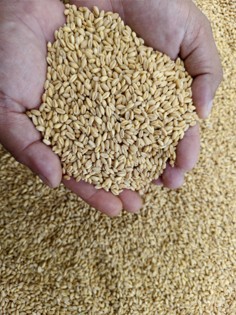
Nearly 175,000 tons of US wheat have reached Chattogram port as part of Bangladesh’s latest purchase of 220,000 tons under government-to-government arrangements.
The US Embassy in Dhaka called the shipment “nutritious” and “high-quality” American wheat that supports food security and bilateral trade. The delivery forms part of larger commitments under a July 2025 memorandum of understanding with US Wheat Associates (up to 700,000 tonnes annually for five years) and the Agreement on Reciprocal Trade (ART) signed by the interim administration of Muhammad Yunus on 9 February 2026—just three days before the national election and under conditions of limited public disclosure.
The wheat has arrived at a documented premium. One recent approval set the G2G price at $322 per tonne for 220,000 tonnes, compared with an open-tender rate of $297.92 per tonne for 50,000 tonnes—an immediate $24 difference. Earlier consignments were priced at $302.75 and $308 per tonne (CIF liner out).
Industry and ministry comparisons have placed the premium over Russian or Black Sea wheat at roughly $24 to $65–70 per tonne, driven largely by longer shipping times (about 55 days from the United States versus roughly 15 from the Black Sea). The Food Ministry has defended the purchases on grounds of higher protein content (claimed around 13.5% versus about 11% for Russian wheat), lower spoilage rates, and supply reliability, while rejecting allegations of irregularities.
Critics, including some importers, have questioned whether the contracted minimum protein of 11.5% justifies the prices relative to open-market levels and have raised concerns about the involvement of a Singapore-based intermediary.
In a detailed analysis published in The Daily Star, engineer and writer Kallol Mustafa described the broader ART as “problematic” and contrary to national interest. He noted that the reciprocal tariff on Bangladeshi exports was reduced only from 20 percent to 19%. Added to an existing average general tariff of about 15.5%, this produces a total tariff burden of roughly 34.5% on Bangladeshi goods entering the US market.
In exchange for that modest reduction, the agreement requires extensive concessions. Bangladesh is to grant tariff concessions on 6,710 U.S. products while receiving reciprocal concessions on only 1,638. Of these, 4,500 US products obtain immediate duty-free access (EIF category), covering livestock, meat, fish, chemicals, textiles, machinery, and industrial goods. Tariffs on 1,539 products under Category B-5 are halved immediately and phased to zero over five years; 672 products under Category B-10 follow a longer phase-out to zero by the tenth year. Mustafa warned that these concessions risk exposing local agricultural and industrial producers to competition from US goods and reducing government tariff revenue.
On mandatory purchases, the op-ed highlighted concrete obligations that lock Bangladesh into higher-cost supplies. Bangladesh must buy 14 aircraft from Boeing. Over 15 years it must purchase U.S. energy products, particularly LNG, worth $15 billion (approximately Tk 1.8 lakh crore). It must also buy US agricultural products worth $3.5 billion annually (approximately Tk 42,000 crore), including at least 700,000 tonnes of wheat each year for five years and soybeans valued at $1.25 billion (or about 2.6 million tonnes).
In addition, it must increase purchases of US military equipment while reducing purchases from other countries. Mustafa observed that Bangladesh has historically limited imports of US agricultural and energy products precisely because of higher costs and longer delivery times. The agreement “prevents Bangladesh from importing these products at more competitive prices and faster delivery times from the international market.
This will cause financial losses and may require subsidies or special incentives to private sector importers.” Increased military purchases, he added, raise both financial costs and geopolitical risks.
Comparative context reinforces the asymmetry. Mustafa pointed out that no other South Asian country subjected to the reciprocal tariffs had signed a comparable agreement with the United States.
Later commentary has noted imbalances in binding language: of 179 instances of the mandatory word “shall,” “Bangladesh shall” appears 131 times while “US shall” appears only six times. Non-tariff barrier removals further tilt the balance. Bangladesh must recognize U.S. FDA certifications and prior marketing approvals for medical equipment and pharmaceuticals, accept US federal motor vehicle safety and emission standards, and recognize USDA sanitary and phytosanitary measures as alternatives to its own. Within 24 months it must allow biotechnology products deemed safe in the United States to enter without additional testing or mandatory labelling.
Mustafa argued that these steps effectively reduce Bangladesh’s ability to enforce biosecurity standards for food and agricultural imports, eliminate previous requirements such as chemical pest treatment for US cotton, and prevent restrictions or labelling on genetically modified products—raising public-health concerns.
Strategic clauses extend beyond commerce. If the United States adopts border or trade measures for national security, Bangladesh must adopt “complementary restrictive measures.” It must align with US export controls, restrict agreements with third countries that could harm US exports (including digital trade deals), and face the risk of US cancellation and reimposition of punitive tariffs if it enters free-trade or preferential arrangements with “non-market” countries such as China or Russia that undermine the agreement. Port, terminal, and logistics systems must use technologies that prevent data leakage and restrict software viewed as harmful to US national security.
Mustafa concluded that these provisions subordinate industry, agriculture, energy, and infrastructure to US commercial interests, draw Bangladesh into US geopolitical projects, and restrict independent foreign-policy choices. “Through this so-called trade agreement, arrangements have effectively been made to establish US dominance over Bangladesh’s economy, trade, and foreign policy,” he wrote. “This agreement is against the national interest and violates Bangladesh’s independence and sovereignty.”
He argued that an agreement signed by a temporary interim government while the public was kept in the dark cannot be considered fully legitimate, and he urged the newly elected government to initiate cancellation through parliamentary discussion (the agreement is to take effect 60 days after completion of legal processes).
Economists have echoed the critique of imbalance. Mustafizur Rahman of the Centre for Policy Dialogue stated that the United States imposed nearly identical tariff rates on around 60 countries, so “Bangladesh gained no real advantage from signing the agreement. Instead, it has committed to importing various US products at higher prices.” He recommended beginning negotiations to terminate the deal if the extra tariff exposure erodes competitiveness.
M.A. Razzaque of RAPID described it as “hardly… a trade agreement,” because “Bangladesh made all the concessions but received nothing in return.” Business figures have focused on practical obstacles: Mostafa Kamal of Meghna Group noted that meeting large soybean-seed import targets would require protection for the domestic crushing industry. Public reactions have been direct; one reply to the US Embassy post declared, “Yes, #Bangladesh bought worst quality wheat with the highest possible price in the market! It’s a shame!”
The interim government has framed the package—wheat and other agricultural purchases, the aircraft order, energy commitments, and tariff reductions on US goods—as necessary to narrow the trade deficit and protect garment-export access after US reciprocal-tariff threats. Critics counter that the modest tariff cut (one percentage point on the reciprocal rate) is outweighed by higher import costs, revenue losses, reduced policy space on subsidies and standards, and binding geopolitical alignments.
With Bangladesh producing only about 13% of its wheat needs, the latest shipment underscores both the scale of import dependence and the continuing debate over whether the ART’s terms deliver net gains or lock in costly, one-sided obligations.