


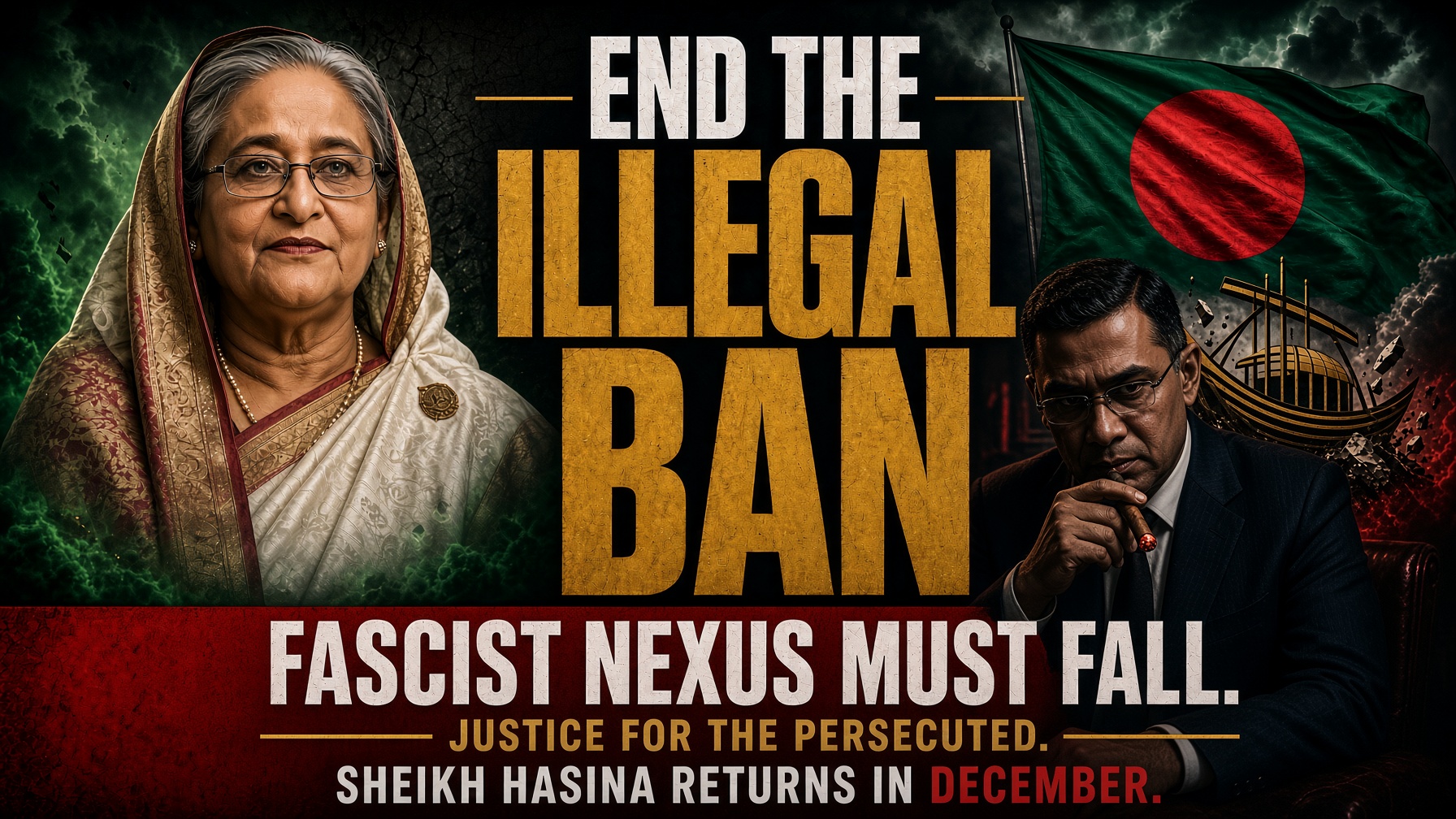
The ongoing illegal ban on the activities of the Bangladesh Awami League, combined with systematic persecution, arbitrary detentions, and prolonged imprisonment without trial, reveals the fascist mindset of the Yunus-BNP-Jamaat nexus that has sought to erase the country’s largest political force since the July 2024 upheaval.
The ban, first imposed by the Yunus-led interim administration in May 2025 under the Anti-Terrorism Act and later entrenched by parliamentary measures after the 2026 elections that excluded the Awami League, prohibits meetings, rallies, publications, and political activity pending International Crimes Tribunal proceedings.
Courts have rejected challenges on procedural grounds, leaving the party of the Liberation War sidelined from democratic life.
Human rights monitors, including Human Rights Watch, have documented thousands of Awami League leaders, activists, former lawmakers, and supporters held in prolonged pretrial detention—many without formal charges, some for well over two years—with repeated bail denials. Deaths in custody have been reported, and lawyers representing Awami League figures have themselves faced arrest, raising grave concerns about due process and judicial independence.
These measures form a pattern of political retribution rather than accountability. While cases from the previous era have been withdrawn in large numbers for other parties, Awami League affiliates continue to face mass prosecutions, death sentences in absentia (including against Sheikh Hasina), and the misuse of counterterrorism laws.
The nexus—spanning the Yunus interim period and the subsequent BNP-led government under Prime Minister Tarique Rahman, with Jamaat-e-Islami as a key political actor—has pursued this exclusion while the banned party’s grassroots face harassment, surveillance, and economic pressure.
In a stark contrast, Sheikh Hasina has reaffirmed her unwavering resolve to return to Bangladesh in December 2026.
Speaking virtually from India, the former prime minister stated that she and senior Awami League colleagues plan to return and surrender before the courts, declaring: “They may arrest me on my return, they may even kill me… Still, I have to go. My party leaders and workers are being subjected to tremendous repression. If death comes, I want it to come on my own soil.”
She has repeatedly emphasized December—Bangladesh’s Victory Month—as the time of her return, framing it as a duty to her people and the ideals of the Liberation War, undeterred by the death sentence handed down in absentia or risks of torture and imprisonment. Her son has noted that an exact date will be announced closer to the time.
Recent statements by the current leadership alleging collusion between the “ousted authoritarian regime” and Jamaat to create labor unrest further illustrate the climate of accusation and division, even as the Awami League remains barred from open political activity.
The illegal ban, arbitrary detentions exceeding two years without trials, systematic denial of bail, and broader persecution stand as a direct assault on multiparty democracy and the rule of law.
Sheikh Hasina’s planned return by December underscores the resilience of the Awami League’s democratic mandate and the demand that Bangladesh’s future be decided by its people through inclusive, free political processes—not by bans and retribution.