


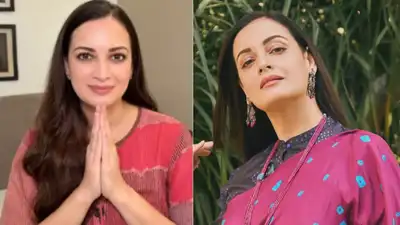
Bangladesh’s leading newspaper Prothom Alo has questioned whether the Brihanmumbai Municipal Corporation (BMC) deleted Bollywood actress Dia Mirza’s anti-firecracker video message from its social media handles simply because of her religious identity.
The campaign followed a Bombay High Court order on October 15 directing the BMC to act against rising air pollution from Diwali firecrackers and to use well-known personalities for public awareness. The civic body, run by the BJP-Shiv Sena alliance, approached several celebrities free of charge. Besides Mirza, actors Madhuri Dixit and Marathi star Nishigandha Wad, and cricketer Ajinkya Rahane also recorded messages. Only Mirza’s video was later taken down.
Prothom Alo reported that the deletion came after objections from Hindu nationalist voices. Mumbai BJP president Amit Satam posted, tagging the BMC: “We will not take lessons from Dia Mirza on how Diwali should be celebrated. The roots of our culture lie in our traditions.” Similar posts followed from other hardline accounts. A BMC official told the media the video was removed due to public anger over one particular person, while the rest of the campaign remained online. No formal statement or explanation was issued by the corporation.
Central minister and Republican Party of India leader Ramdas Athawale, an NDA ally, noted that “Dia is an actress. She is a Muslim,” but added that the issue was not about any particular community. He said India’s Constitution guarantees the right to celebrate festivals, that Hindus join Eid and Muslims celebrate Diwali, and that bursting crackers is part of the festival’s significance—while still acknowledging the need to curb excessive pollution.
Shiv Sena spokesperson Shaina NC remarked that Diwali is the festival of lights and that Mirza’s own name contains “Deep.” She argued the actress should understand the cultural and religious emotions attached to the festival and that Mumbaikars do not need advice from outsiders.
Mumbai Mayor Ritu Tawde (BJP) offered a different explanation, calling Mirza a long-time opponent of Hindutva who has made anti-government remarks and selectively opposed certain issues. “There is no connection with any religion or community,” Tawde said. “Her message was removed because of her anti-Hindutva stance. We believe in secularism.”
Mirza herself expressed surprise on Monday. She pointed out that the High Court had ordered the campaign, the BMC had decided to run it and had asked her to record the video, and asked why others were criticising it. She stressed that air pollution is a serious public-health issue and that she had taken no fee for the work, writing on social media: “There are no longer days of good deeds.”
Prothom Alo also recalled Mirza’s family background: her biological father, Frank Handrich, was a German Christian graphic designer; her mother Deepa is a Bengali Hindu interior designer; after her parents’ separation when she was four, her mother married Ahmed Mirza of Hyderabad, and Dia has used her stepfather’s surname. She is now married to Hindu businessman Vaibhav Rekhi.
The newspaper’s framing—that the selective removal of only Mirza’s message raises questions about her religion—has drawn attention amid the wider political controversy in Mumbai over the pollution-control campaign.