


Democrats are preparing a broad package of bills aimed at artificial intelligence systems and the rapid expansion of data centers once they take control of Congress in January, according to lawmakers, aides, and advocates.
The push represents a clear break from the outgoing Republican-led Congress, which largely prioritized accelerating AI development and stopped short of passing significant restrictions—even as public opposition grew over data centers’ heavy electricity demands and rising power costs for consumers.
Incoming Democratic priorities include:
- Measures to protect consumers from higher electricity bills linked to data centers.
- Requirements for independent testing and evaluation of the most advanced AI models against safety standards.
- Legislation clarifying when AI companies can be held legally responsible for harm caused by their systems.
Any new rules face long odds while President Donald Trump remains in office. He has repeatedly rejected calls for mandatory federal AI regulations and has instead signaled support for states that want to embrace the technology.
Still, control of key committees will give Democrats new tools. They plan to hold hearings, compel testimony from industry leaders, and build public and legislative momentum—especially if AI systems produce real-world harms. Representative Greg Casar of Texas, chair of the Congressional Progressive Caucus, has already said AI executives should be called to testify under oath.
Federal restrictions could slow the release of new models or force companies to modify their systems, potentially affecting profits. Those concerns contributed to a sharp sell-off in technology shares on Thursday.
Key figures and specific plans
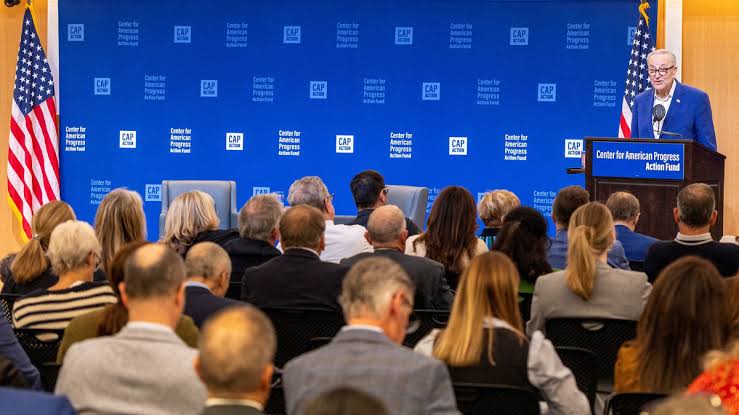
Senator Chuck Schumer of New York, expected to become Senate majority leader, said this week that shielding consumers from higher energy costs tied to data-center growth will be one of his priorities next year.
Representative Lori Trahan of Massachusetts intends to advance legislation requiring independent experts to evaluate leading AI models against safety benchmarks, and to clarify company liability when AI systems cause harm, according to her deputy chief of staff. Representative Zoe Lofgren of California, seeking to chair the House Science Committee, has said Democrats will pursue “responsible regulations for AI while also fostering innovation.”
Newly elected Senator Abdul El-Sayed of Michigan has called for an independent agency with authority to oversee AI companies.
Public support for stronger rules is already high. A Reuters poll published in October found that most U.S. voters believe the Trump administration and Congress are not taking AI risks seriously enough and want new regulations.
Analysts note that while a presidential veto remains a major obstacle, Democrats could try to attach AI provisions to must-pass legislation or, in a crisis scenario, potentially assemble a two-thirds majority in both chambers to override a veto. They also plan to intensify scrutiny of major AI developers, including OpenAI, Anthropic, Meta, Google, and SpaceX, building on earlier requests for details on security practices and instances of models taking unintended actions.
Source: Based on reporting by Courtney Rozen for Reuters, November 6, 2026.