


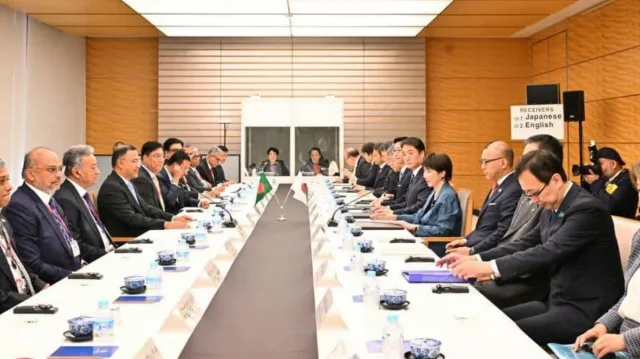
Tokyo has dismissed as baseless the reports in the media and on social media that Japan agreed to take 100,000 workers from Bangladesh every year. Japan’s Ministry of Foreign Affairs said no such decision was made, including at the two countries’ recent summit.
Kitamura Toshihiro, the ministry’s press secretary, said in a post on X on Thursday, October 29, that the reports were not accurate. He said the October 27 summit between the prime ministers of Bangladesh and Japan made no decision on the matter. He pointed readers to the official summary of the meeting on the ministry’s website.
Before Japan responded, several Bangladeshi outlets had reported a plan to send 100,000 workers to Japan each year.
Some TV channels cited the Ministry of Expatriates’ Welfare and Overseas Employment, saying the plan was based on demand in Japan’s labor market. They said it would give priority to technical interns, specified skilled workers and skilled professionals in various fields.
Tokyo’s statement makes clear the difference between the two claims. A plan by Bangladesh to send workers is not the same as an agreement by Japan to accept a fixed number of them.
The official summary of the October 27 summit on the Japanese ministry’s website does not mention any decision to take 100,000 Bangladeshi workers a year. It says the two leaders discussed economic cooperation, investment, regional connectivity and security.
At the meeting, Japanese Prime Minister Sanae Takaichi spoke of the potential for 1 trillion yen in Japanese private-sector investment in Bangladesh over the next five years. The two sides said they hoped this investment could create around 200,000 jobs in Bangladesh.
Bangladeshis can currently go to Japan through the Specified Skilled Worker (SSW) and Technical Intern programs. The two countries signed a memorandum of cooperation on this in 2019. Strict language and qualification requirements keep the process tightly controlled, however. No agreement or practical system for sending 100,000 workers a year exists so far.