


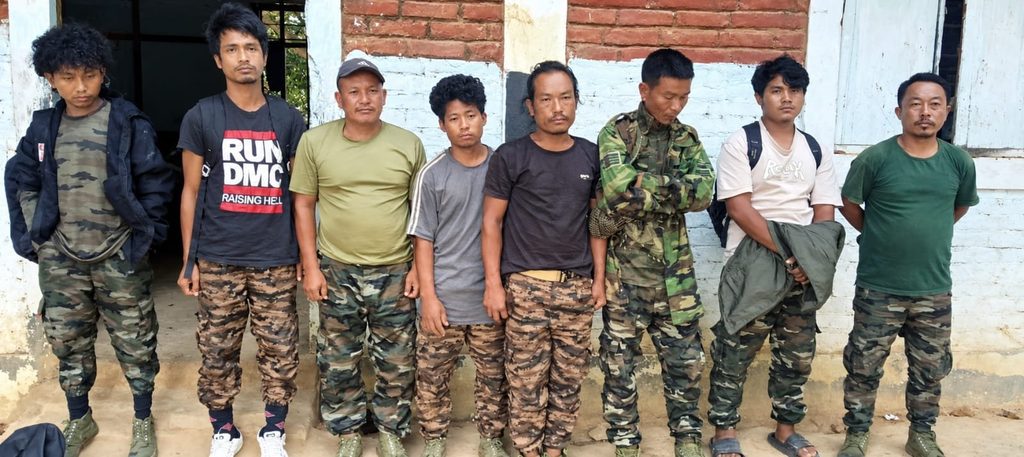
Seventeen men impersonating registered insurgents under a ceasefire deal were arrested from a designated camp in Manipur during one of the biggest recent operations in a high-risk area by the CRPF and its CoBRA commandos. The high-impact joint action has exposed weak links in the verification of individuals staying at designated camps of Kuki insurgents under the Suspension of Operations (SoO) agreement.
This was the first major operation conducted directly at the location of a camp of Kuki insurgents who signed the controversial SoO agreement. These groups have faced allegations of misusing the arrangement to pursue efforts to break up Manipur by failing to remain confined to designated camps, particularly since the Meitei-Kuki ethnic violence began in May 2023.
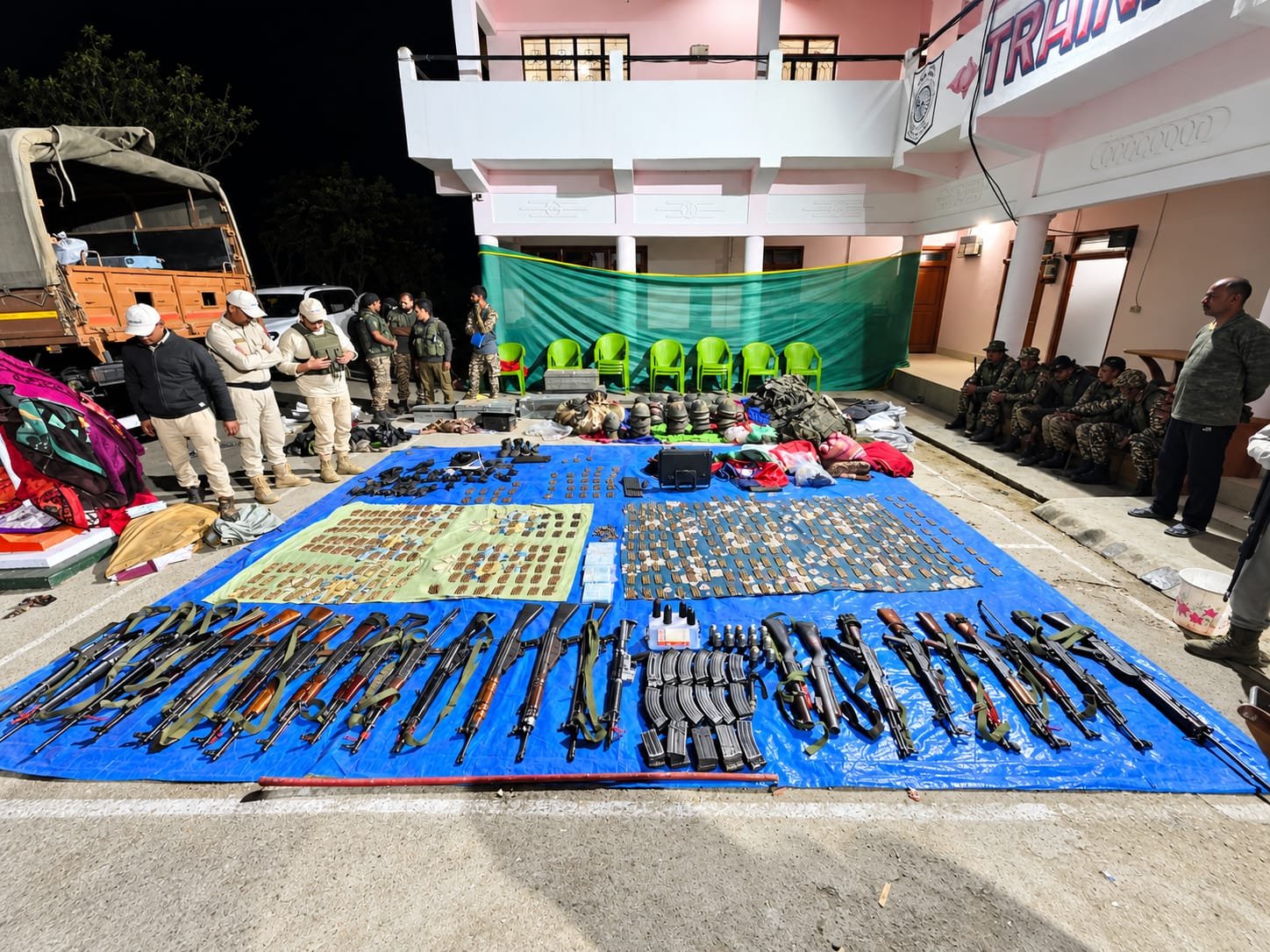
The site, known as Sinai Camp, was a designated SoO facility where insurgents were required to stay, with weapons kept in locked storage and monitored by a joint monitoring group that included military representatives. In the October 23 operation, security forces seized 24 firearms, explosives, ammunition, and communication equipment, according to Manipur Police.
The raid was launched by the Quick Action Team of the Central Reserve Police Force (CRPF) and its special CoBRA units alongside Manipur Police commandos. CoBRA, which has a strong record against Maoists in central India, operated in Manipur for the first time in this context.
The operation has intensified scrutiny of the camp amid demands for accountability after the October 19 killing of three Meitei civilians on the outskirts of Imphal, near the Kuki-dominant Kangpokpi district. Police said the 17 arrested men used false identities—eight posing as members of the Kuki National Army (KNA) and nine as members of the Kuki Liberation Army (KLA). All were detained after verification. Seized items included 24 firearms, 38 magazines, substantial ammunition, explosives, wireless equipment, and other combat gear.
A case was registered under the Bharatiya Nyaya Sanhita, Arms Act, Indian Wireless Telegraphy Act, and Explosive Substances Act. The men were remanded to eight days of police custody until October 31 after medical examinations. Investigators are also examining potential involvement of designated SoO insurgents who were supposed to be at the camp.
Under the SoO, registered cadres were meant to remain in designated camps with weapons in locked storage under regular monitoring. They received a monthly stipend of about Rs 6,000 for rehabilitation. The agreement was subject to annual review for extension or termination. Over two dozen groups operate under two umbrellas for negotiations: the Kuki National Organisation (KNO), led by the Kuki National Army, and the United People’s Front (UPF), led by the Zomi Revolutionary Army. Both signed the SoO.
The raid has renewed questions over verification processes and accountability at SoO camps. The seizure of substantial weapons has heightened concerns, though investigators have not yet fully determined how the arms were held. Sinai Camp drew attention after the October 19 attack in which three civilians collecting firewood were killed. Manipur MLA Thokchom Lokeshwar Singh was among those suggesting the attack may have been planned from the nearby camp and demanded its removal. Police have not established a direct link between the 17 arrested individuals and the civilian killings. Protests followed the deaths, with calls for the camp’s removal amid fears of reigniting Meitei-Kuki tensions.
Manipur Home Minister Govindas Konthoujam stated that the SoO agreement expired on September 4 and had not been renewed. He noted that the arrangement does not permit fresh recruitment. Activists have questioned whether the lack of an active agreement now allows security forces to neutralize the insurgents.
The Kuki National Army (KNA) operating in Manipur has been linked by security analysts and reports to the Kuki-Chin National Army and the Kuki-Chin National Front (KNF) based in Bangladesh’s Chittagong Hill Tracts (CHT), which border India’s Manipur and Mizoram. These groups share ethnic Kuki-Chin ties across the porous frontier. The Bangladesh-based KNF and its armed wing have maintained cross-border connections and, in past years, provided training and sanctuary to members of the Islamist outfit Jama’atul Ansar Fil Hindal Sharqiya.
Jama’atul Ansar Fil Hindal Sharqiya, which includes former members of al-Qaeda-linked Ansar al Islam and other banned groups, and which has been described in security assessments as having ties to broader jihadist networks including elements associated with al-Qaeda and the Tehrik-e-Taliban Pakistan (TTP), was banned by the Awami League government in 2023 after it trained cadres in KNF camps in the CHT in exchange for payments. Since the 2024 political changeover in Bangladesh, these militant networks have reportedly become more active, operating alongside Rohingya groups such as ARSA and RSO in the CHT and Cox’s Bazar areas. This confluence of ethnic insurgent and Islamist elements is viewed as raising the security stakes for the wider region spanning Bangladesh, India’s Northeast, and Myanmar’s border zones.
In a statement on the Sinai Camp operation, Manipur Police said: “In a high-impact joint action on 23 October at the designated SoO Sinai Camp (KNO/KNA & KNO/KLA), CRPF’s Quick Action Team and elite CoBRA units, working with Manipur Police, exposed 17 individuals (8 KNA and 9 KLA) posing as registered cadres with fake identities. All 17 were arrested on the spot.” They described it as a precision strike that delivered a blow to unauthorized armed elements and strengthened efforts for lasting peace in Manipur.
The operation underscores ongoing challenges in managing SoO camps, verifying cadres, and addressing the broader network of Kuki-Chin groups that span national borders and intersect with other militant currents in the region.