


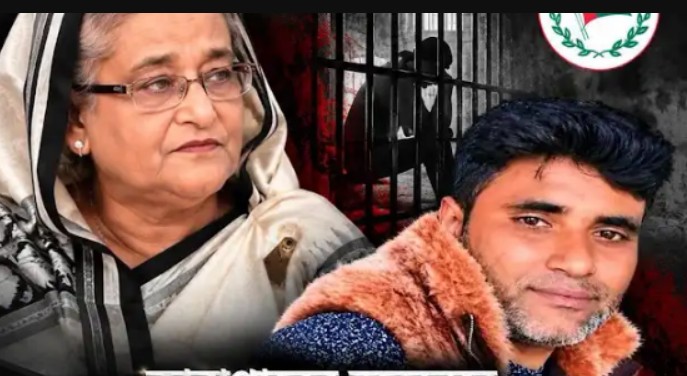
Former prime minister condemns party ban, alleged custodial deaths, torture, mob attacks and destruction of homes and businesses
Former Bangladesh prime minister Sheikh Hasina has accused the authorities that took power after August 5, 2024, of presiding over a sustained campaign of political repression against Awami League leaders, activists, and supporters, warning that the party’s ban and continuing reports of violence have deepened the country’s political crisis.
The allegations highlight the deteriorating position of the Awami League since Hasina’s removal from office, with the party pointing to arrests, alleged custodial deaths, torture, mob killings and attacks on the homes, businesses and property of people associated with the former ruling party.
The political transition began with the fall of Hasina’s government on August 5, 2024, followed by the installation of an interim administration led by Muhammad Yunus. The Bangladesh Nationalist Party (BNP), led by Tarique Rahman, subsequently took office in February 2026.
The Awami League has accused both administrations of failing to protect its supporters and of allowing political hostility to develop into intimidation, collective punishment and violence. The allegations concerning the role of the army and Islamist groups, including Jamaat-e-Islami and Hefazat-e-Islam, require further independent verification.
Awami League ban remains a central flashpoint
A major source of controversy is the prohibition on Awami League activities. On May 11, 2025, the interim government announced a ban under anti-terrorism legislation, and the following day the Home Ministry issued a gazette notification prohibiting the party and its affiliated organisations from conducting political activities, including rallies, meetings and publications. The Election Commission also suspended the party’s registration.
The interim authorities justified the restrictions by citing allegations of serious crimes during the July–August 2024 uprising and the need to protect public security and ongoing legal proceedings. The Awami League has rejected the restrictions as illegitimate and politically motivated.
The BNP government has maintained the restrictions, leaving the Awami League unable to participate in the February 2026 parliamentary election as a registered political party.
Critics argue that excluding a major political organisation from electoral competition raises fundamental questions about political pluralism, freedom of association and the right of citizens to support a party of their choice. They say allegations against individual leaders should be investigated through credible judicial proceedings rather than used to justify indiscriminate punishment of an entire political constituency.
Allegations of custodial deaths and torture
Hasina and Awami League supporters have raised concerns about the treatment of party members detained following the political upheaval. Their allegations include torture, deaths in custody, arbitrary arrests and the use of criminal cases to intimidate political opponents.
These claims demand transparent investigations, access to independent legal representation and accountability for any abuse by law-enforcement personnel. The authorities should publish verifiable information about deaths in detention, the circumstances of arrests and the status of cases involving political activists.
Human Rights Watch reported in October 2026 that hundreds of Awami League members remained in jail following the BNP’s return to power, with many detained without charge, and criticised arbitrary detention and restrictions on political activity. The report also stressed that human rights violations committed under the previous Awami League administration cannot justify abuses against its supporters today.
Mob attacks, arson and looting
The Awami League has also alleged that supporters have been targeted in mob attacks, killings, arson and the looting or destruction of private property. Homes, businesses and other establishments associated with party members have reportedly been attacked amid retaliatory political violence.
A country report published by the UK government in October 2026 cited findings by the Human Rights Support Society that, during the first half of 2026, election-related violence included attacks, looting and arson against homes, vehicles, businesses and election offices. The report recorded at least 396 incidents of election-related violence, resulting in 13 deaths and 2,578 injuries.
Although those figures cover election-related violence more broadly and do not establish that every incident targeted Awami League supporters, they underscore the continuing challenges facing public security and the rule of law.
The central question is whether authorities have taken effective measures to prevent politically motivated attacks, protect threatened families and businesses, investigate perpetrators and ensure that victims receive justice regardless of their political affiliation.
Questions over the role of security forces and Islamist groups
The Awami League has accused elements within the security establishment and Islamist political networks of helping to create an environment in which its members face intimidation and violence. Allegations of coordination or complicity involving the army, Jamaat-e-Islami and Hefazat-e-Islam require evidence-based investigation and responses from the organisations concerned.
Any credible inquiry should establish whether security personnel failed to intervene in attacks, participated in abuses or acted under political direction. It should also examine whether individuals or groups responsible for arson, looting, unlawful killings and torture have been investigated and prosecuted.
The state has a responsibility to protect all citizens, including political opponents, and to ensure that neither political affiliation nor religious or ideological identity places anyone above the law.
A wider crisis of political rights
The controversy over the Awami League’s status is part of a broader debate about Bangladesh’s political future. The authorities have cited allegations of serious crimes committed during the previous government and the 2024 uprising, while rights advocates have emphasised the need for fair trials, due process and equal protection under the law.
Both obligations must be upheld. Allegations against former government officials must be investigated impartially, and those responsible for abuses must be held accountable. At the same time, political affiliation alone cannot justify detention, collective punishment, mob violence or the destruction of property.
For the Awami League and its supporters, the continuing ban and allegations of attacks have become central symbols of what they describe as political exclusion and persecution. For Bangladesh, the test is whether the government can guarantee political rights, protect citizens from violence and demonstrate that justice applies equally to supporters and opponents of those in power.
A credible response will require independent investigations into custodial deaths and alleged torture, prosecutions based on evidence, protection for threatened communities and a transparent legal framework governing political participation.
Without such safeguards, allegations of selective justice and political repression are likely to remain a source of instability in Bangladesh.