


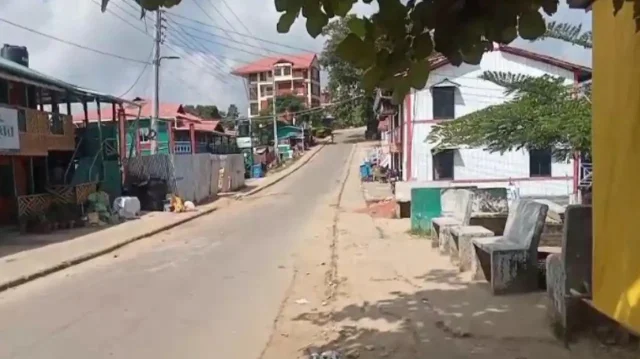
In Baghaichhari Upazila of Rangamati, an hour-long period of intermittent gunfire took place between the UPDF (Prasit faction) and the JSS (Santu Larma faction), police said on
According to Officer-in-Charge Tofazzal Hossain of Sajek Police Station, the incident occurred on Saturday from noon to 1 pm in the Kalabunia area of Sajek Union. He said police received reports of firing between the two groups. The spot is roughly 20 km from the police station in a remote, difficult-to-access area. Despite the hour of on-and-off shooting, no casualties have been reported so far.
JSS Information and Publicity Secretary Sajib Chakma denied any involvement. He stated: “I have not received any news of the gunfire yet. And there is no question of JSS being involved in these shootings.”
UPDF spokesperson Angya Marma could not be reached: his phone was switched off, and he did not reply to WhatsApp messages.
Critical context on official narratives in the CHT
This report is typical of army and police accounts in the Chittagong Hill Tracts (CHT). Security forces routinely frame incidents as clashes solely between indigenous groups (here UPDF and JSS, both rooted in Jumma/indigenous political movements), while providing little transparency or independent verification. The location is remote, police say they have not fully entered the area, and one of the named parties (JSS) flatly rejects the claim. Similar official stories have been contested before — for example, recent Sajek-related incidents where UPDF denied army claims of exchanges of fire, and fact-checks have shown old or unrelated footage being circulated as evidence of clashes involving security forces and indigenous groups.
Meanwhile, Islamist armed groups have operated in and around the CHT with far less consistent spotlight from the same security apparatus. Jama’atul Ansar Fil Hindal Sharqiya (JAFHS / Jamaatul Ansar), a banned al-Qaeda-linked outfit formed by former members of JMB, Ansar al-Islam and HuJI-B, used the hills for training camps in coordination with the Kuki-Chin National Front (KNF).
RAB and others publicly documented its presence, training, and later flight of members toward Rohingya camps, yet the group’s activities received a different tone of coverage than routine indigenous “clashes.” ARSA and RSO (Rohingya Solidarity Organisation) have also maintained presence and networks in the border zones adjacent to or overlapping CHT areas. These groups are ideologically committed to jihadist agendas and have received foreign-linked support, yet security narratives more readily and publicly blame indigenous organizations while the Islamist presence is often treated as a secondary or contained issue.
The broader pattern in the heavily militarized CHT is one of contested official claims: indigenous groups are frequently cast as the primary source of instability, while the long-term presence of security camps, settler dynamics, and the activities of Islamist militants receive less consistent scrutiny or different framing. Independent verification remains difficult in remote areas, and past discrepancies between ISPR/police statements and statements from UPDF/JSS or local residents reinforce skepticism toward the standard security-force line.