


Construction work on three metro rail projects is set to begin at the same time in the capital. The routes are: Airport to Kamalapur (MRT Line-1), Hemayetpur to Bhatara (Line-5 Northern Route), and Gabtoli to Dasherkandi (Line-5 Southern Route).
Contracts for four construction packages of Line-1 and Line-5 Northern Route were signed yesterday, starting the process of field-level work on the two projects. However, if work proceeds simultaneously on all three routes, there is a risk of increased traffic congestion and public suffering.
Dhaka Mass Transit Company Limited (DMTCL) says it is preparing traffic plans based on the experience of MRT Line-6, and alternative roads and other necessary measures will be kept in place.
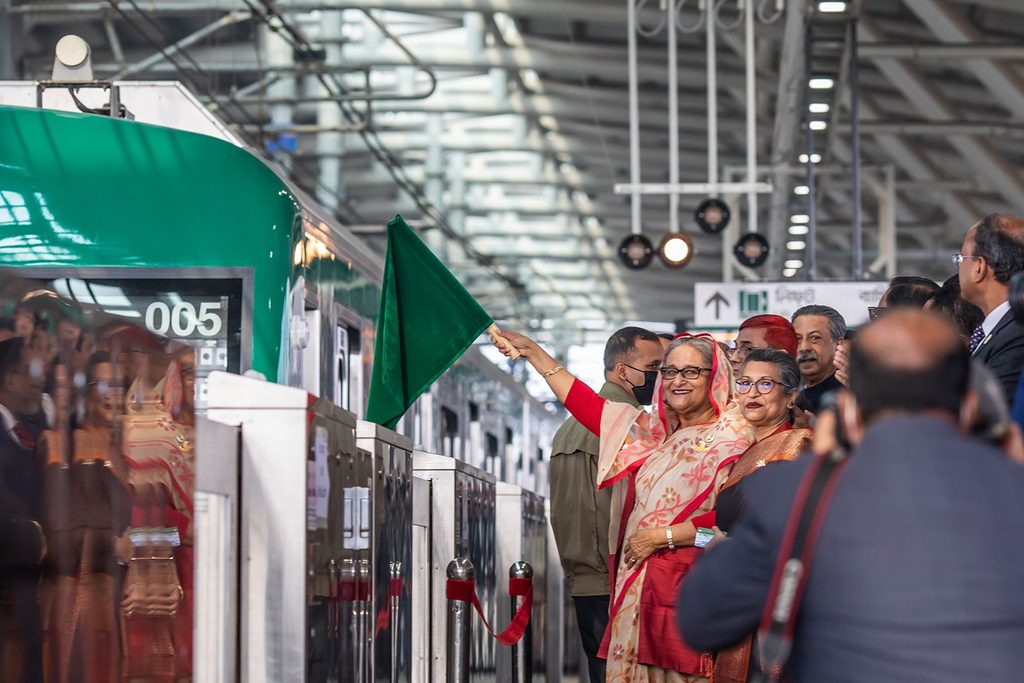
The contracts were signed yesterday at the metro rail building in Diabari, Uttara. The two projects are being implemented with joint funding from the Bangladesh government and Japan’s aid agency JICA. The chief guest at the event was Dr. Mohammad Ziaul Haque, Secretary of the Road Transport and Highways Division. He said, “There can be no compromise on safety and quality in construction work. Work must be completed on time so that people’s hardship is not prolonged.”
Under the contracts, one package of Line-1 will build 49 structures including workshops, train storage sheds, and operation centers in the depot area. The contract is with the SinoHydro-SEBCL joint venture. Another package will construct more than five kilometers of elevated rail from the point where the underground section ends and the elevated section begins, up to the start of the Balu River, along with the Joyar Sahara, Boalia, and Mastul stations. The contractor is the CREC-MIL-MBEC joint venture.
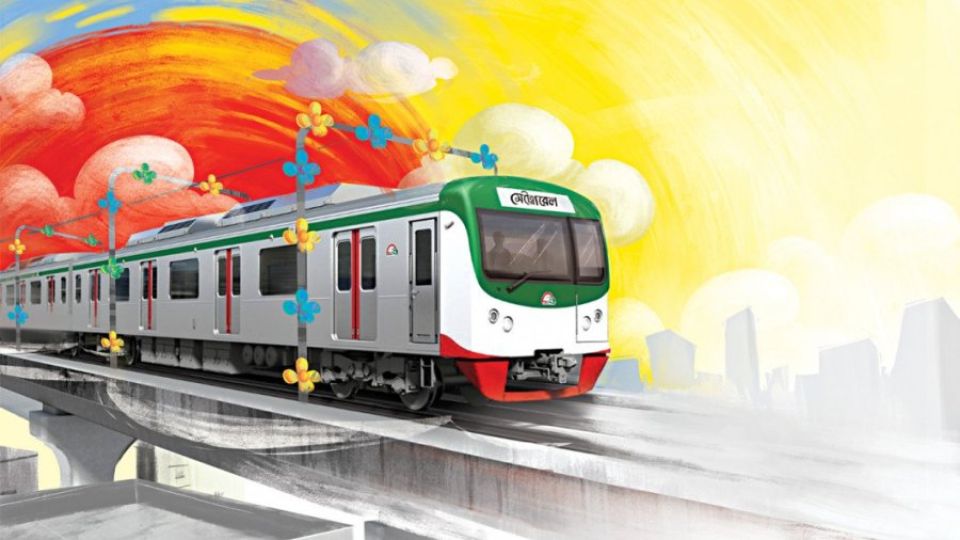
For the Line-5 Northern Route depot package, an administrative building, control center, train storage areas, warehouses, and workshops will be built. The contract is with the CPC-Hanil joint venture. Another package will construct 6.5 kilometers of elevated track from Hemayetpur to Aminbazar and from Notun Bazar to Bhatara, plus five stations (Hemayetpur, Baliapur, Bilamalia, Aminbazar, and Bhatara). The contractor for this is also CREC-MIL-MBEC.
Line-1 will run via Airport Road, Progoti Sarani, Kuril, Badda, and Rampura to Kamalapur. The Northern Route path is Hemayetpur, Aminbazar, Gabtoli, Mirpur, Kachukhet, Banani, and Gulshan to Bhatara. The Southern Route will go via Gabtoli, Kalyanpur, Shyamoli, Asad Gate, Russell Square, Karwan Bazar, Hatirjheel, and Aftabnagar to Dasherkandi. Work on all three projects will run at roughly the same time. Line-1 is scheduled until December 2033, the Northern Route targets December 2032, and the Southern Route deadline is August 2033.
DMTCL officials say that because the underground metro tunnels run beneath the ground, the impact on surface roads will be relatively less. Line-1 has about 19.87 kilometers of underground track. However, during construction of stations and depots, excavation of shafts to go underground, and relocation of water, gas, electricity, and telephone lines, some road sections may be temporarily closed or narrowed. Barricades there raise the risk of disruption to movement.
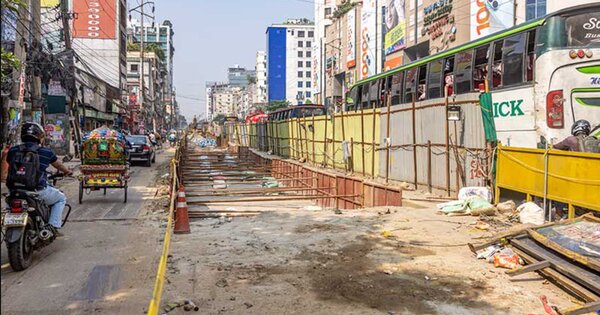
The impact is already visible in reality. Preliminary work on Line-1 is causing traffic jams in various parts of Progoti Sarani. Excavation and construction materials from Kuril to Notun Bazar have reduced the usable road space.
Long queues of vehicles are forming at Kuril, Jamuna Future Park, Nadda, and Badda. Pedestrians are also suffering from dust and footpath problems. WASA water-line work in the same areas is adding further pressure.
BUET professor and infrastructure expert Dr. Hadiuzzaman told Bonik Barta, “A major plan is needed for several metro construction works to proceed simultaneously in Dhaka. The capital has few main roads. If work continues on two or three major roads at the same time, it must be considered whether there is enough space to divert vehicles to alternative routes. A separate project is needed on how the huge number of vehicles will be managed.”
The Northern Route is about 20 kilometers long: 13.5 kilometers underground and 6.5 kilometers elevated. The Hemayetpur-Gabtoli section of the Dhaka-Aricha highway carries heavy long-distance buses, trucks, and working people. If road space shrinks in Gabtoli and Mirpur, hardship can increase both for entering the city from Savar-Ashulia and for movement inside the city.
The Southern Route is about 17.5 kilometers. There is a plan for underground track from Gabtoli to Aftabnagar, then elevated track to Dasherkandi. If space is reduced for work on busy roads like Kalyanpur, Shyamoli, Asad Gate, and Karwan Bazar, congestion can increase in central and commercial areas.
During Line-6 construction, there were prolonged jams, dust, and footpath movement problems in Mirpur, Farmgate, and Motijheel. The same situation is feared in the new projects. When work proceeds on multiple routes at once, pressure from one road can spread to surrounding roads.
When asked about the plan, Southern Route Project Director Sheikh Khalilur Rahman told Bonik Barta, “Traffic plans under the project will be followed to reduce jams during construction. The top-down method is being used as construction technology. Alternative roads are being built where needed.
Drawing on the experience of MRT Line-6 construction, measures are being taken to keep vehicle movement normal on the roads. There is also a plan to keep station entry and exit points somewhat away from the road rather than right beside it.” He added that measures will be taken according to local needs to reduce risks.
Timing and cost concerns amid the economic crisis
These three mega metro projects are being launched simultaneously with large-scale, high-cost packages involving major international joint ventures, at a time when Bangladesh is facing a serious economic crisis marked by high inflation, foreign exchange pressure, elevated debt levels, and strained public finances.
Launching multiple expensive infrastructure megaprojects at once risks further inflating budgets through cost overruns, extended timelines, and the additional expenses of traffic management, utility relocation, and compensation for prolonged public hardship.
Given limited fiscal space, scarce foreign reserves, and the need to prioritize essential spending and debt servicing, starting these works now (with timelines stretching into the early 2030s) appears poorly timed.
Experience with MRT Line-6 already showed significant disruption and cost pressures; repeating and multiplying that on several corridors simultaneously is likely to deepen both economic strain and everyday suffering for Dhaka’s residents. In the current crisis, such projects should have been sequenced more carefully, rigorously re-costed, or deferred until macroeconomic conditions stabilize.