


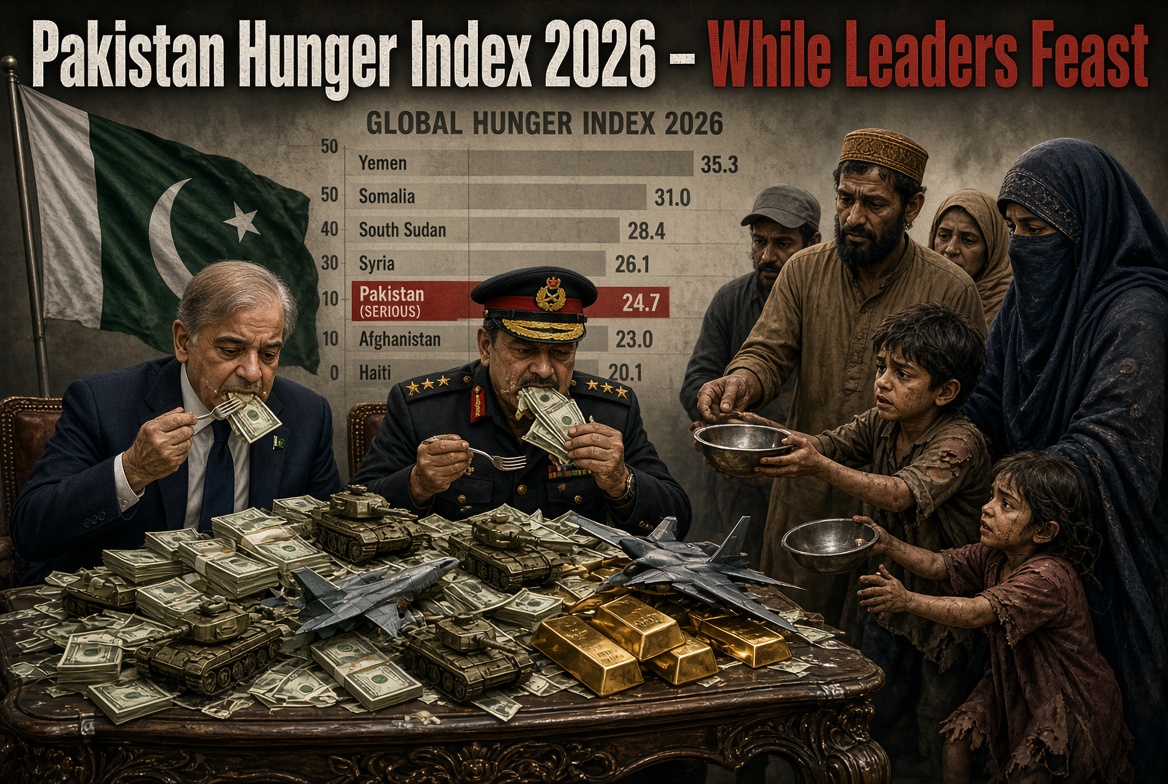
Pakistan scored 25.5 on the 2026 Global Hunger Index (GHI), ranking 106th out of 122 countries with sufficient data and placing second-worst in South Asia behind only Afghanistan (28.6).
The score classifies hunger as “serious” and marks a deterioration from 24.0 in 2018—one of only two South Asian countries (with Afghanistan) to see worsening conditions over that period—despite longer-term improvement from 36.2 in 2000.
By comparison, India scored 24.1, Bangladesh 19.2 (moderate), Nepal 14.5, and Sri Lanka 10.2.
South Asia’s regional score stands at 23.5, second only to sub-Saharan Africa.
Key drivers cited in the GHI and related reporting include economic instability, high food-price inflation that eroded household purchasing power, climate shocks such as floods, and persistent child malnutrition: 16.1% of Pakistan’s population is undernourished, 33.6% of children under five are stunted, 9.8% are wasted, and the under-five mortality rate is 5.6%.
Experts point to constrained job opportunities for women and high levels of child undernutrition as central factors differentiating Pakistan from better-performing neighbors.
Bangladesh, for example, has benefited from garment-sector employment that expanded women’s workforce participation, alongside door-to-door community health services that improved nutrition and child outcomes.
Pakistan’s female labor-force participation remains comparatively low, limiting household incomes and dietary diversity. Child stunting, while lower than in 2000, remains very high and continues to reflect chronic undernutrition linked to inadequate access to nutritious food, sanitation, and maternal education.
Global hunger has also edged higher after nearly two decades of progress, with overlapping crises of inflation, climate impacts, and conflict contributing to the broader trend.
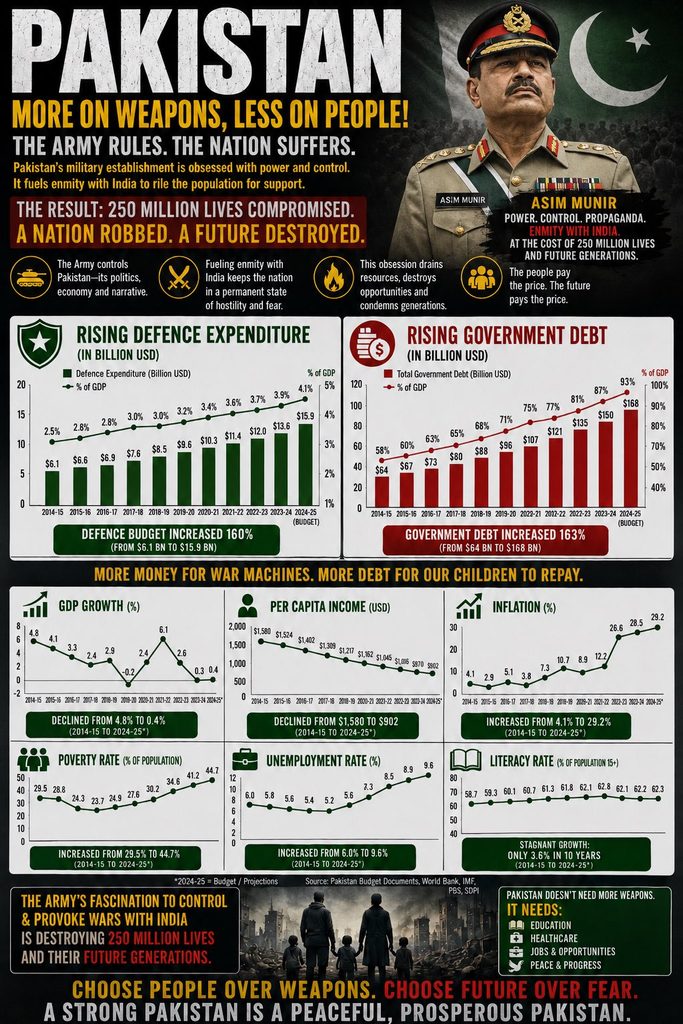
Prolonged military influence over politics and the economy has shaped Pakistan’s governance and resource allocation for decades. No elected prime minister has completed a full term since independence; successive periods of direct or de facto military dominance (including under Pervez Musharraf and more recent expanded roles for the army chief) have coincided with cycles of political instability, interrupted civilian policy continuity, and heavy defense spending relative to social sectors.
Military-linked commercial entities form one of the country’s largest economic conglomerates, while recent political crises, election controversies, and security operations have diverted attention and resources from sustained nutrition, education, and agricultural reforms.
Parallel challenges from radical Islamist groups, particularly the Tehreek-e-Taliban Pakistan (TTP), Islamic State (ISIS) and al-Qaeda in the Indian Subcontinent (AQIS), have further constrained development in frontier regions: attacks on girls’ schools, restrictions on women’s mobility and education, and the influence of unregulated madrassas have reduced female schooling and employment opportunities while fueling insecurity that disrupts markets, health services, and aid delivery.
These factors compound the effects of economic shocks and climate events, helping explain why Pakistan and Afghanistan—both facing militant threats and governance disruptions—have seen GHI scores rise since 2018 while several other South Asian countries recorded modest gains.