


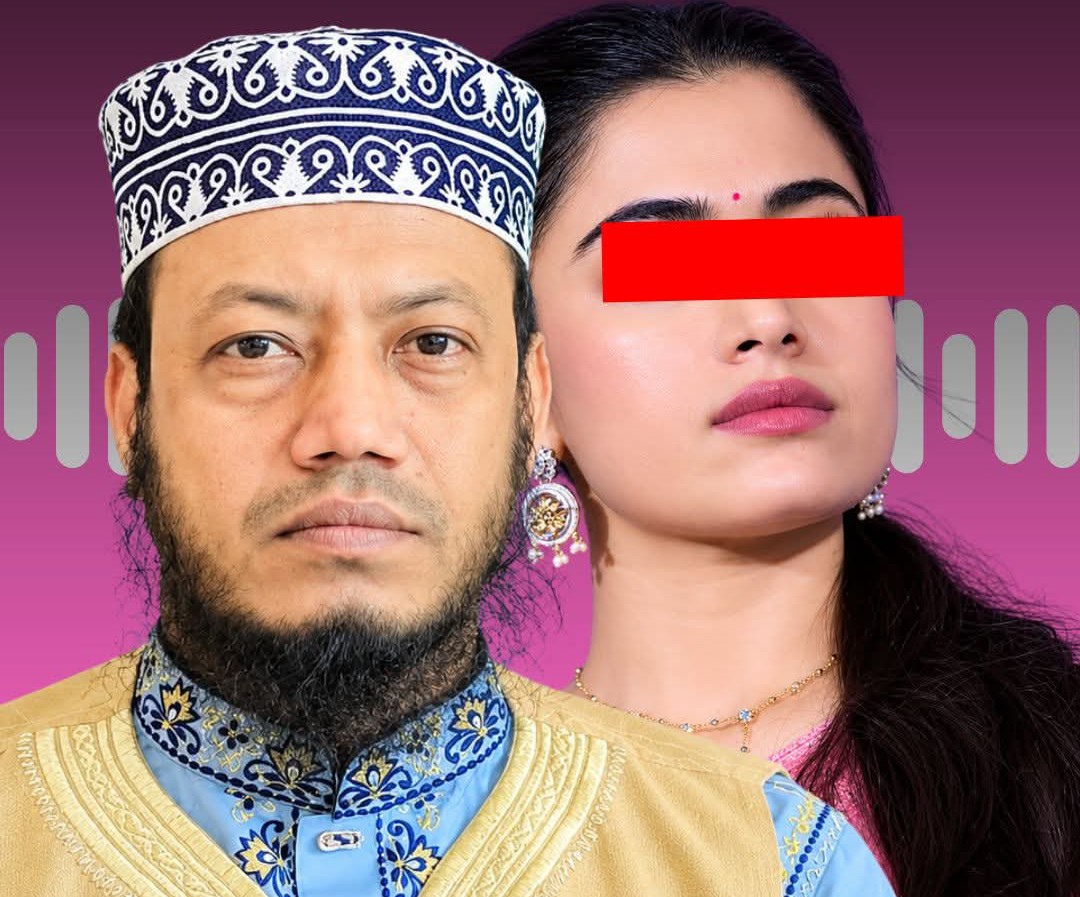
A widely circulated claim that a leaked audio clip of Kushtia-3 Jamaat-e-Islami MP and Islamic preacher Mufti Amir Hamza is AI-generated has been assessed as false by a technical analysis that scored the recording as almost certainly human.
The controversy began on 5 November 2026 when Rashed Khan, the Prime Minister’s political assistant, posted on his verified Facebook page that he had received audio and video materials involving Hamza related to incidents with women. Khan stated he had fact-checked the materials and found them credible. He shared a short excerpt of a conversation in which a voice, identified as Hamza’s, expresses remorse, asks for forgiveness, and refers to being misled by “shaitan” (Satan) and “nafs” (desires).
Khan also placed an audio link in the comments and asked what action Jamaat-e-Islami would take.
The clip quickly spread on YouTube Shorts, Facebook, and other platforms. In the recording, the speaker appears contrite and seeks pardon for alleged past conduct. Supporters of Hamza and some netizens responded by claiming the voice was not authentic and had been created with artificial intelligence.
To examine the AI allegation, Fact Check Zone submitted the audio file was submitted to the commercial tool Undetectable AI (powered by TruthScan). The tool classified the recording as “Likely Human” and assigned it a 99% probability of being a real human voice rather than synthetic or humanised AI speech. The analysis found no reliable technical evidence from those asserting the clip was AI-generated.
The evaluation followed standard transparency practices by naming the tool, describing the method (speech-pattern and frequency analysis of the uploaded file), and basing the conclusion solely on the tool’s output rather than political alignment. The claim that the audio is AI-generated was therefore rated false.
AI voice-detection tools, including those that advertise very high accuracy, remain imperfect. Results can be affected by compression, re-encoding on social platforms, background noise, or model limitations, and independent forensic verification by multiple specialised laboratories is generally required for definitive conclusions in high-stakes cases. In this instance, the single-tool result provides strong counter-evidence to the AI claim but is not presented as absolute forensic proof of the recording’s origin or the accuracy of its content.
Amir Hamza, the 34-year-old preacher and Jamaat politician elected to the Kushtia-3 seat in February 2026, has previously drawn controversy over public remarks. Rashed Khan, a BNP-aligned figure appointed political assistant to the Prime Minister with secretary rank in July 2026, has had earlier public tensions with Hamza.
The episode has renewed debate in Bangladeshi political and social-media circles about the authenticity of leaked materials and the reliability of AI detection in politically charged cases.