


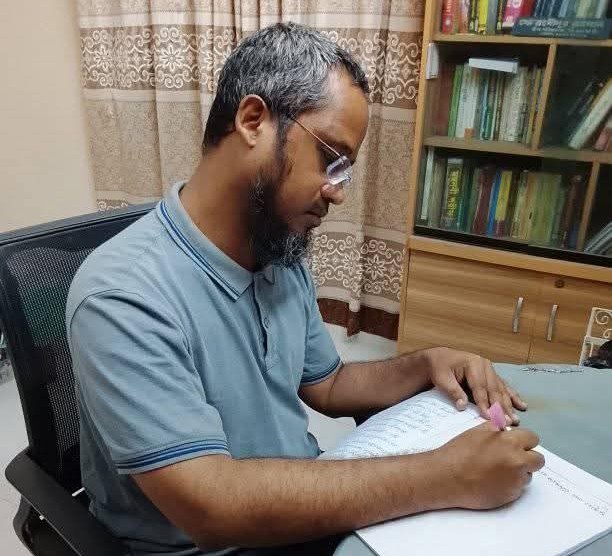
Shafiur Rahman Farabi, the Bangladeshi Islamist blogger and alleged Hizb ut-Tahrir activist sentenced to life imprisonment for his role in the 2015 murder of secular writer and blogger Avijit Roy, has resumed posting on social media and his blog after his release on bail.
His recent Facebook posts have drawn attention for their critical and derogatory references to Hindu deities and Gautama Buddha, prompting concerns that he is again spreading religious hatred against minority faiths while enjoying judicial impunity.
Farabi was arrested in March 2015 shortly after Roy, a US-based Bangladeshi-American founder of the Mukto Mona blog, was hacked to death near Dhaka University’s TSC while returning from the Ekushey Book Fair. His wife, Rafida Ahmed Bonya, was severely injured in the attack.
A special anti-terrorism tribunal in February 2021 sentenced five members of the banned group Ansar al-Islam to death and Farabi to life imprisonment for threats and instigation on social media; he was also fined. He had previously faced cases under the ICT Act, including a seven-year sentence in 2023 related to threats over the funeral of another slain blogger.
On 30 July 2025, a High Court bench granted him interim bail in the Avijit Roy case. Lawyers argued that co-accused confessional statements did not name him, most witnesses did not link him, and he had already spent years in custody since 2015. The Appellate Division’s chamber judge later issued a “no order” on the state’s appeal, allowing the bail to stand. Farabi walked free from Kashimpur High Security Central Jail in Gazipur on 22 August 2025.
Since his release, Farabi has returned to online activity on Facebook (where he maintains a verified account with a large following) and his site farabiblog.com. Posts and linked blog entries have included commentary on Hindu deities under titles such as material questioning what Islam says about them, with language referring to “Hanuman” figures and metaphorically “setting fire to their tails.”
He has also written and shared pieces on Gautama Buddha, including one titled along the lines of “Gautama Buddha and Asceticism at a Glance,” continuing a pattern of counter-blogging against non-Islamic religious figures and practices. One recent public post referenced a photo card that he suggested could lead to his arrest, while questioning authorities about actions against those who insult the Prophet and noting restrictions on certain Hindu imagery in Western countries.
Outlets such as The Daily Republic have described him as a “dangerous jihadist” whose release followed campaigns by Islamist groups and references to interventions involving the interim government’s law adviser. Farabi has long been known for online campaigns against freethinkers; he previously threatened Roy directly on social media (including posts stating it was a “holy duty” to kill him once he returned to Bangladesh) and was linked to earlier provocations after the 2013 killing of blogger Ahmed Rajib Haider. He has denied direct involvement in the physical attacks while acknowledging threats.
Critics argue that his return to public religious commentary against Buddhism and Hinduism—while still under a life sentence whose appeal is pending and while on bail—highlights gaps in enforcement against hate speech and the risks of impunity for figures previously tied to the wave of attacks on secular bloggers between 2013 and 2016. Supporters and his own statements frame the posts as defensive responses to perceived attacks on Islam and as exercises of free speech after what he portrays as politically motivated prosecutions under the previous government.
Bangladesh has seen ongoing debates over free speech, religious sensitivities, and the treatment of minority communities. Farabi’s case continues to illustrate the tension between judicial decisions on bail and the practical effects of allowing previously convicted individuals to resume online activity that targets other faiths.