


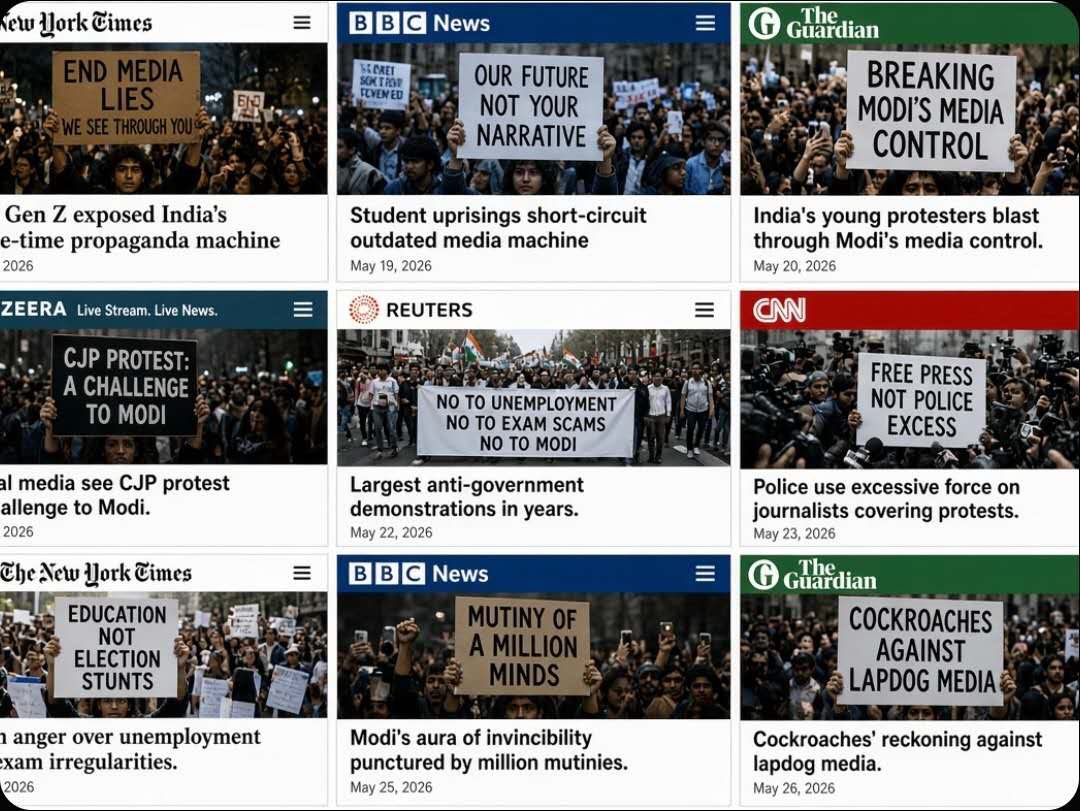
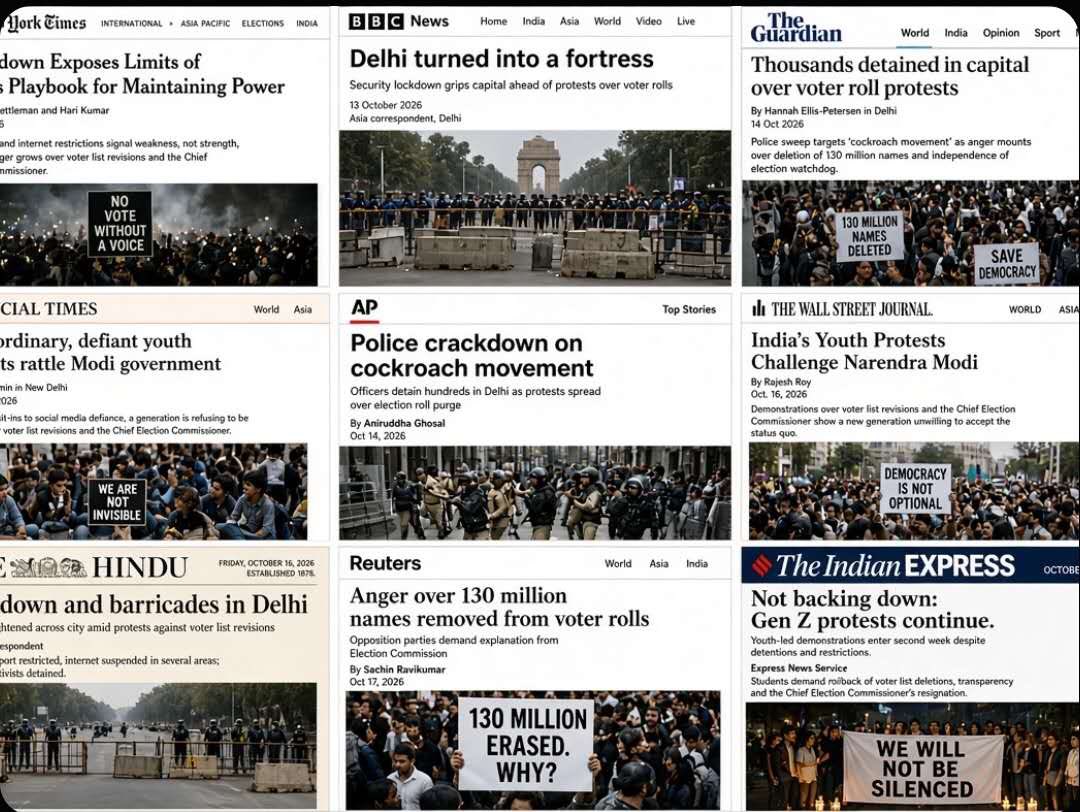
Western outlets have elevated the Cockroach Janata Party (CJP)-led street protests in Delhi—focused on the Election Commission’s Special Intensive Revision (SIR) of electoral rolls and demands for Chief Election Commissioner Gyanesh Kumar’s resignation—into a narrative of systemic democratic crisis under Prime Minister Narendra Modi.
This framing coincides with open collaboration between CJP and opposition parties, explicit regime-change language from allies, and repeated allegations of foreign funding.
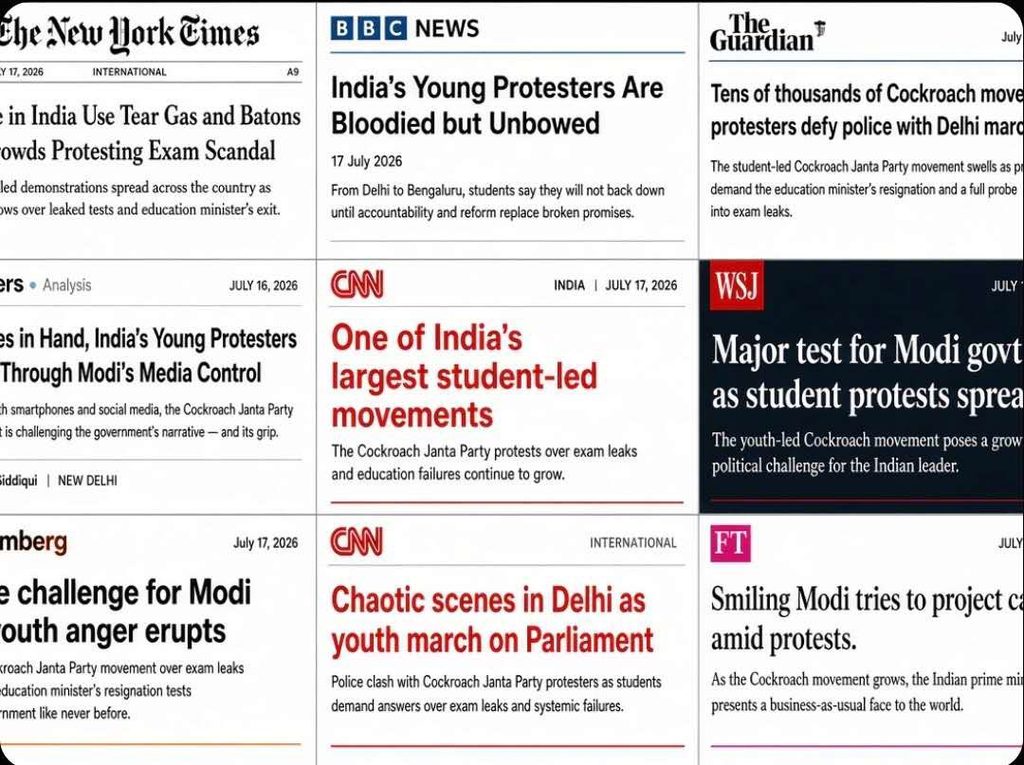
In an October 15, 2026, Foreign Affairs article titled “A Democratic Reckoning in India,” political scientist Pratap Bhanu Mehta wrote that “India is in rebellion” and that the protests represent “nothing less than a contest over the foundations of the Indian state and whether it lives up to its constitutional commitments.” The piece, published by the Council on Foreign Relations, traces the movement from summer exam-related demonstrations (which contributed to Education Minister Dharmendra Pradhan’s resignation) to the current challenge over the tagging of roughly 130 million names for potential removal from voter rolls.
It portrays the CJP as inventive Gen-Z resistance that has eroded the government’s narrative control.
Coverage from the BBC, Al Jazeera, and Deutsche Welle has similarly stressed police deployments, thousands of detentions, and the “Gen Z” character of the protests while amplifying accusations of “vote theft” favoring the BJP and institutional bias. Analysts, including geopolitical commentator Angelo Giuliano, have described this as standard colour-revolution amplification: specific grievances (exam integrity, roll revisions) are scaled into existential threats to democracy, with Western platforms supplying the international framing. Giuliano has highlighted parallels with events in Bangladesh (2024) and Nepal, noting that such movements often begin with legitimate issues before external networks and media elevate them.
The CJP originated in May 2026 as online satire after Chief Justice Surya Kant compared some unemployed youth to “cockroaches.” Boston University graduate Abhijeet Dipke turned the remark into a mobilising identity. The group is not a registered party and claims volunteer and crowdfunded support.
Opposition collaboration has become explicit. Karnataka Pradesh Congress Committee president B.K. Hariprasad stated that Congress members would fund the CJP and other agitations against Modi. Rahul Gandhi has publicly criticised police actions against CJP leaders and engaged with the movement. Joint appearances and press conferences have linked CJP figures with All India Students’ Association (AISA) president Neha Bora, senior advocate Prashant Bhushan, and others.
Bora publicly offered a “red salute” to participants in Bangladesh’s 2024 student uprising that ousted Sheikh Hasina, saying the Gen-Z movement in India “first started in Bangladesh” and that those protesters had “shown us the way,” drawing parallels on democratic and voting rights.
BJP leaders called this an open admission of seeking similar regime-change methods.
At a press conference with Dipke and Bora, Bhushan declared, “We all want a regime change. Is there anything wrong with that?” and described the struggle as one against a “dictatorial government.” Dipke later sought to narrow CJP’s stated goal to the removal of Kumar and an independent appointment, distancing the organisation from broader regime-change language. BJP leaders, including national president Nitin Nabin and Defence Minister Rajnath Singh, have accused the Congress, CJP, and allies of pursuing a Bangladesh-style regime change in collusion with foreign powers.
On funding, BJP figures (including Union minister Kiren Rijiju and Telangana BJP president N. Ramchander Rao) have alleged links to Pakistan, George Soros, and U.S. donors. American singer Mary Millben publicly claimed U.S.-based donors and Soros-linked networks were involved, citing Dipke’s American education and a pattern of targeting conservative leaders. The Ministry of External Affairs said it had “no information to share” on the claims; a viral post asserting that the MEA had ruled out foreign funding was officially labelled misleading because the spokesperson had simply declined to comment. Fact-checks note that no bank records, grant documents, or verified intelligence findings have been publicly produced, and courts dismissed petitions seeking agency probes. CJP representatives maintain the movement is sustained by volunteers and public contributions; Dipke has denied party or foreign funding.
The episode illustrates competing narratives: one of youth-driven accountability over exams, employment, and electoral processes, and another of coordinated political mobilisation, opposition financing, inspiration from successful ousters in neighbouring countries, and external media amplification. The latter view treats the combination of funding admissions, regime-change rhetoric, Bangladesh references, and crisis framing in outlets such as Foreign Affairs as consistent with documented colour-revolution patterns. Protests and political responses continue amid heavy security in the capital.